Punjab stubble burning 2026: 52 fires logged, one FIR registered
Synopsis
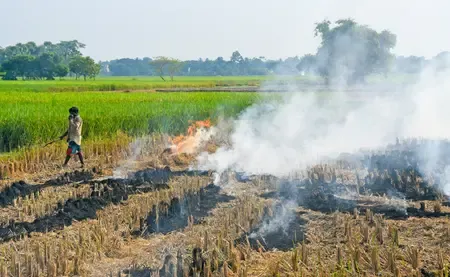
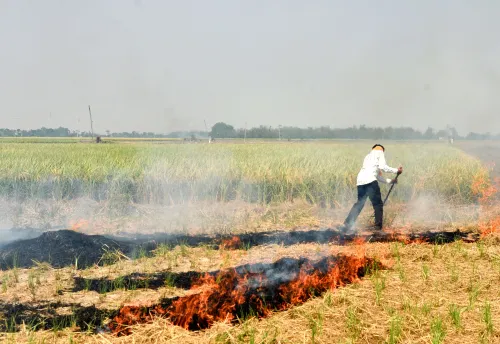
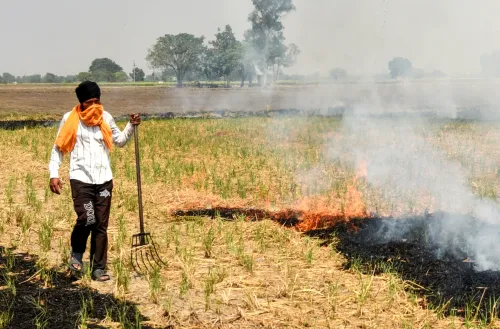
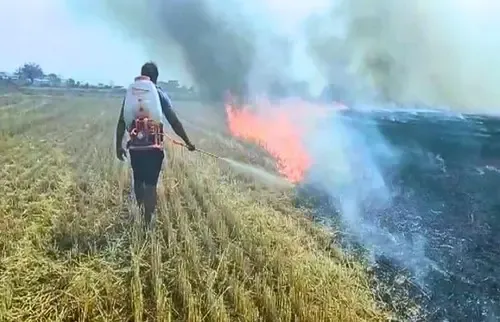
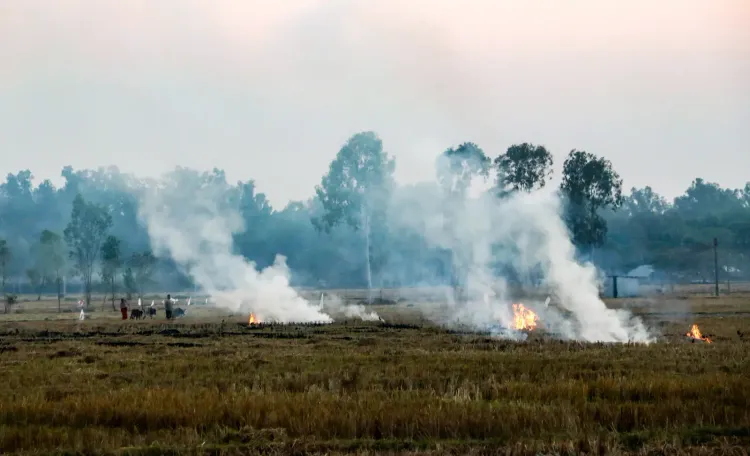
Punjab has logged 52 stubble-burning fires in the opening days of the 2026 harvest season, with just one FIR filed and no officer-level accountability actions taken despite confirmed violations in 16 fields. With peak burning months still ahead, early enforcement numbers point to a familiar pattern — fines imposed, little recovered, and the smoke already on its way to Delhi.
Key Takeaways
52 stubble-burning fire incidents reported across Punjab as of 30 September 2026 .
Field inspections conducted in 42 cases ; burning confirmed at 16 locations.
Amritsar leads with 30 fires ; Tarn Taran (8), Ferozepur (5), Gurdaspur (3), and Moga (2) follow.
Environmental compensation of ₹55,000 imposed in 11 cases ; only ₹25,000 recovered so far.
One FIR registered — in Patiala ; nine red entries and four show-cause notices issued statewide.
No chargesheets or suspensions recorded against any nodal or supervisory officers.
A total of 52 incidents of paddy stubble burning have been reported across Punjab as of Tuesday, 30 September 2026, with field inspections confirming signs of crop residue burning in 16 of those cases, according to government data. Authorities have so far registered one FIR and imposed environmental compensation in 11 cases, totalling ₹55,000, of which ₹25,000 has been recovered.
District-wise Breakdown
Amritsar recorded the highest number of incidents — 30 fires — of which 20 fields were inspected and burning was confirmed at four locations. Environmental compensation of ₹5,000 was imposed in one case there, and the full amount has been recovered, officials said. Tarn Taran followed with eight cases, all fields inspected, burning confirmed at five sites, compensation of ₹20,000 imposed in four cases, and five red entries recorded.
Ferozepur reported five incidents, with burning confirmed at all five inspected fields, compensation of ₹20,000 imposed in four cases, and four red entries logged. Gurdaspur reported three cases, Moga two, and Fazilka, Hoshiarpur, SBS Nagar, and Patiala one each, according to the government data.
The One FIR: Patiala
The sole criminal case registered so far is linked to the single fire incident in Patiala, where field inspection confirmed signs of crop burning and environmental compensation of ₹5,000 was imposed. Authorities connected this case to the registration of an FIR, making it the only instance of criminal action among the 52 reported fires, officials said.
Enforcement Measures Taken
Across the state, authorities issued four warning or show-cause notices and recorded a total of nine red entries in field records. Notably, no chargesheets or suspension actions have been initiated against any nodal or supervisory officers in connection with the incidents, with that count remaining at zero, officials confirmed.
Why This Matters
Paddy stubble burning in Punjab and neighbouring states is a seasonal environmental crisis that significantly worsens air quality across northern India, including New Delhi, every post-harvest period. Critics and courts have repeatedly flagged the gap between reported incidents and actual enforcement, and the current data — with only one FIR across 52 fires and zero officer-level accountability actions — is likely to renew those concerns. This comes amid ongoing scrutiny from the Commission for Air Quality Management in NCR and Adjoining Areas (CAQM), which has mandated stricter action on farm fires. With the peak burning season typically running through October and November, these early figures are being watched as an indicator of how seriously state machinery will respond this year.
Point of View
But the enforcement ratio is already telling: 52 fires, 16 confirmed, one FIR, zero officer accountability actions. Punjab's stubble-burning problem has persisted for years not because field-level data is unavailable — it clearly is — but because consequence rarely follows detection. The recovery of just ₹25,000 of ₹55,000 in imposed fines underscores how environmental compensation functions more as paperwork than deterrence. With CAQM oversight tightening and Delhi's air quality a national flashpoint each October, the real test is whether this year's enforcement curve bends upward in November, or flattens as it has before.
NationPress
30 Sept 2026
Frequently Asked Questions
How many stubble-burning fires have been reported in Punjab this season?
As of 30 September 2026, a total of 52 fire incidents linked to paddy stubble burning have been reported across Punjab. Field inspections were carried out in 42 of these cases, with burning confirmed at 16 locations.
Which district recorded the most stubble-burning incidents in Punjab?
Amritsar recorded the highest number of fire incidents with 30 cases, followed by Tarn Taran with 8 and Ferozepur with 5. Gurdaspur reported 3 cases and Moga 2, while Fazilka, Hoshiarpur, SBS Nagar, and Patiala each reported one incident.
Has an FIR been filed over stubble burning in Punjab?
Yes, one FIR has been registered so far, linked to the single fire incident reported in Patiala, where burning was confirmed during field inspection and an environmental compensation of ₹5,000 was also imposed.
How much environmental compensation has been imposed for stubble burning in Punjab?
Environmental compensation totalling ₹55,000 has been imposed across 11 cases statewide. Of this, ₹25,000 has been recovered so far, according to government data.
Why is Punjab's stubble burning a concern beyond the state?
Paddy stubble burning in Punjab contributes significantly to air pollution across northern India, particularly worsening air quality in New Delhi during October and November. The Commission for Air Quality Management in NCR and Adjoining Areas (CAQM) has mandated stricter state-level enforcement to curb farm fires during the post-harvest period.