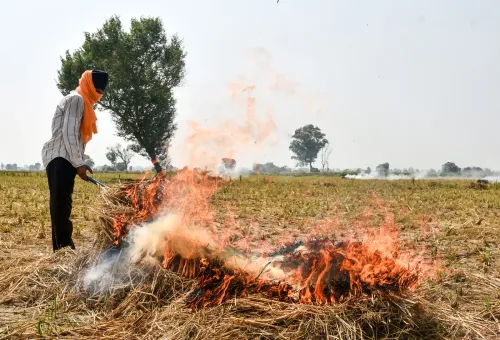
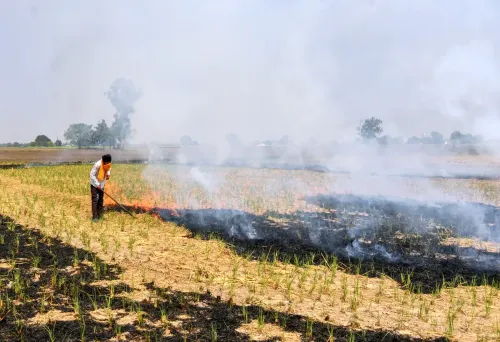
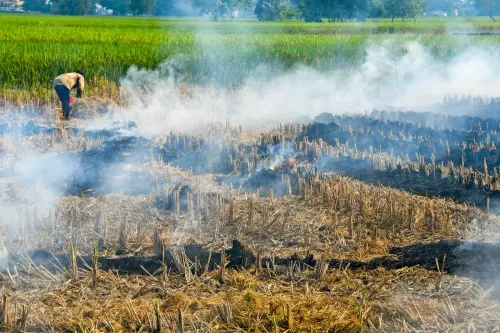
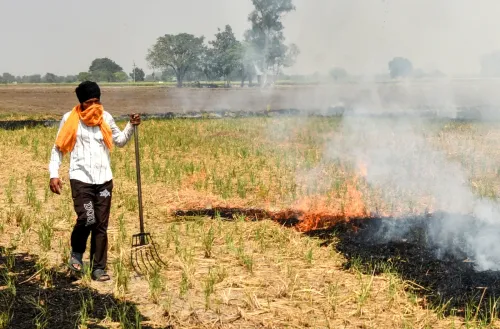
Punjab records 2,787 stubble burning cases; ₹46.10 lakh fine imposed till Nov 5
Synopsis
Punjab has logged 2,787 stubble burning incidents with ₹46.10 lakh in fines and 710 FIRs — yet fires keep burning. With 87.6% of paddy harvest done and Delhi-NCR's air turning toxic, the enforcement machinery is visibly outpaced by ground reality, raising uncomfortable questions about whether punitive measures alone can break a cycle rooted in agricultural economics.
Key Takeaways
The Punjab Pollution Control Board (PPCB) recorded 2,787 stubble burning incidents across the state as of 5 November .
Environmental compensation fines of ₹46.10 lakh were imposed in 914 cases ; only ₹24.85 lakh recovered so far.
710 FIRs registered under Section 223 of the Bharatiya Nyaya Sanhita (BNS) ; 829 red entries made in revenue records.
Tarn Taran had the highest confirmed fires ( 294 sites ); Patiala recorded 156 incidents with 27 FIRs .
Paddy harvesting completed on 87.60% of Punjab's 32.87 lakh hectares under cultivation as of 5 November .
786 show-cause notices issued statewide; field inspections conducted at 2,194 locations .
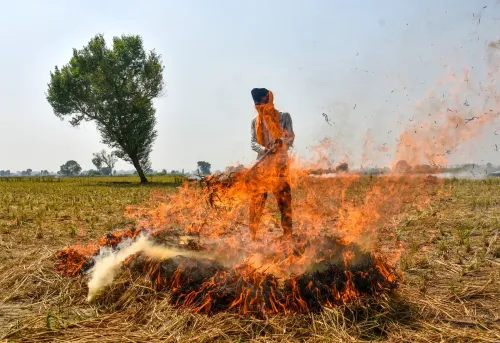
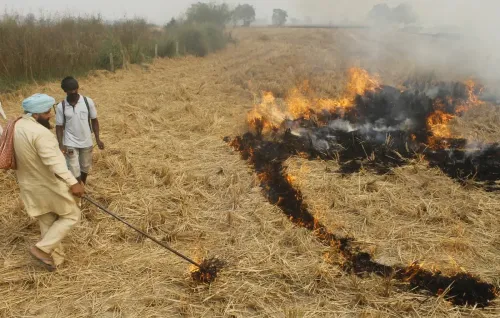
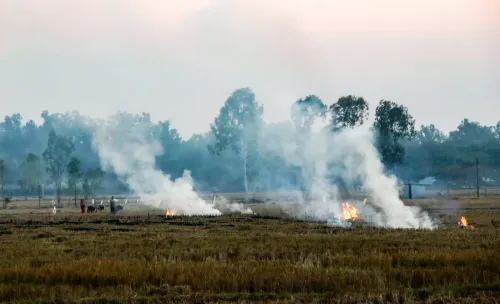
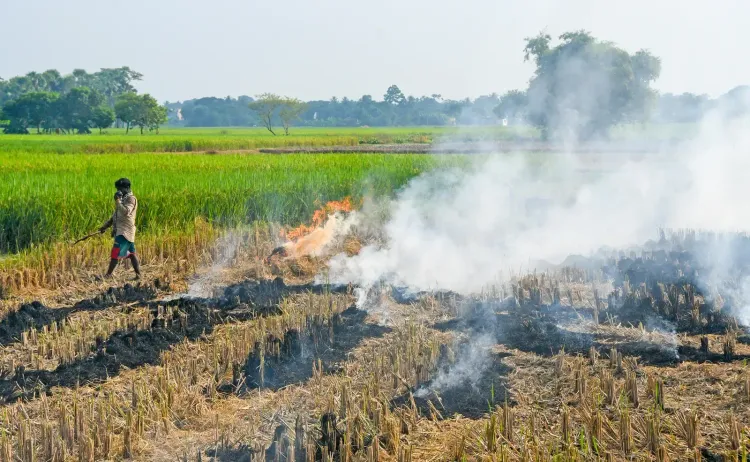
Stubble burning across Punjab has recorded 2,787 incidents as of 5 November 2026, according to the Punjab Pollution Control Board (PPCB), as deteriorating air quality in the Delhi-National Capital Region (NCR) intensifies pressure on state authorities to enforce a ban on agricultural residue burning. Despite inspections, fines, and criminal cases, fires continue to flare across multiple districts.
Scale of Violations Across Districts
Field inspections were conducted at 2,194 locations across Punjab, with stubble burning confirmed at 994 sites. Tarn Taran saw the highest confirmed fire count, with inspections at 553 locations and burning confirmed at 294 sites. Ferozepur followed with 361 incidents recorded, ahead of Sangrur (240), Amritsar (221), and Bathinda (216).
In Patiala, 156 stubble burning incidents were recorded. Inspections were conducted at 103 of those locations, with fire confirmed at 59 sites. The district had 27 FIRs registered and 16 red entries made in revenue records.
Fines, FIRs, and Revenue Record Penalties
Environmental compensation fines totalling ₹46.10 lakh were imposed in 914 cases under the CAQMS Monitoring and Enforcement Actions Report. Of this amount, only ₹24.85 lakh has been recovered so far. In Patiala alone, compensation was imposed in 42 cases totalling ₹2.15 lakh, with ₹70,000 already collected.
Across the state, 710 FIRs have been registered under Section 223 of the Bharatiya Nyaya Sanhita (BNS), and red entries — a punitive notation in land revenue records that can affect future loan eligibility and land transactions — were made for 829 cases. Additionally, 786 show-cause notices were issued statewide.
Harvesting Progress and Why Burning Persists
According to the PPCB report, the total area under paddy cultivation in Punjab spans 32.87096 lakh hectares. As of 5 November, harvesting had been completed across 87.60% of this area, suggesting the peak window for stubble disposal — and therefore the peak risk period — is nearing its end.
The burning of agricultural residues has repeatedly been discouraged by the Union government, yet incidents reportedly continue at multiple locations, often carried out covertly. Farmers have long argued that the tight turnaround between paddy harvest and wheat sowing leaves limited time and resources for mechanised residue management, even where government subsidies for machinery exist.
Impact on Delhi-NCR Air Quality
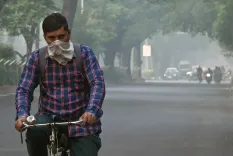
Stubble burning from Punjab and Haryana is considered a significant seasonal contributor to Delhi-NCR's hazardous air quality every October and November. The PPCB enforcement data underscores that administrative measures — fines, FIRs, and revenue record penalties — are being deployed, but their deterrent effect remains limited as long as ground-level compliance gaps persist.
With harvesting approaching completion, enforcement agencies will be watching whether incident rates decline sharply in the coming weeks, or whether a final burst of fires extends the pollution crisis into mid-November.
Point of View
With less than 54% of imposed fines actually recovered and fires confirmed at nearly half of all inspected sites. The reliance on FIRs and revenue record penalties signals escalating legal pressure, yet neither measure addresses the core agricultural economics that make burning the cheapest option for many small farmers. With Delhi-NCR's air quality already in hazardous territory, the question is not whether Punjab is enforcing — it clearly is — but whether enforcement without viable, affordable alternatives can ever be more than a seasonal ritual.
NationPress
6 Nov 2026
Frequently Asked Questions
How many stubble burning cases have been recorded in Punjab this season?
The Punjab Pollution Control Board (PPCB) has recorded 2,787 incidents of stubble burning across the state as of 5 November, based on its CAQMS Monitoring and Enforcement Actions Report. Field inspections were conducted at 2,194 locations, with burning confirmed at 994 of those sites.
What penalties have been imposed for stubble burning in Punjab?
Environmental compensation fines totalling ₹46.10 lakh have been imposed in 914 cases, of which ₹24.85 lakh has been recovered. Additionally, 710 FIRs have been filed under Section 223 of the Bharatiya Nyaya Sanhita (BNS), and red entries have been made in revenue records for 829 cases.
Which districts in Punjab have the highest stubble burning activity?
Tarn Taran leads with burning confirmed at 294 sites, followed by Ferozepur with 361 incidents recorded. Sangrur (240), Amritsar (221), Bathinda (216), and Patiala (156) are also among the most affected districts, according to the PPCB report.
Why does stubble burning continue despite bans and fines?
Stubble burning persists largely because the window between paddy harvest and wheat sowing is narrow, and mechanised residue management remains expensive or inaccessible for many small farmers. The Union government has discouraged the practice repeatedly, but incidents reportedly continue at multiple locations, often covertly.
How does Punjab's stubble burning affect Delhi-NCR air quality?
Agricultural residue fires in Punjab and Haryana are a significant seasonal contributor to the hazardous air quality experienced across the Delhi-National Capital Region every October and November. The smoke from these fires travels downwind into Delhi, compounding local pollution sources and pushing the Air Quality Index into severe and hazardous categories.