Punjab stubble burning: 4,657 cases, 1,442 FIRs and ₹7.28 crore penalties
Synopsis
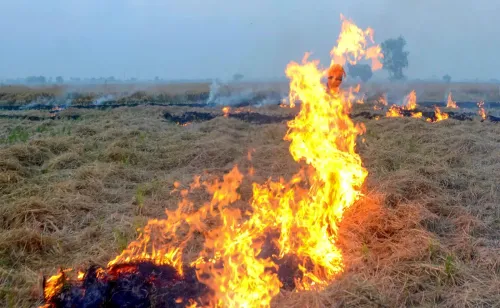
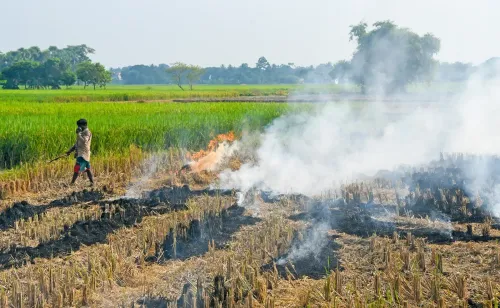
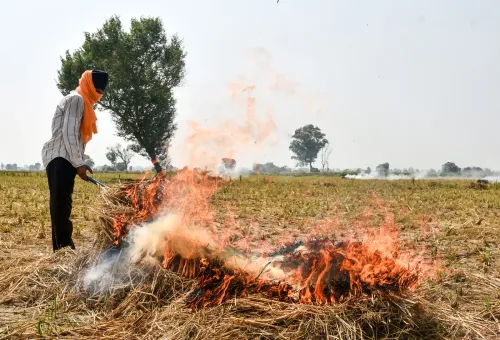
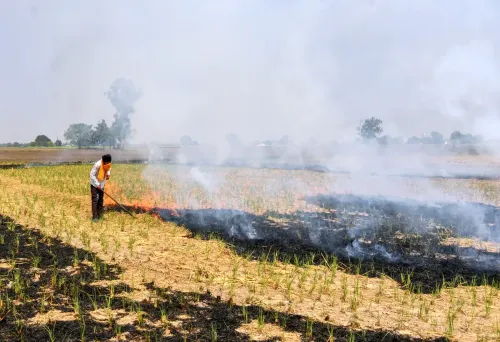
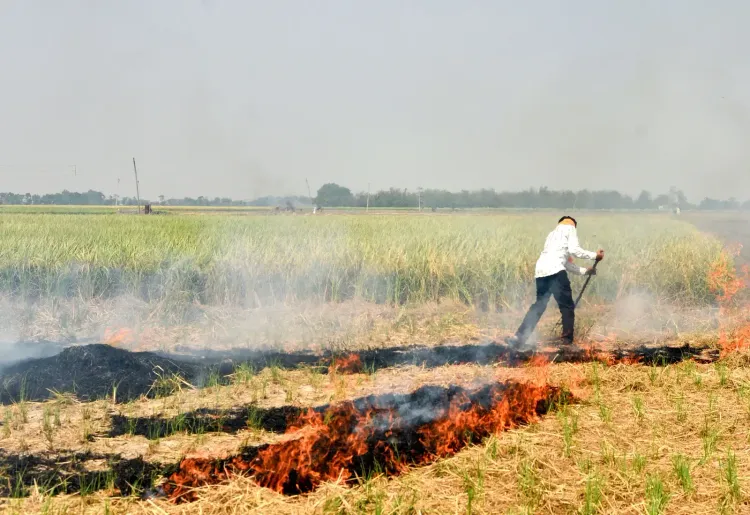
Punjab has logged 4,657 stubble-burning incidents this season — and the numbers reveal a stubborn enforcement gap. With 1,442 FIRs filed and ₹7.28 crore in penalties imposed but less than half recovered, the PPCB data lays bare the limits of punitive action alone in curbing a practice that is choking northern India's air every autumn.
Key Takeaways
Punjab recorded 4,657 stubble-burning incidents as of 9 November 2026 , per PPCB data.
1,442 FIRs have been registered; environmental compensation of ₹7.28 crore imposed, of which only ₹3.36 crore recovered.
Tarn Taran leads in incidents ( 659 ); Ferozepur leads in FIRs ( 365 ).
Physical verification confirmed burning evidence at 1,675 locations out of 3,845 fields inspected.
Harvesting completed on 93.70% of Punjab's 32.87 lakh hectares of paddy area.
Patiala district registered 86 FIRs and imposed ₹43.50 lakh in penalties, with 35 red entries in land records.
Punjab has recorded 4,657 stubble-burning incidents as of 9 November 2026, even as state authorities continue enforcement drives across agricultural districts, according to the latest data from the Punjab Pollution Control Board (PPCB). A total of 1,442 FIRs have been registered and environmental compensation of ₹7.28 crore imposed — of which ₹3.36 crore has been recovered so far.
Scale of the Monitoring Exercise
Harvesting has been completed across 93.70% of Punjab's total paddy area of 32.87 lakh hectares. Administrative and monitoring teams have inspected 3,845 fields where fires were reported; physical verification has confirmed stubble-burning evidence at 1,675 locations. The scale of the exercise reflects the PPCB's attempt to bring ground-level accountability to a problem that persists year after year.
District-Wise Breakdown
Tarn Taran has recorded the highest number of incidents in the state at 659 cases, followed by Ferozepur with 621. Sangrur has reported 508 incidents, while Bathinda has logged 412. In terms of FIRs, Ferozepur leads with 365 registered cases, with Tarn Taran close behind at 307. Sangrur has filed 80 FIRs and Bathinda just 19, a disparity that suggests uneven enforcement intensity across districts.
Patiala: A Case Study in Enforcement
In Patiala district, 299 stubble-burning incidents have been recorded. Field inspections have been conducted in 195 of these cases, with physical evidence of burning confirmed at 122 locations. The district has registered 86 FIRs and imposed environmental penalties totalling ₹43.50 lakh, of which ₹15 lakh has been recovered. Additionally, red entries have been made in land records in 35 cases, and 185 warning notices issued — enforcement tools that signal escalating consequences for repeat violators.
Why the Problem Persists
Despite criminal cases, financial penalties, and thousands of field inspections, thousands of fires continue to be set, underscoring the structural challenge authorities face. Paddy stubble burning is driven largely by the tight window between paddy harvest and wheat sowing, leaving farmers with little time — and, critics argue, insufficient alternatives — for residue management. This comes amid recurring public health concerns over air quality in northern India each October–November, with stubble smoke a known contributor to the severe smog episodes that blanket the Indo-Gangetic Plain. The PPCB data makes clear that enforcement alone has not proved sufficient to change farmer behaviour at scale.
What Happens Next
Monitoring and inspections are set to continue until the paddy harvest season concludes. Authorities are expected to pursue recovery of the remaining ₹3.92 crore in unrecovered penalties. Whether the combination of criminal liability, financial penalties, and land-record entries will drive a meaningful reduction in incidents compared to previous years remains to be seen.
Point of View
The state's toolkit — FIRs, red entries, warning notices — appears more effective at generating paperwork than preventing fires. The deeper issue is structural: without affordable, timely alternatives to burning, farmers will keep choosing the fastest solution. Punjab's air quality crisis each winter is not a law-and-order problem alone; it is an agrarian economics problem that penal action cannot solve by itself.
NationPress
10 Nov 2026
Frequently Asked Questions
How many stubble-burning cases has Punjab recorded this season?
Punjab has recorded 4,657 stubble-burning incidents as of 9 November 2026 , according to the Punjab Pollution Control Board. Of these, physical evidence of burning has been confirmed at 1,675 locations following field inspections.
What penalties have been imposed for stubble burning in Punjab?
Environmental compensation of ₹7.28 crore has been imposed across Punjab, with ₹3.36 crore recovered so far. In addition, 1,442 FIRs have been registered and warning notices issued to violators.
Which districts have the most stubble-burning incidents in Punjab?
Tarn Taran leads with 659 incidents , followed by Ferozepur with 621 , Sangrur with 508 , and Bathinda with 412 . In FIRs, Ferozepur tops with 365 cases.
Why do farmers continue to burn stubble despite penalties?
Farmers face a narrow window between paddy harvest and wheat sowing, leaving limited time for alternative residue management. Critics argue that without sufficient financial support or accessible machinery for in-situ management, burning remains the fastest and cheapest option despite the legal risks.
What is a 'red entry' in land records in the context of stubble burning?
A red entry is a punitive notation made in a farmer's land record to flag a violation, used as a deterrent and administrative tool. In Patiala district alone, 35 such red entries have been made this season alongside 86 FIRs and 185 warning notices.