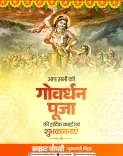
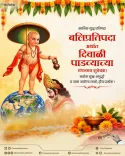
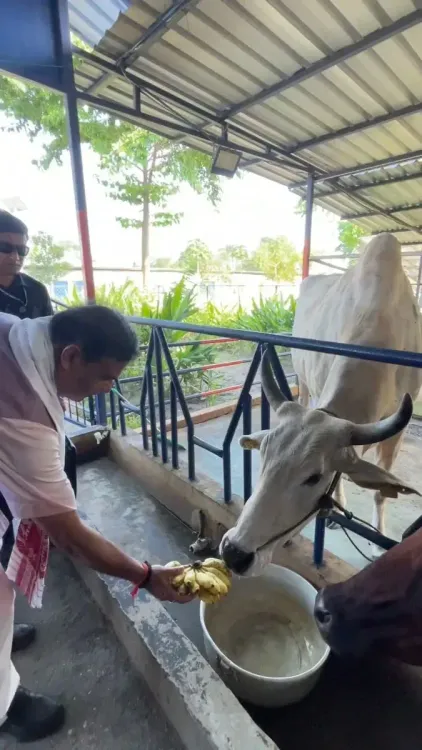
CM Himanta Biswa Sarma extends Govardhan Puja wishes
Synopsis
Assam Chief Minister Himanta Biswa Sarma marked Govardhan Puja on 10 November 2026 by invoking Lord Krishna's parable of nature-reverence, pledging continued protection of cattle and Sanatan cultural traditions, and connecting the festival to rural livelihoods and environmental stewardship.
Key Takeaways
Assam CM Himanta Biswa Sarma posted Govardhan Puja greetings on 10 November 2026 .
He described the festival as a symbol of gratitude in Sanatan culture toward nature, cattle, and agricultural traditions.
He invoked Lord Krishna's Govardhan hill episode as a timeless lesson in environmental and cattle protection.
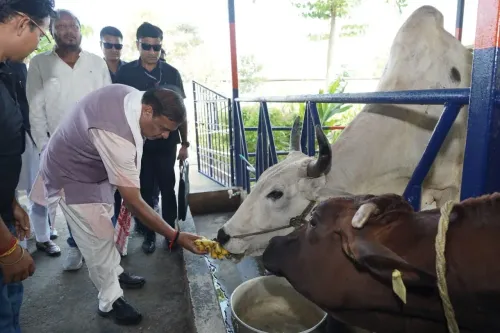
Sarma framed cow welfare as both a religious and cultural commitment , not merely a matter of faith.
The messaging aligns with a broader BJP pattern of linking Hindu festivals to governance themes of conservation and rural economy.
On the morning of Govardhan Puja 2026, Assam Chief Minister Himanta Biswa Sarma invoked Lord Krishna's ancient lesson — that the earth, its cattle, and its farmers deserve reverence — to renew a public pledge of cow protection and environmental stewardship.
Posting in Hindi on Tuesday, 10 November, Sarma wrote: 'Govardhan Puja is a symbol of gratitude in Sanatan culture toward nature, the environment, cattle, and our agricultural traditions. Lord Krishna, by giving the message of worshipping Govardhan hill, taught us the importance of protecting nature and the cow.' He closed with the salutations Jai Shri Krishna and Jai Gomata.
The festival and its deeper resonance
Govardhan Puja falls the day after Diwali and commemorates the moment in Hindu scripture when Lord Krishna urged the people of Vrindavan to worship the Govardhan hill — the source of their pasture and livelihood — rather than seek favors from Indra, the rain god. The story has long been read as a parable of ecological self-reliance: tend what sustains you, and it will sustain you in return.
Sarma leaned into that reading explicitly, linking the festival's symbolism to rural livelihoods, cattle welfare, and 'Sanatan culture' — a phrase the BJP uses to describe the living continuum of Hindu civilisational practice.
Cow protection as governance messaging
BJP leaders across multiple states routinely connect Hindu festival occasions to policy themes such as environmental conservation, cow protection, and the rural economy. For Sarma, who leads a state with significant agricultural and livestock communities, the message carries a dual register: cultural affirmation and a signal of administrative intent toward livestock welfare.
The Chief Minister stated that the service and protection of Gaumata (the cow, revered as a mother figure) is 'not merely religious faith, but a resolve to preserve our cultural heritage' — framing animal welfare as inseparable from cultural identity.
Point of View
The framing sidesteps controversy while reinforcing the party's 'Sanatan culture' plank ahead of ongoing rural outreach cycles. For Assam specifically, where cattle-rearing communities are a significant electoral constituency, such statements serve as low-cost but high-visibility affirmations of ideological alignment. The gesture is ceremonial in form but deliberately substantive in signal.
NationPress
10 Nov 2026
Frequently Asked Questions
What is Govardhan Puja and why is it celebrated?
Govardhan Puja is a Hindu festival observed the day after Diwali, commemorating Lord Krishna's act of lifting the Govardhan hill to protect villagers from Indra's floods. It celebrates gratitude toward nature, cattle, and agricultural traditions.
What did Assam CM Himanta Biswa Sarma say on Govardhan Puja 2026?
CM Sarma extended greetings and stated that Govardhan Puja symbolises gratitude in Sanatan culture toward nature, the environment, cattle, and farming traditions. He pledged continued protection of cows and called on people to conserve Sanatan traditions.
What is the significance of cow protection in BJP's political messaging?
BJP leaders across states frequently connect Hindu festivals to cow protection and rural economy themes, framing cattle welfare as both a cultural and governance priority. It appeals to Hindu-majority voter bases and aligns with the party's Sanatan culture emphasis.
What does 'Sanatan Sanskriti' mean in this context?
'Sanatan Sanskriti' translates as 'eternal culture' and refers to the living traditions of Hinduism. BJP leaders use the term to describe a broad civilisational framework encompassing religion, ecology, and social customs.
What is Himanta Biswa Sarma's role beyond being Assam CM?
Himanta Biswa Sarma is the Chief Minister of Assam and a senior BJP leader. He also serves as the convenor of the North-East Democratic Alliance (NEDA), which coordinates BJP-aligned governance across northeastern Indian states.