CM Himanta visits Maa Mansa Temple, invokes Sanatan unity
Synopsis
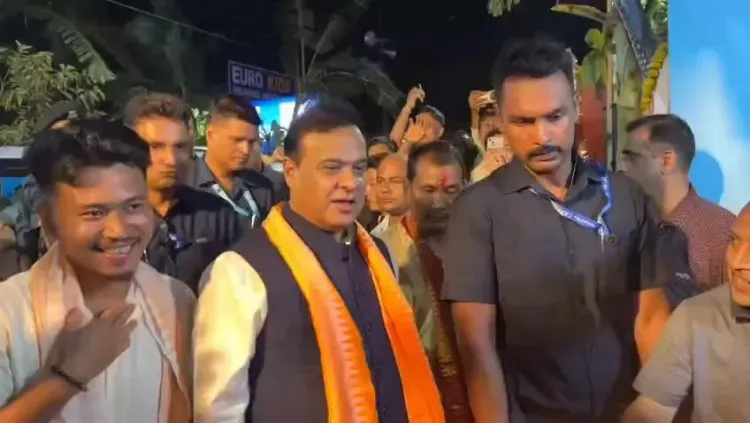
Assam Chief Minister Himanta Biswa Sarma visited the Shri Shri Maa Mansa Temple in Guwahati on 23 May 2026, seeking the goddess's blessings and declaring that every sect of Sanatan civilisation is respected in Assam — a gesture combining personal devotion with cultural outreach.
Key Takeaways
CM Himanta Biswa Sarma visited the Shri Shri Maa Mansa Temple in Guwahati on 23 May 2026 .
He sought the goddess's blessings and prayed for the welfare and prosperity of all citizens.
He publicly stated that every sect and tradition of Sanatan civilisation is respected in Assam .
The visit aligns with the BJP -led Assam government's consistent cultural and religious outreach since 2021 .
CM Sarma also convenes the North-East Democratic Alliance (NEDA) , making such cultural messaging relevant across the wider Northeast region.
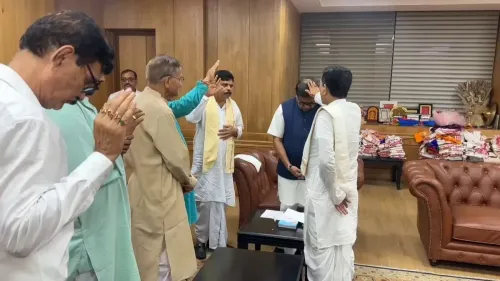
Assam Chief Minister Himanta Biswa Sarma visited the Shri Shri Maa Mansa Temple in Guwahati on Saturday, 23 May 2026, seeking the goddess's blessings and offering prayers for the welfare and prosperity of all. The visit was accompanied by a public affirmation that every sect and tradition within Sanatan civilisation is respected in Assam.
Context
In his post, CM Sarma wrote in Hindi: 'असम में सनातन सभ्यता के हर मत और पंथ का सम्मान किया जाता है' — 'Every sect and tradition of Sanatan civilisation is respected in Assam.' He added that he had sought Maa Mansa's blessings at the Guwahati temple and prayed for the wellbeing and happiness of all. The statement frames the temple visit not merely as a personal act of devotion but as a broader cultural and civic message.
Policy Backdrop
Since Himanta Biswa Sarma assumed office as Chief Minister in 2021, his administration has consistently foregrounded Assam's cultural and religious heritage in public outreach. The BJP-led government in the state has made temple visits, cultural affirmations, and promotion of indigenous traditions a visible strand of governance. This pattern is part of a wider approach by BJP-led administrations across the Northeast, where cultural messaging is paired with efforts to maintain regional harmony in a diverse, multi-faith landscape.
The Shri Shri Maa Mansa Temple in Guwahati is dedicated to Goddess Mansa, a deity associated with serpents and widely venerated across eastern India, particularly in Bengal and Assam. The temple draws devotees from across the region and holds significance in the local religious calendar.
Stakeholders and Impact
The visit and accompanying statement are directed at Assam's large Hindu devotee population as well as the broader electorate. By explicitly invoking 'every sect and tradition' within Sanatan civilisation, CM Sarma signals an inclusive framing — one that seeks to encompass diverse schools of Hindu thought rather than a single strand. For residents of Guwahati and across the state, such public gestures by the Chief Minister carry both devotional and political resonance.
Cultural and religious outreach of this kind also reinforces CM Sarma's role as a prominent voice of the North-East Democratic Alliance (NEDA), the BJP-led coalition he convenes, where cultural solidarity functions as a unifying theme across the region's varied communities.
What's Next
Similar statements and temple visits by CM Sarma have historically clustered around major festivals and state-level cultural programmes in Assam. Public messaging of this nature is likely to continue as the administration maintains its emphasis on cultural heritage as a pillar of governance. Observers will watch whether the Sanatan-unity framing evolves into specific policy announcements — such as heritage conservation initiatives or support for temple trusts — in the weeks ahead.
Point of View
Where religious outreach serves as both personal expression and political communication. By invoking 'every sect and tradition' of Sanatan civilisation, CM Sarma positions himself as an inclusive custodian of Hindu plurality rather than a sectarian voice — a framing that broadens his appeal across Assam's diverse communities. This approach also reinforces his authority within NEDA, where cultural solidarity underpins the coalition's regional identity. The consistency of such gestures suggests they function as a durable governance strategy, not merely episodic campaigning.
NationPress
6 Oct 2026
Frequently Asked Questions
Which temple did Assam CM Himanta Biswa Sarma visit in Guwahati?
CM Himanta Biswa Sarma visited the Shri Shri Maa Mansa Temple in Guwahati on 23 May 2026, seeking the goddess's blessings and praying for public welfare.
What did CM Himanta Biswa Sarma say about Sanatan civilisation in Assam?
He stated that every sect and tradition of Sanatan civilisation is respected in Assam, framing the visit as a reaffirmation of the state's inclusive cultural ethos.
Who is Maa Mansa and why is the Guwahati temple significant?
Maa Mansa is a goddess associated with serpents, widely venerated across eastern India including Assam and Bengal. The Shri Shri Maa Mansa Temple in Guwahati is a prominent regional shrine that draws devotees from across the state.
Why does Himanta Biswa Sarma frequently make temple visits and cultural statements?
Since becoming Chief Minister in 2021, CM Sarma has made cultural and religious outreach a visible part of his administration's public communication, consistent with the BJP-led government's emphasis on Assam's heritage and Sanatan traditions.
What is NEDA and what is Himanta Biswa Sarma's role in it?
The North-East Democratic Alliance (NEDA) is a BJP-led political coalition spanning northeastern states. CM Himanta Biswa Sarma serves as its convenor, giving his cultural messaging a regional dimension beyond Assam alone.