Jaishankar Extends $500 mn Credit Line to Guyana, Signs Digital Deal
Synopsis
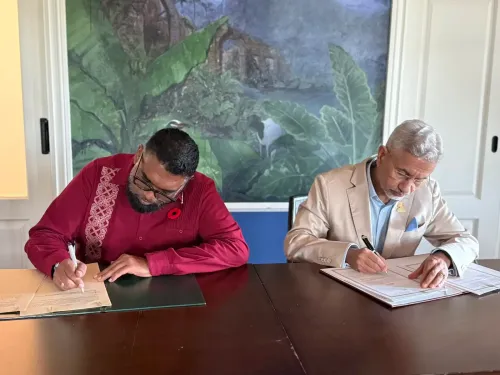
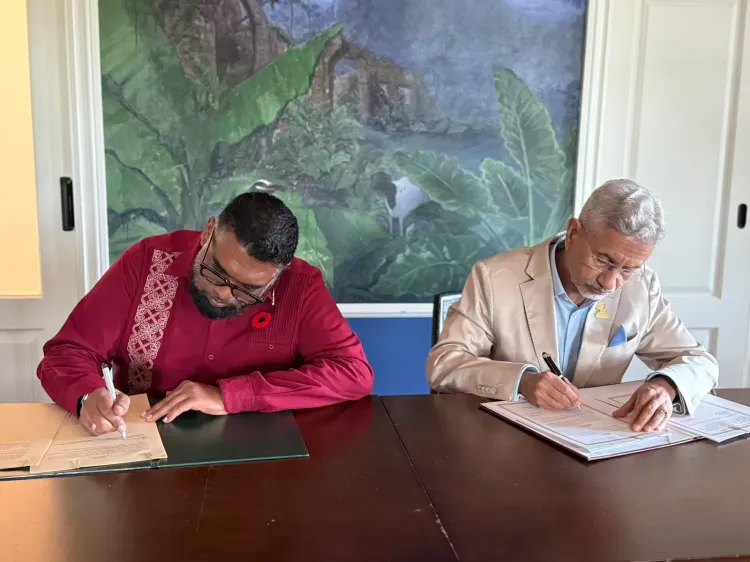
EAM Dr. S. Jaishankar met Guyana President Dr. Irfaan Ali on November 5, 2026, announcing a USD 500 mn Line of Credit for roads, health and defence, and signing agreements on digital public infrastructure including a UPI-like payment system — building on PM Modi's landmark 2024 Guyana visit.
Key Takeaways
Jaishankar met President Dr.
Irfaan Ali of Guyana on November 5, 2026 .
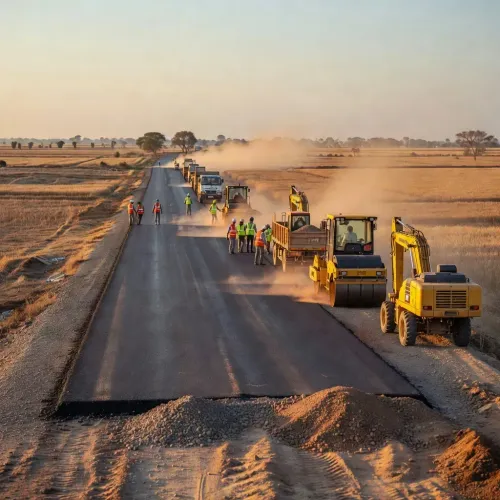
India announced the extension of a USD 500 million Line of Credit for roads, health and defence projects in Guyana.
Three agreements were signed: on MSE manufacturing projects, grant assistance for Quick Impact Projects, and cooperation in Digital Public Infrastructure.
The digital agreement includes the functioning of a UPI-like payment system in Guyana — a significant export of India's fintech standards.
Both sides reviewed progress since PM Narendra Modi's visit to Guyana in 2024 , which served as the launchpad for the current phase of cooperation.
The engagement reflects India's broader strategy of combining concessional finance, technology exports and diaspora diplomacy across the Global South.
A USD 500 million Line of Credit, a UPI-like digital payments framework, and a clutch of infrastructure agreements — Union External Affairs Minister Dr. S. Jaishankar landed in Guyana on Thursday, November 5, 2026, and left no room for ambiguity about where India's South-South ambitions are heading.
What Jaishankar and President Ali Agreed On
Meeting with President Dr. Irfaan Ali, Jaishankar announced the extension of a USD 500 million Line of Credit earmarked for roads, health and defence projects in Guyana — the single largest financial instrument on the table. Three formal agreements were also signed: one on the supply and installation of MSEs (Manufacturing Support Equipment) manufacturing projects, a second providing grant assistance for Quick Impact Projects, and a third on cooperation in Digital Public Infrastructure, including the functioning of a UPI-like payment system in Guyana. That last agreement is the headline-grabber. India's Unified Payments Interface has become one of its most exportable technology standards, and planting it in a CARICOM economy signals clear strategic intent.
Modi's 2024 Visit as the Launchpad
Both sides reviewed what Jaishankar called 'steady progress in our bilateral cooperation, especially after PM @narendramodi's visit in 2024.' That visit — the first by an Indian Prime Minister to Guyana in decades — set the political temperature for deeper engagement. The agreements signed today are, in effect, the operational follow-through. India has used Lines of Credit as a primary instrument for development partnerships with Caribbean nations since the early 2000s, covering infrastructure and capacity-building. The new USD 500 mn facility extends that tradition significantly in both scale and scope.
Why Guyana, and Why Now
Guyana is not a random stop. The country has emerged as one of the fastest-growing oil producers on the planet since major offshore discoveries transformed its economic outlook. It hosts a large and historically connected Indian-origin diaspora, giving bilateral ties a cultural ballast that few partnerships in the region can match. For India, the combination of a resource-rich, diaspora-linked, diplomatically receptive country offers a rare opportunity to export infrastructure finance, defence cooperation, and digital public goods simultaneously — establishing Indian standards before others do.
The Quick Impact Projects grant signals that India is not waiting for the slow burn of large credit-financed infrastructure. Small, visible, fast-disbursing projects build goodwill on the ground. The MSE manufacturing agreements, meanwhile, bring Indian project exporters into the picture — turning diplomacy into direct economic opportunity at home.
The Bigger Picture: India's Caribbean Push
This engagement sits inside a consistent and accelerating pattern. India has been systematically deepening ties with smaller economies across the Global South — combining concessional finance with technology exports and diaspora diplomacy. The digital public infrastructure agreement in particular reflects a deliberate play: position India's homegrown systems, from UPI to identity infrastructure, as the architecture of choice for emerging markets before Western or Chinese alternatives lock in.
The next test is delivery. Rollout timelines for the USD 500 mn credit line and the technical handshake required to operationalise a UPI-equivalent in Georgetown will determine whether today's signatures translate into lasting strategic depth — or remain another promising framework waiting for momentum.
Point of View
New Delhi is simultaneously building hard infrastructure and embedding its own technology standards in an economy that is rapidly gaining strategic weight as an oil producer. The Quick Impact Projects grant adds a smart layer of people-level visibility that large infrastructure loans rarely deliver quickly. Taken together with PM Modi's 2024 Guyana visit, this visit signals that India is treating the Caribbean not as a peripheral courtesy stop but as a consistent, compounding investment — one that rivals both Western donors and Chinese infrastructure lenders for influence in a diaspora-rich, resource-endowed region.
NationPress
5 Nov 2026
Frequently Asked Questions
What is the USD 500 million Line of Credit India announced for Guyana?
India announced the extension of a USD 500 million Line of Credit to Guyana during EAM Jaishankar's meeting with President Ali on November 5, 2026. The concessional financing is designated for roads, health and defence projects, continuing India's long-standing use of Lines of Credit as a development partnership tool with Caribbean nations.
What is the UPI-like system India agreed to set up in Guyana?
India and Guyana signed an agreement on cooperation in Digital Public Infrastructure that includes the functioning of a UPI-like payment system in Guyana. This mirrors India's Unified Payments Interface model and is part of India's broader effort to export its digital public goods architecture to partner countries.
What are Quick Impact Projects in India's foreign assistance?
Quick Impact Projects are small, fast-disbursing grant-funded initiatives India supports in partner countries to deliver visible, ground-level benefits quickly. Unlike large credit-financed infrastructure, they are designed to build immediate goodwill and address community-level needs in a short timeframe.
What was the significance of PM Modi's 2024 visit to Guyana?
PM Modi's 2024 visit to Guyana was a landmark moment in India-Guyana relations, described by both sides as a launchpad for deeper bilateral cooperation. Jaishankar's November 2026 visit and the agreements signed are a direct follow-through on the political momentum that visit generated, though specific outcomes from 2024 remain subject to official confirmation.
Why is India deepening ties with Guyana?
Guyana is strategically important to India for several reasons: it has emerged as a fast-growing oil producer, it hosts a large Indian-origin diaspora with deep historical ties, and it is a member of CARICOM with growing regional influence. India sees Guyana as an opportunity to export infrastructure finance, digital standards and development cooperation while strengthening its presence in the Global South.