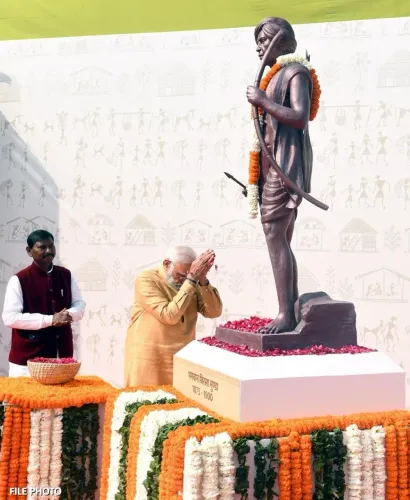
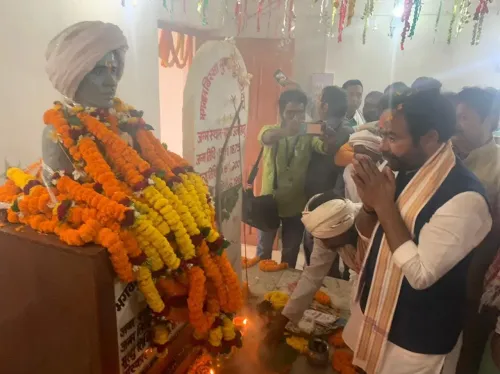
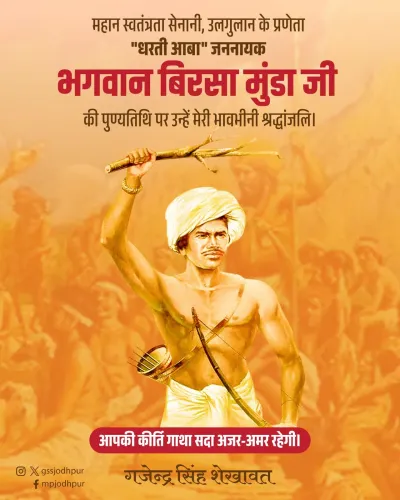
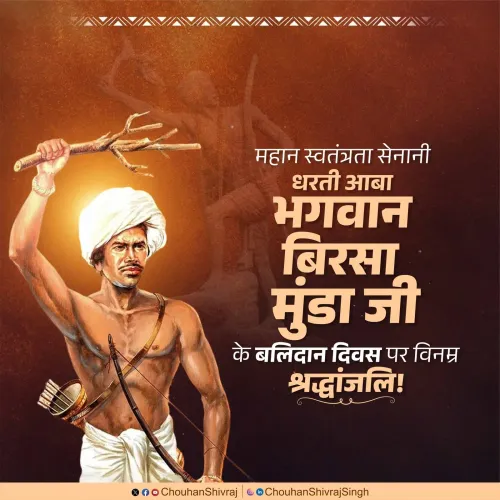
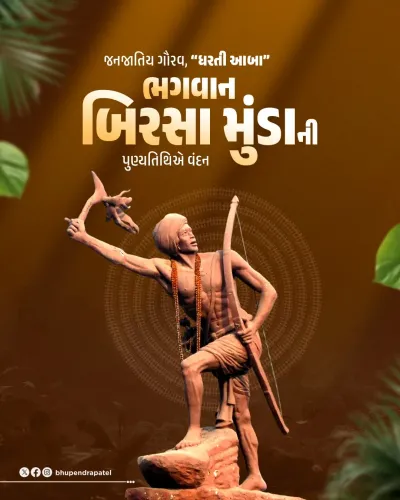
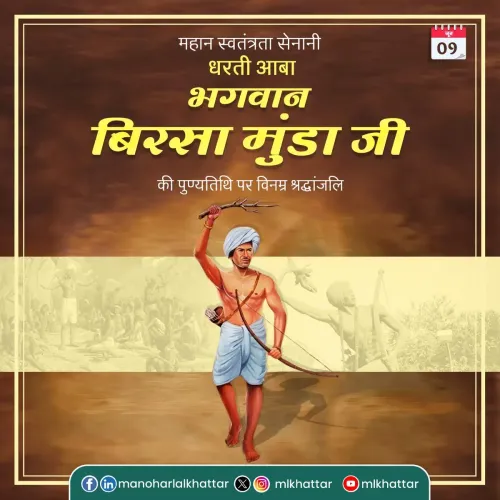
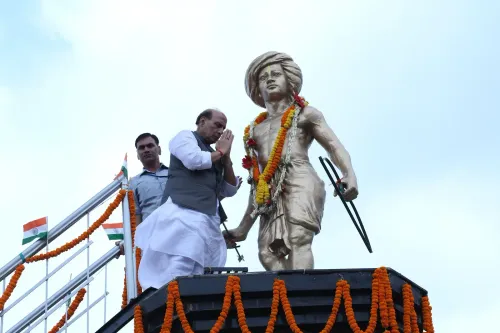
Kejriwal pays tribute to Birsa Munda on death anniversary

Synopsis
AAP convenor Arvind Kejriwal on 9 June 2026 honoured Bhagwan Birsa Munda on his death anniversary, saluting the 19th-century Adivasi leader's Ulgulan rebellion and his enduring legacy in the fight for tribal rights over water, forests and land.
Key Takeaways
AAP convenor Arvind Kejriwal posted a tribute to Bhagwan Birsa Munda on 9 June 2026 , the 126th anniversary of his death.
Birsa Munda, known as 'Dharti Aaba' (Father of the Earth), led the Ulgulan — a mass tribal uprising against British colonial rule in the late 1890s .
The tribute highlighted Birsa Munda's lifelong dedication to protecting jal, jungle aur zameen (water, forests and land) for tribal communities.
Birsa Munda died on 9 June 1900 in British custody at Ranchi Jail , at approximately 25 years of age.
His demands for tribal resource rights were partially enshrined in the Forest Rights Act, 2006 , over a century after the Ulgulan.
Annual tributes to Birsa Munda carry political significance given the demographic weight of Scheduled Tribe voters in Jharkhand and other tribal belts.
AAP convenor Arvind Kejriwal on Tuesday, 9 June 2026 paid homage to Bhagwan Birsa Munda on his death anniversary, honouring the 19th-century Adivasi leader as an enduring source of inspiration in the struggle for tribal rights over land, forests and water.
Context
Kejriwal's post, written in Hindi, offered 'koti-koti naman' (countless salutations) to Birsa Munda, describing him as the voice of 'Ulgulan' — the great rebellion — raised against oppressive British rule and exploiters. He referred to Birsa Munda by his revered title 'Dharti Aaba' (Father of the Earth), a name bestowed by tribal communities of the Chhotanagpur region.
The post stated that Birsa Munda's life and thought, dedicated to protecting 'jal, jungle aur zameen' (water, forests and land), remain 'a great source of inspiration for all of us' even today.
Policy Backdrop
Bhagwan Birsa Munda, born in present-day Jharkhand, led the Ulgulan movement in the late 1890s — a mass uprising demanding an end to British administration and the dominance of moneylenders and landlords over tribal communities in the Chhotanagpur plateau. He died on 9 June 1900 in British custody at Ranchi Jail, aged approximately 25.
The demands Birsa Munda championed — tribal control over forests, water bodies and ancestral land — were partially codified more than a century later through the Scheduled Tribes and Other Traditional Forest Dwellers (Recognition of Forest Rights) Act, 2006, which granted statutory community rights over these resources.
Stakeholders and Impact
Tributes to Birsa Munda on 9 June have become an annual political ritual across party lines, reflecting the electoral and moral weight that Adivasi communities carry, particularly in Jharkhand, where Scheduled Tribe voters significantly influence both assembly and Lok Sabha outcomes. AAP, though not a principal political force in Jharkhand, has been expanding its national outreach to tribal constituencies.
For Adivasi communities, the jal-jungle-zameen framework articulated during the Ulgulan continues to anchor contemporary debates over mining leases, forest clearances and displacement in mineral-rich tribal belts.
What's Next
Attention will remain on central and state government notifications regarding implementation of the Forest Rights Act, as well as any forthcoming policy announcements targeting Scheduled Tribe welfare ahead of electoral cycles. The annual commemoration also typically renews calls from tribal rights groups for stronger enforcement of existing land and forest protections.
Point of View
Signalling solidarity with tribal communities whose votes carry decisive weight in Jharkhand and adjoining mineral-belt constituencies. For AAP, which lacks a strong organisational footprint in tribal states, such messaging serves as low-cost national positioning on a politically resonant issue. The invocation of 'jal, jungle aur zameen' also connects to live policy disputes over Forest Rights Act implementation, mining clearances and displacement — issues that remain flashpoints for Adivasi mobilisation. Whether such tributes translate into concrete policy commitments will be the metric by which tribal rights groups judge the sincerity of the gesture.
NationPress
20 Sept 2026
Frequently Asked Questions
Who was Bhagwan Birsa Munda?
Bhagwan Birsa Munda was a 19th-century Adivasi leader from present-day Jharkhand who led the Ulgulan movement against British colonial rule and landlord exploitation, fighting for tribal control over land, forests and water. He is revered by the title 'Dharti Aaba', meaning Father of the Earth.
What was the Ulgulan movement?
The Ulgulan, meaning 'great rebellion', was a mass uprising launched by Birsa Munda in the late 1890s in the Chhotanagpur region, demanding an end to British administration and the dominance of moneylenders and landlords over tribal communities.
When did Birsa Munda die?
Birsa Munda died on 9 June 1900 in British custody at Ranchi Jail, at approximately 25 years of age, making 9 June his widely observed death anniversary.
Why do political leaders pay tribute to Birsa Munda every year?
Annual tributes to Birsa Munda signal solidarity with Adivasi communities and their ongoing demands for resource rights. It also carries electoral significance, particularly in Jharkhand and other tribal-majority constituencies where Scheduled Tribe voters influence political outcomes.
What is the Forest Rights Act and how does it relate to Birsa Munda?
The Scheduled Tribes and Other Traditional Forest Dwellers (Recognition of Forest Rights) Act, 2006 granted statutory community rights over forests, water and land — the very demands that Birsa Munda championed during the Ulgulan more than a century earlier.