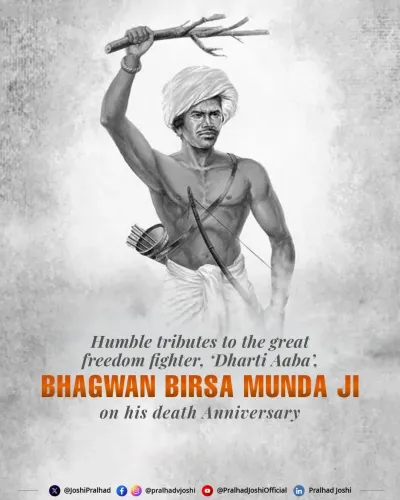
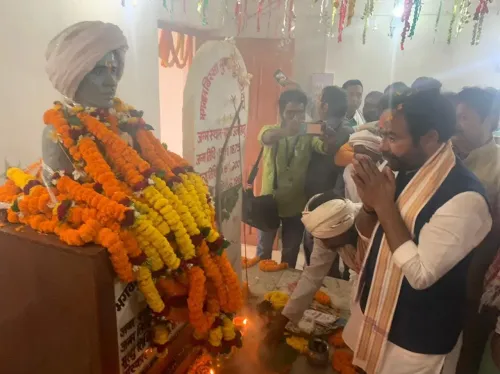
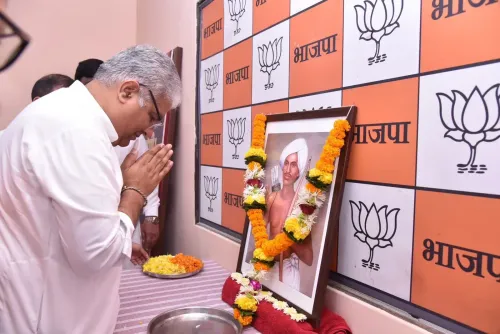
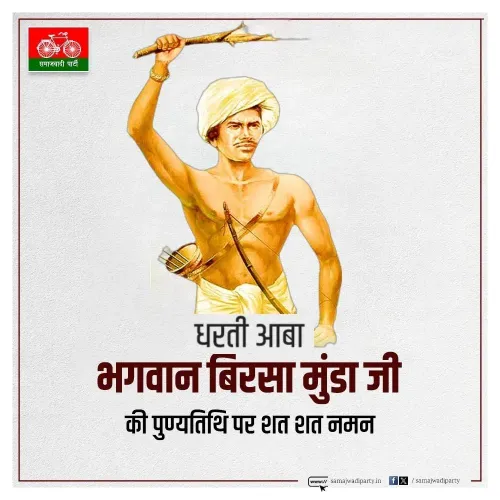
Sonowal Pays Tribute to Birsa Munda on Death Anniversary
Synopsis
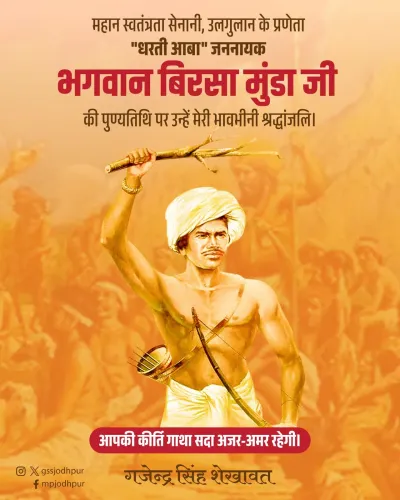
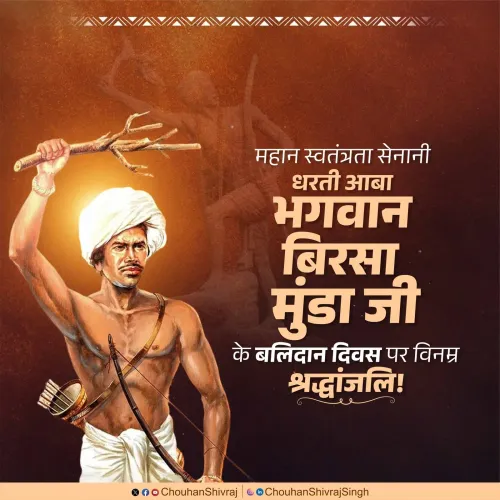
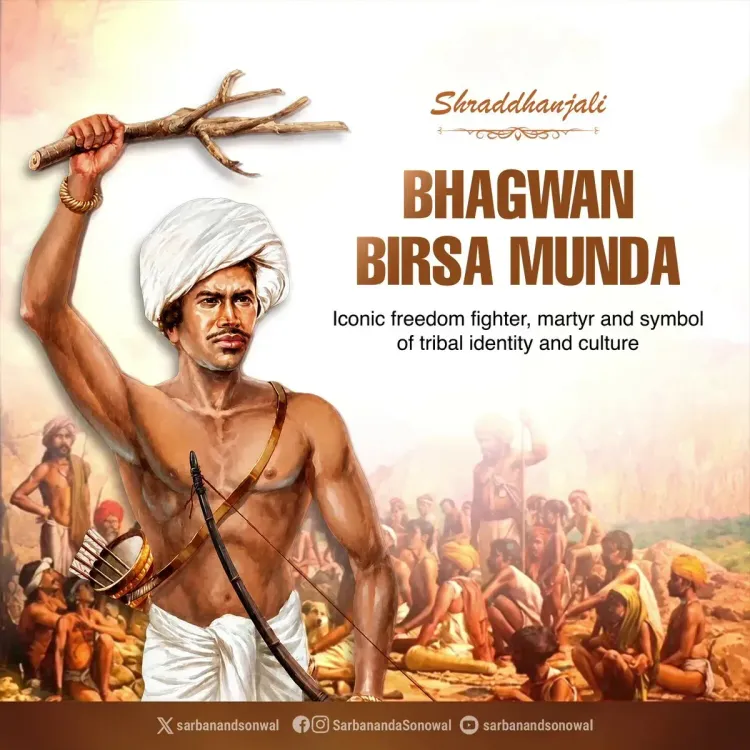
Union Minister Sarbananda Sonowal paid tribute to Bhagwan Birsa Munda on his death anniversary, calling him a revolutionary whose courage gave new energy to India's freedom struggle. Birsa Munda, who led the Ulgulan rebellion in the 1890s, is honoured annually by the BJP government through Janjatiya Gaurav Diwas on 15 November.
Key Takeaways
Sarbananda Sonowal , Union Minister of Ports, Shipping and Waterways, paid tribute to Bhagwan Birsa Munda on his death anniversary on 9 June 2026 .
Birsa Munda led the Ulgulan rebellion against British colonial rule in the 1890s , championing tribal land rights and cultural revival in present-day Jharkhand .
He died on 9 June 1900 in Ranchi Jail at the age of 25 and is revered as Dharti Aaba by tribal communities.
The Union Government declared 15 November as Janjatiya Gaurav Diwas in 2021 to honour Birsa Munda's birth anniversary and tribal contributions to the freedom movement.
Sonowal's tribute reflects the BJP's sustained effort to integrate Adivasi histories into the national freedom narrative, particularly in states with large Scheduled Tribe populations.
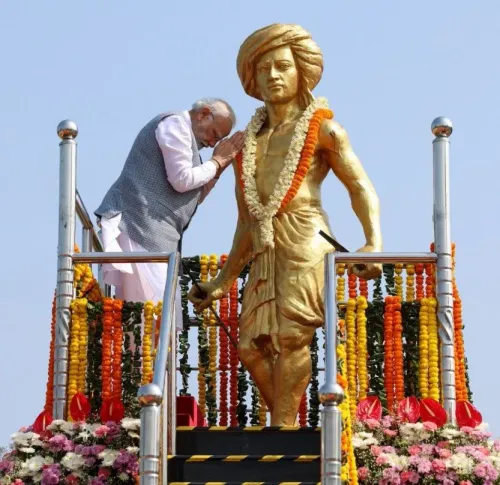
Union Minister of Ports, Shipping and Waterways Sarbananda Sonowal paid tribute to tribal freedom fighter Bhagwan Birsa Munda on his death anniversary on Tuesday, June 9, 2026, honouring the revolutionary leader's role in India's independence movement.
Context
Bhagwan Birsa Munda was a Munda tribal leader from present-day Jharkhand who led the Ulgulan (Great Tumult) rebellion against British colonial rule in the 1890s. His movement championed tribal land rights, cultural revival, and resistance to forced conversions and colonial exploitation. He died on 9 June 1900 in Ranchi Jail, aged just 25, and is venerated as Dharti Aaba — 'Father of the Earth' — by tribal communities across central and eastern India.
Sonowal wrote: 'His indomitable courage and fight for tribal pride and empowerment gave new energy to the freedom struggle. India remains eternally grateful for his supreme sacrifice.'
Policy Backdrop
The BJP-led Union Government declared 15 November — Birsa Munda's birth anniversary — as Janjatiya Gaurav Diwas in 2021, formally recognising tribal contributions to India's freedom struggle. The move was part of a broader effort to integrate Adivasi histories into the mainstream national narrative.
Tributes to 19th-century tribal figures have become a consistent feature of BJP leaders' public communication, particularly around key dates in the Adivasi calendar. Such messaging carries political resonance in states with large Scheduled Tribe populations, including Jharkhand, Odisha, and parts of the Northeast — regions where Sonowal's own party has invested heavily in electoral outreach.
Stakeholders and Impact
Birsa Munda's legacy holds deep significance for Adivasi and tribal communities across India, estimated at over 10 crore people belonging to Scheduled Tribes. His death anniversary serves as a moment of collective remembrance for these communities, particularly in Jharkhand, Chhattisgarh, West Bengal, and Odisha.
Sonowal, himself from Assam — a state with a significant tribal and indigenous population — has historically aligned his public identity with Adivasi welfare themes. His post, tagged #BirsaMunda, joins a chorus of tributes from across the political spectrum on this date each year.
What's Next
Commemorative observances around Birsa Munda are expected to intensify closer to Janjatiya Gaurav Diwas on 15 November, when the government typically organises events highlighting tribal welfare schemes and cultural heritage. Parliamentary and state-level discussions on tribal land rights, forest rights, and welfare measures remain areas to watch in the months ahead.
The annual rhythm of such tributes underscores how Birsa Munda's memory has become a touchstone in India's political discourse around Adivasi identity, rights, and recognition — a conversation that shows no sign of fading.
Point of View
Sustained pattern by the BJP-led government to foreground Adivasi icons in the national freedom narrative — a strategy that carries both cultural and electoral weight in tribal-majority regions. The institutionalisation of Janjatiya Gaurav Diwas in 2021 gave this outreach a formal calendar anchor, transforming individual tributes into a year-round political posture. For a leader like Sonowal, who represents Assam with its own complex tribal landscape, such messaging reinforces personal credibility alongside party alignment. The broader implication is that Birsa Munda's legacy has moved from the margins of official history to its centre — a shift that reflects both genuine historical correction and calculated political positioning.
NationPress
23 Oct 2026
Frequently Asked Questions
Who was Bhagwan Birsa Munda and why is he remembered?
Bhagwan Birsa Munda was a Munda tribal leader from present-day Jharkhand who led the Ulgulan rebellion against British colonial rule in the 1890s. He is remembered for championing tribal land rights, cultural revival, and resistance to colonial exploitation, and is revered as Dharti Aaba — 'Father of the Earth' — by Adivasi communities.
When did Birsa Munda die?
Birsa Munda died on 9 June 1900 in Ranchi Jail at the age of 25, during British colonial rule in India.
What is Janjatiya Gaurav Diwas?
Janjatiya Gaurav Diwas is observed on 15 November, Birsa Munda's birth anniversary. The Union Government declared this day in 2021 to formally recognise the contributions of tribal communities to India's freedom struggle.
Why did Sarbananda Sonowal pay tribute to Birsa Munda?
Sonowal paid tribute on Birsa Munda's death anniversary, 9 June, calling him a revolutionary whose courage gave new energy to India's freedom struggle. Such tributes are a regular part of the BJP government's outreach to Adivasi and Scheduled Tribe communities.
What was the Ulgulan rebellion?
The Ulgulan, meaning 'Great Tumult,' was a tribal uprising led by Birsa Munda in the 1890s in the Chota Nagpur region of present-day Jharkhand. It was directed against British colonial land policies, missionary activity, and the exploitation of tribal communities by landlords.