Pralhad Joshi Pays Tribute to Birsa Munda on Death Anniversary
Synopsis
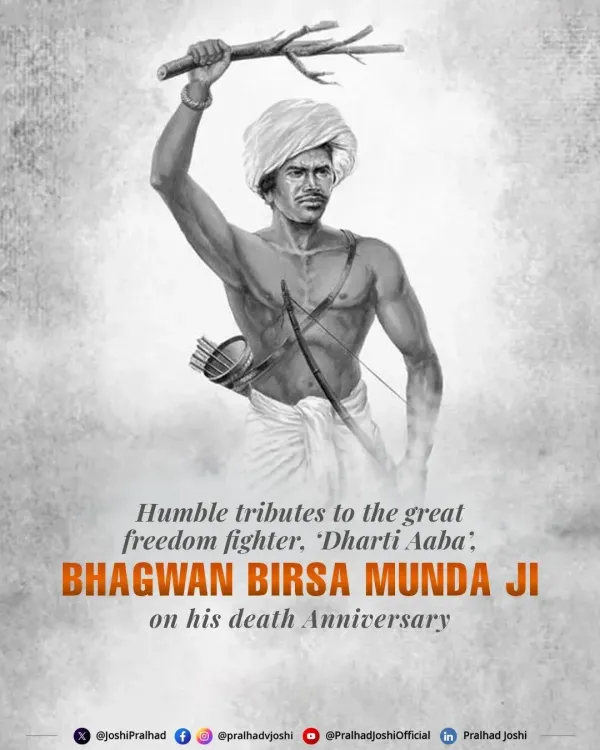
Union Consumer Affairs Minister Pralhad Joshi on 9 June 2026 paid tribute to Bhagwan Birsa Munda on the 126th death anniversary of the tribal freedom fighter, recalling his Ulgulan movement against British colonial rule and his fight for tribal rights and dignity.
Key Takeaways
Pralhad Joshi , Union Consumer Affairs Minister and senior BJP leader, paid tribute to Bhagwan Birsa Munda on 9 June 2026 , the 126th anniversary of the tribal leader's death.
Birsa Munda died on 9 June 1900 in Ranchi jail after leading the Ulgulan movement against British land policies in the Chota Nagpur region.
The Government of India instituted Janjatiya Gaurav Diwas in 2021 on 15 November — Munda's birth anniversary — to formally honour tribal contributions to India's freedom struggle.
Joshi described Munda's 'courage, sacrifice and unwavering commitment to justice' as a continuing inspiration for building 'a stronger and more inclusive Bharat.' India's Scheduled Tribe population of over 10 crore people across central and eastern India regards Birsa Munda as a foundational cultural and political symbol.
The next major government-level observance is expected on 15 November 2026 for Janjatiya Gaurav Diwas .
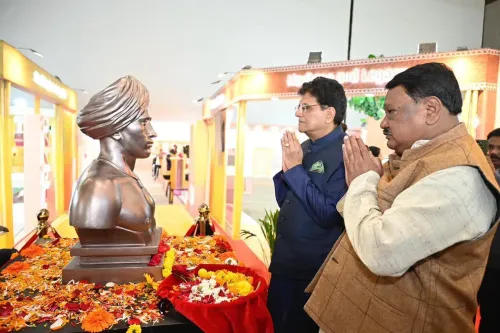
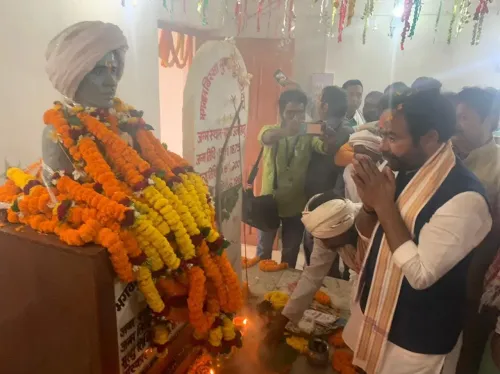
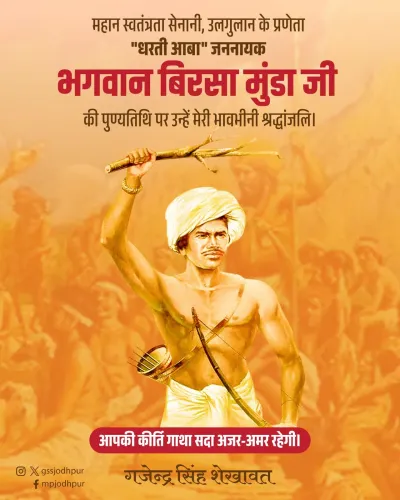
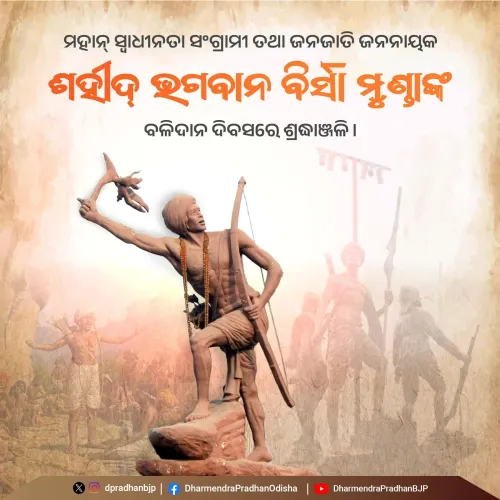
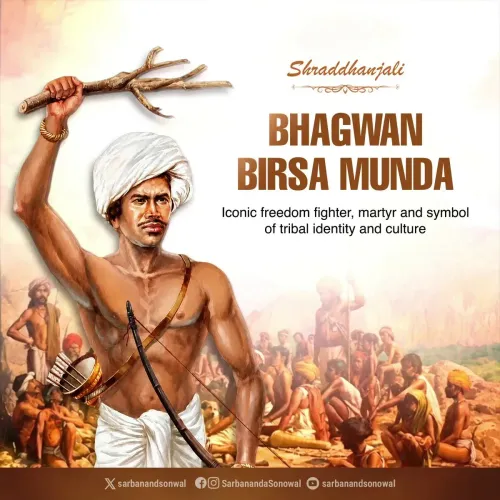
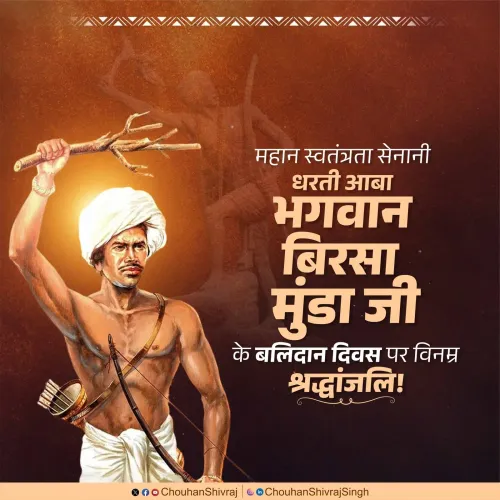
Union Consumer Affairs Minister Pralhad Joshi on Tuesday, 9 June 2026 paid tribute to tribal icon and freedom fighter Bhagwan Birsa Munda on his death anniversary, honouring the 19th-century leader's resistance against colonial rule and his lifelong fight for the rights and dignity of tribal communities.
Context
Birsa Munda died on 9 June 1900 in Ranchi jail, making this year the 126th death anniversary of the revered tribal leader. Born in the Chota Nagpur region, Munda led the Ulgulan — meaning 'the great tumult' — a mass movement against British land-grab policies and the displacement of tribal communities from their ancestral forests. His resistance made him a defining figure in India's pre-independence history and an enduring symbol of tribal self-assertion.
Minister Joshi wrote on X: 'His courage, sacrifice and unwavering commitment to justice continue to inspire generations in building a stronger and more inclusive Bharat.' The post carried the hashtag #BirsaMunda, amplifying the tribute across social media.
Policy Backdrop
The Government of India instituted Janjatiya Gaurav Diwas in 2021 to mark Birsa Munda's birth anniversary on 15 November, formally integrating the tribal icon into the national commemorative calendar. The initiative underscored a broader governmental effort to highlight the contributions of Scheduled Tribe communities to India's freedom struggle.
Successive central governments have used commemorative days, dedicated museums, and curriculum revisions to embed tribal icons more prominently in the national narrative. This symbolic architecture has run alongside legislative and administrative measures — including forest-rights legislation and the work of the Ministry of Tribal Affairs — aimed at addressing land, livelihood, and identity concerns of tribal populations.
Stakeholders and Impact
India's Scheduled Tribe population, estimated at over 10 crore people spread across states including Jharkhand, Chhattisgarh, Odisha, Madhya Pradesh, and the northeastern states, holds Birsa Munda as a central cultural and political reference point. Tributes from senior ministers on his death anniversary carry both symbolic weight and political resonance in regions with significant tribal electorates.
For the ruling BJP, commemorating Birsa Munda aligns with a stated agenda of mainstreaming tribal heritage while reinforcing outreach to communities that have historically been at the margins of formal political power. The Janjatiya Gaurav Diwas framework is the most visible institutional expression of this approach.
What's Next
The 15 November 2026 observance of Janjatiya Gaurav Diwas — Birsa Munda's birth anniversary — is expected to be the next major occasion for government-level commemorations, potentially accompanied by announcements on tribal welfare schemes or institutions bearing his name. Annual observances have increasingly become platforms for policy signalling on forest rights, tribal education, and livelihood programmes, making them significant markers on the political calendar for communities across central and eastern India.
Point of View
Chhattisgarh, and Odisha. The institutionalisation of Janjatiya Gaurav Diwas in 2021 gave these annual gestures a formal policy scaffold, elevating them beyond routine ceremonial messaging. By invoking Munda's legacy of resisting colonial oppression and fighting for tribal identity, the tribute also implicitly frames the current government as a continuation of that protective impulse. The cumulative effect is a sustained symbolic politics that seeks to position tribal heritage as central to the BJP's vision of an 'inclusive Bharat.'
NationPress
29 Jul 2026
Frequently Asked Questions
Who was Bhagwan Birsa Munda and why is he remembered?
Bhagwan Birsa Munda was a 19th-century tribal leader from the Chota Nagpur region who led the Ulgulan movement against British land-grab policies. He is remembered as a symbol of tribal resistance, dignity, and the fight for forest and land rights. He died in Ranchi jail on 9 June 1900.
When did Birsa Munda die and what is his death anniversary date?
Birsa Munda died on 9 June 1900 in Ranchi jail. His death anniversary falls on 9 June each year; 2026 marks the 126th anniversary of his passing.
What is Janjatiya Gaurav Diwas and when is it observed?
Janjatiya Gaurav Diwas is a national commemorative day instituted by the Government of India in 2021 to honour tribal contributions to the freedom struggle. It is observed on 15 November, Birsa Munda's birth anniversary.
Why did Pralhad Joshi post a tribute to Birsa Munda?
Pralhad Joshi, Union Consumer Affairs Minister and senior BJP leader, posted the tribute on 9 June 2026 to mark the death anniversary of Birsa Munda, honouring the tribal icon's resistance against colonial oppression and his legacy of fighting for tribal rights and identity.
What was the Ulgulan movement led by Birsa Munda?
The Ulgulan, meaning 'the great tumult,' was a mass uprising led by Birsa Munda in the late 19th century against British colonial land policies that displaced tribal communities in the Chota Nagpur region. It became one of the most significant tribal rebellions in Indian history.