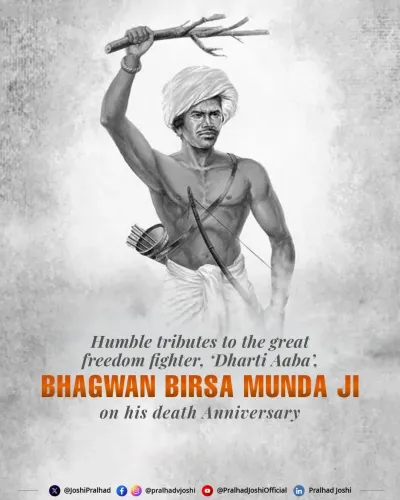
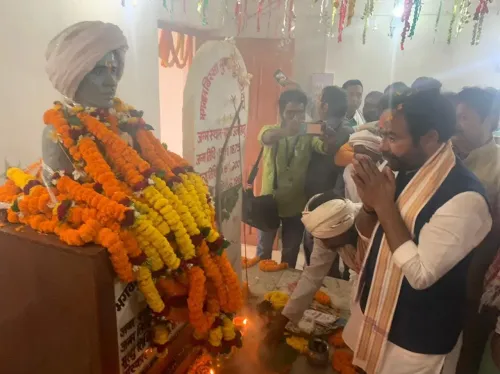
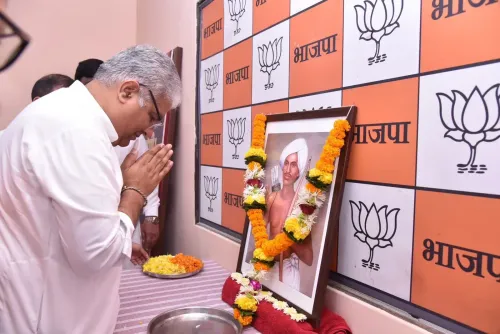
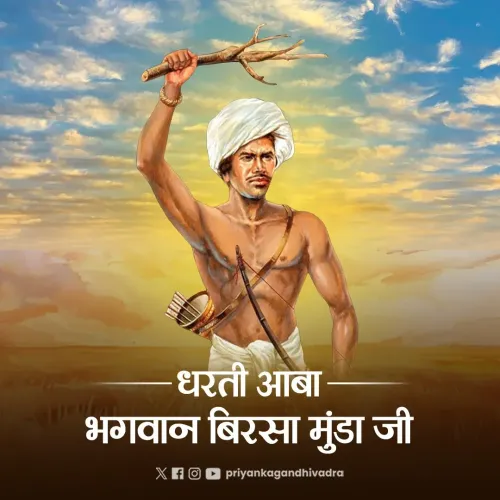
Piyush Goyal pays tribute to Birsa Munda on martyrdom anniversary
Synopsis
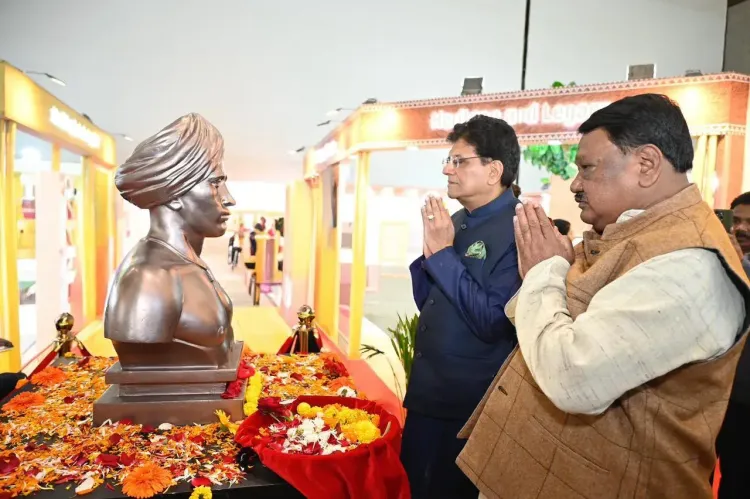
Union Commerce Minister Piyush Goyal on 9 June 2026 paid tribute to Birsa Munda, the Munda tribal leader who died in British custody in 1900, calling his life an immortal symbol of Adivasi pride and a lasting inspiration for future generations of India.
Key Takeaways
Piyush Goyal posted a tribute to Birsa Munda on his martyrdom anniversary, 9 June 2026 .
Birsa Munda , known as Dharti Aaba , died in Ranchi jail on 9 June 1900 at the age of 25 .
He led the Ulgulan rebellion against British colonial rule and feudal exploitation in the Chota Nagpur region.
The Government of India established Janjatiya Gaurav Divas on 15 November in 2021 to honour tribal contributions to India's freedom struggle.
Senior BJP leaders routinely mark Birsa Munda's anniversaries as part of broader Adivasi outreach, especially in Jharkhand , Odisha , and Chhattisgarh .
Goyal described Munda's sacrifice as an 'immortal symbol of tribal self-respect and freedom consciousness.'
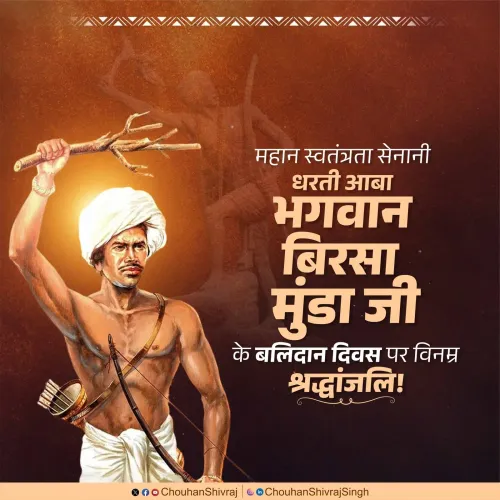
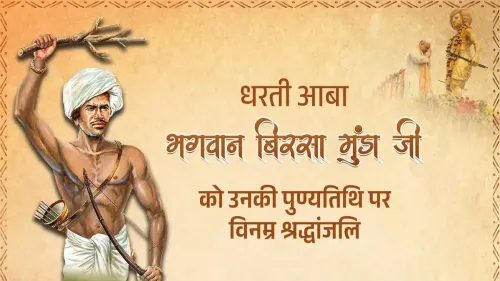
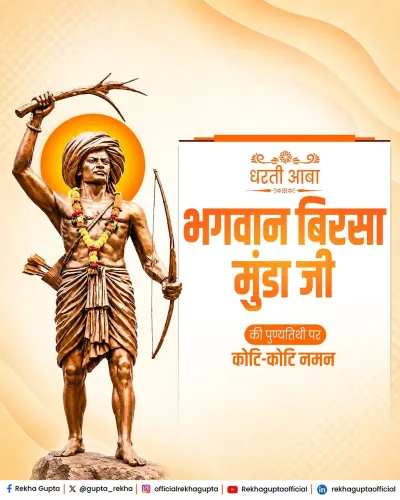
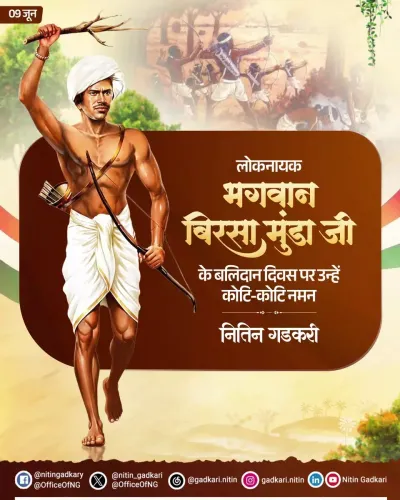
Union Commerce and Industry Minister Piyush Goyal on Tuesday, 9 June 2026 paid tribute to tribal icon Birsa Munda on his martyrdom anniversary, honouring the freedom fighter's legacy of resistance against colonial oppression and his enduring symbol of Adivasi pride.
Posting on X in Hindi, Minister Goyal wrote: 'धरती आबा भगवान बिरसा मुंडा जी के बलिदान दिवस पर उन्हें शत-शत नमन' — 'Heartfelt salutations to Dharti Aaba Bhagwan Birsa Munda on his martyrdom day.' He added that even in a short life, Birsa Munda 'sounded the bugle of struggle against injustice, exploitation and oppression,' and that his life 'gives us the message of courage, self-respect and dedication to the nation.'
Context
Birsa Munda, revered as Dharti Aaba (Father of the Earth), was born in 1875 in the Chota Nagpur region of present-day Jharkhand. A leader of the Munda tribal community, he spearheaded the Ulgulan (Great Tumult) rebellion in the late nineteenth century, rallying indigenous communities against British colonial rule, feudal landlords, and missionary encroachment on tribal land and culture.
Munda was arrested by British authorities and died in Ranchi jail on 9 June 1900, aged just 25. His martyrdom anniversary is observed each year as a moment of reflection on tribal sacrifice in India's long freedom struggle.
Policy Backdrop
The Government of India institutionalised Janjatiya Gaurav Divas in 2021, designating 15 November — Birsa Munda's birth anniversary — as a national day to commemorate tribal contributions to the independence movement, with Munda as its central icon.
Since 2014, the central government has made consistent efforts to incorporate Adivasi figures into the mainstream narrative of India's freedom struggle, with senior BJP leaders regularly marking both the birth and martyrdom anniversaries of tribal icons. This outreach is particularly significant in states with large tribal populations, including Jharkhand, Odisha, and Chhattisgarh.
Stakeholders and Impact
Tribal communities across India, who constitute roughly 8 per cent of the national population, regard Birsa Munda as a foundational figure of Adivasi identity and political consciousness. Tributes from senior central government ministers carry symbolic weight for these communities, reinforcing the state's recognition of indigenous histories.
Goyal's post, which described Munda's sacrifice as something that 'will always inspire future generations of India,' reflects the broader political consensus around elevating Adivasi heroes in public memory. Such messaging resonates strongly in the Chota Nagpur plateau belt, a region that has historically been central to both tribal rights movements and electoral contests.
What's Next
With Janjatiya Gaurav Divas 2026 approaching in November, commemorative events centred on Birsa Munda and other tribal freedom fighters are expected to be organised by central and state governments. Observers will also watch for any legislative or policy proposals concerning tribal land rights, forest rights, or welfare programmes in the upcoming sessions of Parliament.
The sustained official recognition of figures like Birsa Munda signals that Adivasi heritage will remain a prominent theme in India's political and cultural discourse in the months ahead.
Point of View
Senior ministers signal continued political investment in communities that are electorally decisive in states like Jharkhand and Odisha. The institutionalisation of Janjatiya Gaurav Divas in 2021 gave this outreach an official scaffolding, and annual tributes from cabinet-level figures reinforce it. The pattern suggests that Adivasi identity politics will remain a structural feature of BJP's electoral and cultural strategy well into the decade.
NationPress
16 Sept 2026
Frequently Asked Questions
Who was Birsa Munda and why is he remembered?
Birsa Munda (1875-1900) was a Munda tribal leader from the Chota Nagpur region who led the Ulgulan rebellion against British colonial rule and feudal exploitation. He is revered as Dharti Aaba, or Father of the Earth, and is regarded as a foundational symbol of Adivasi identity and resistance in India.
When did Birsa Munda die and how?
Birsa Munda died on 9 June 1900 in Ranchi jail while in British custody. He was just 25 years old at the time of his death, and his martyrdom anniversary is observed each year on 9 June.
What is Janjatiya Gaurav Divas?
Janjatiya Gaurav Divas is a national day instituted by the Government of India in 2021 to commemorate tribal contributions to India's freedom struggle. It is observed on 15 November, the birth anniversary of Birsa Munda.
Why did Piyush Goyal pay tribute to Birsa Munda?
Piyush Goyal paid tribute to mark the martyrdom anniversary of Birsa Munda on 9 June 2026. In his post, he described Munda's life as an immortal symbol of tribal self-respect and called his sacrifice an enduring inspiration for future generations of India.
What was the Ulgulan rebellion?
The Ulgulan, meaning 'Great Tumult,' was an uprising led by Birsa Munda in the late nineteenth century in the Chota Nagpur plateau. It mobilised Munda tribal communities against British colonial authorities, feudal landlords, and encroachment on indigenous land and culture.