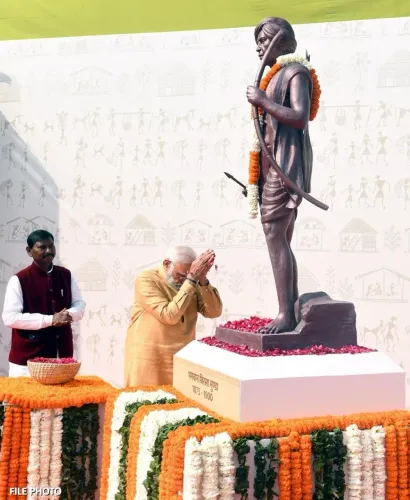
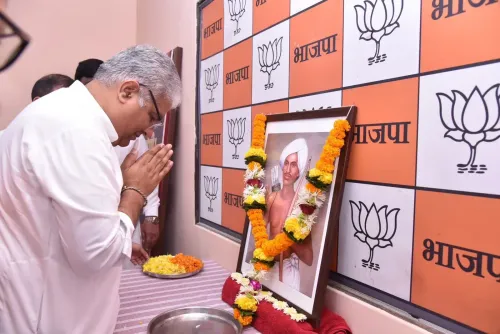
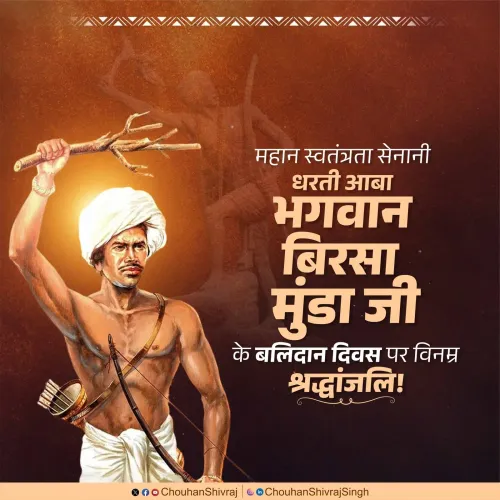
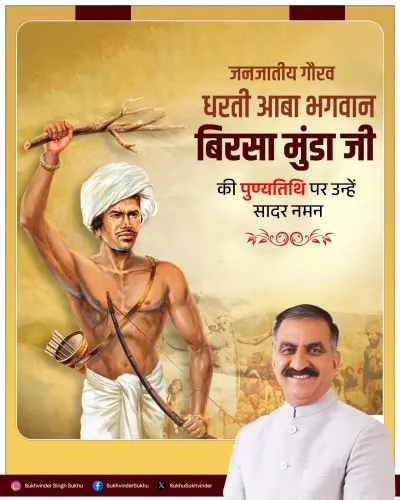
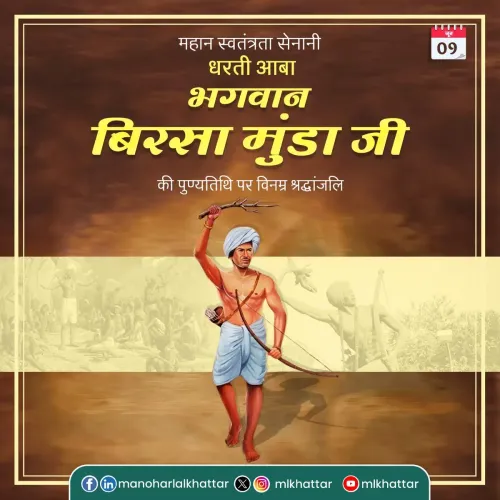
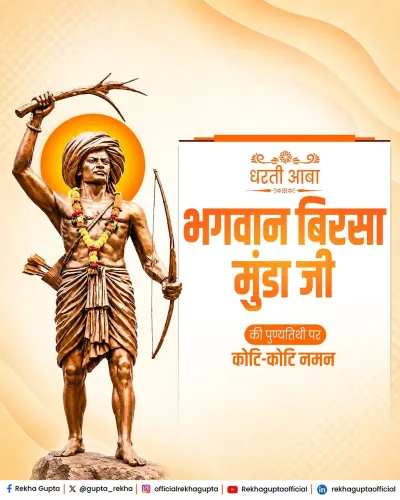
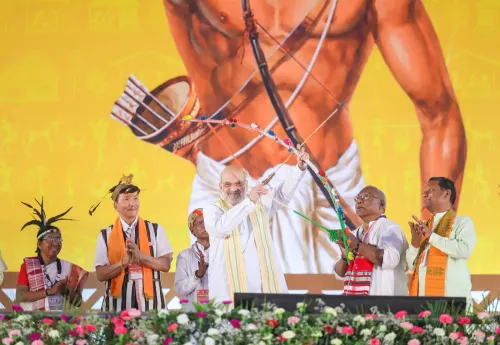
Amit Shah pays tribute to Birsa Munda on death anniversary
Synopsis
Union Home Minister Amit Shah on 9 June 2026 paid tribute to Bhagwan Birsa Munda on his death anniversary, calling him an immortal symbol of tribal self-respect. Shah highlighted Birsa Munda's Ulgulan uprising against British rule, his defence of jal-jungle-zameen rights, and his resistance to religious conversion as enduring inspirations for crores of Indians.
Key Takeaways
Amit Shah paid tribute to Bhagwan Birsa Munda on his death anniversary, 9 June 2026 .
Birsa Munda led the Ulgulan uprising (1899–1900) against British land and forest policies in the Chota Nagpur region.
Shah highlighted Birsa Munda's role in organising Adivasi communities around jal, jungle aur zameen (water, forest and land) rights.
The Union government declared 15 November as Janjatiya Gaurav Diwas in 2021 to honour tribal contributions to India's freedom struggle.
The PM JANMAN scheme and the Forest Rights Act, 2006 form the current policy framework addressing tribal land and welfare rights.
Birsa Munda died on 9 June 1900 in British custody at Ranchi Jail , aged 25 .
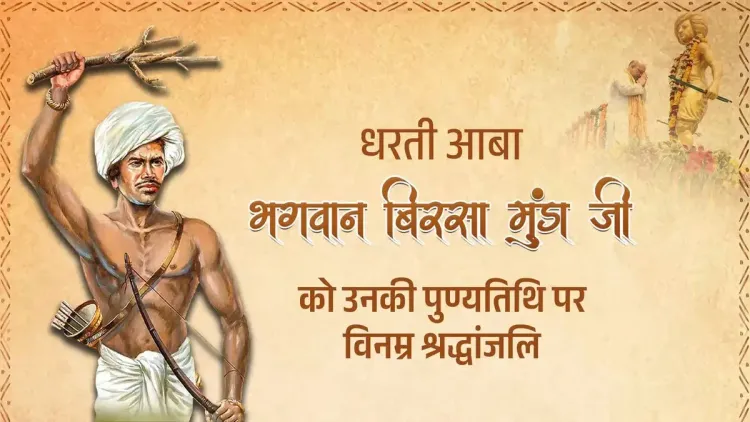
Union Home Minister Amit Shah on Tuesday, 9 June 2026 paid tribute to tribal freedom fighter Bhagwan Birsa Munda on his death anniversary, honouring him as an immortal symbol of tribal self-respect, patriotism and cultural consciousness.
In his post, Shah wrote — 'जनजातीय स्वाभिमान, राष्ट्रभक्ति और सांस्कृतिक चेतना के अमर प्रतीक' — describing Birsa Munda as 'the immortal symbol of tribal self-respect, patriotism and cultural consciousness.' He noted that Birsa Munda sounded the call for freedom against British rule through the Ulgulan movement, organised the Adivasi community to protect their rights and heritage, and gave the cause of protecting jal, jungle aur zameen (water, forest and land) the character of a mass movement.
Context
Birsa Munda, born on 15 November 1875 in the Chota Nagpur region of present-day Jharkhand, led the Ulgulan (Great Tumult) uprising of 1899–1900 against British forest laws, forced labour and land alienation. He mobilised the Munda tribal community to assert customary rights over their ancestral lands and forests. He died on 9 June 1900 in British custody at Ranchi Jail, aged just 25.
Shah's tribute also highlighted Birsa Munda's struggle against religious conversion and his dedication to tribal pride — themes that resonate strongly in the current political discourse around Adivasi identity and cultural preservation.
Policy Backdrop
In 2021, the Union government formally declared 15 November — Birsa Munda's birth anniversary — as Janjatiya Gaurav Diwas, instituting an annual commemoration to honour the contributions of tribal communities to India's freedom struggle. The move was part of a broader effort to integrate Adivasi icons into the mainstream national freedom narrative.
The Forest Rights Act, 2006, had earlier provided a statutory framework recognising individual and community rights over forest land and produce for Scheduled Tribes and other traditional forest dwellers — directly addressing the jal-jungle-zameen concerns that Birsa Munda championed over a century ago. More recently, the PM JANMAN scheme has targeted Particularly Vulnerable Tribal Groups (PVTGs) with focused welfare interventions.
Stakeholders and Impact
Birsa Munda remains a towering figure for tribal communities across Jharkhand, Odisha, West Bengal, Chhattisgarh and Maharashtra, where Munda and allied communities have a significant presence. Adivasi organisations and cultural groups mark his death anniversary each year with remembrance events.
Since 2014, successive BJP-led governments have systematically elevated 19th-century tribal rebels within the national freedom narrative, linking them to themes of cultural preservation, opposition to religious conversion and assertion of jal-jungle-zameen rights. This has run parallel to expanded budgetary allocations for tribal welfare and the creation of new commemorative institutions and museums dedicated to Adivasi icons — including the Birsa Munda Smriti Udyan in Ranchi.
What's Next
The government's focus on tribal welfare is expected to continue with the rollout of the PM JANMAN scheme targeting PVTGs and ongoing parliamentary deliberations on amendments to the Forest Conservation Act. As Janjatiya Gaurav Diwas approaches on 15 November, commemorative events across tribal belts are likely to be held with renewed emphasis on Birsa Munda's legacy of resistance and cultural assertion.
The annual cycle of tributes to Adivasi icons, backed by institutional recognition and welfare schemes, signals that tribal communities will remain a central focus of both political outreach and policy action in the months ahead.
Point of View
Alongside his jal-jungle-zameen legacy, reflects a deliberate framing that aligns tribal cultural assertion with the ruling party's broader ideological positions. This annual commemorative cycle serves both as genuine historical recognition and as political outreach to tribal constituencies spread across electorally significant states such as Jharkhand, Odisha and Chhattisgarh. The tribute also arrives as the government advances schemes like PM JANMAN, reinforcing the link between symbolic recognition and welfare policy for Particularly Vulnerable Tribal Groups.
NationPress
29 Jul 2026
Frequently Asked Questions
Who was Bhagwan Birsa Munda and why is he remembered?
Bhagwan Birsa Munda was a Munda tribal leader born on 15 November 1875 in the Chota Nagpur region of present-day Jharkhand. He led the Ulgulan (Great Tumult) uprising of 1899–1900 against British forest laws, forced labour and land alienation, and is revered as a symbol of tribal self-respect and the jal-jungle-zameen movement.
When did Birsa Munda die and how?
Birsa Munda died on 9 June 1900 in British custody at Ranchi Jail at the age of 25. The exact cause of death has been disputed historically, but he had been arrested by colonial authorities following the Ulgulan uprising.
What is Janjatiya Gaurav Diwas and when was it started?
Janjatiya Gaurav Diwas is an annual commemoration declared by the Union government in 2021, observed on 15 November — Birsa Munda's birth anniversary — to honour the contributions of tribal communities to India's freedom struggle.
What was the Ulgulan movement?
The Ulgulan, meaning 'Great Tumult,' was a tribal uprising led by Birsa Munda in the Chota Nagpur region between 1899 and 1900. It protested British forest laws, forced labour and land alienation while asserting Munda customary rights over their ancestral lands and forests.
What government schemes currently support tribal communities in India?
Key measures include the Forest Rights Act of 2006, which recognises individual and community rights over forest land for Scheduled Tribes, and the PM JANMAN scheme, which targets Particularly Vulnerable Tribal Groups with focused welfare interventions including housing, healthcare and livelihood support.