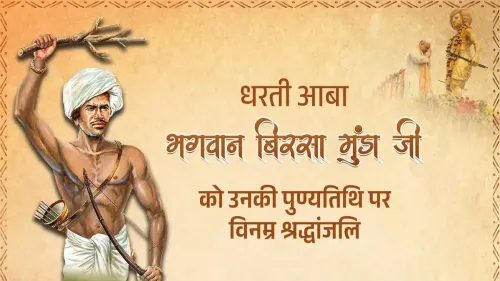
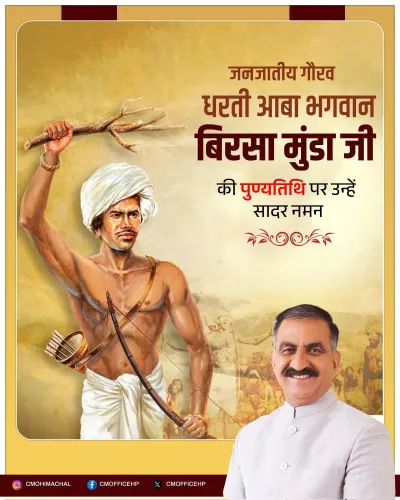
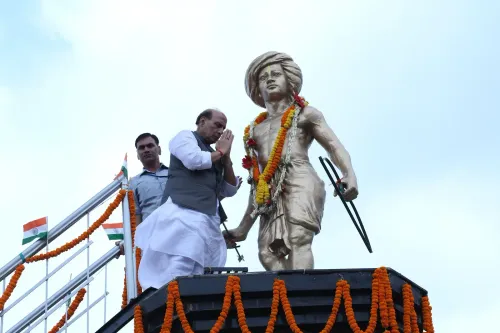
CM Sukhu pays tribute to Birsa Munda on death anniversary
Synopsis
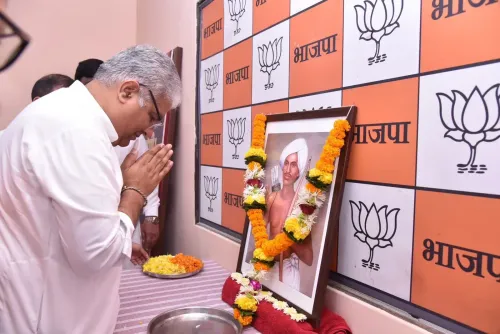
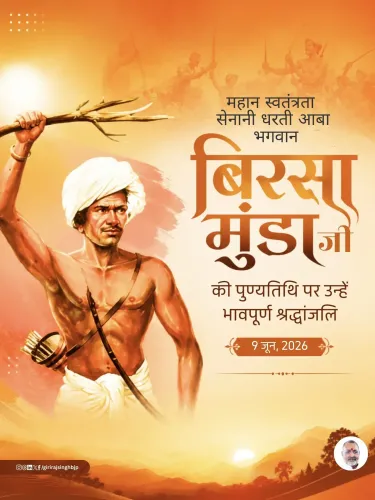
Himachal Pradesh Chief Minister Sukhvinder Singh Sukhu on 9 June 2026 paid homage to tribal freedom fighter Birsa Munda on his death anniversary, honouring the Ulgulan leader's lifelong fight for Adivasi rights over water, forests, and land.
Key Takeaways
CM Sukhvinder Singh Sukhu posted a tribute to Birsa Munda on his death anniversary, 9 June 2026 .
Birsa Munda (1875-1900) led the Ulgulan movement against British land-alienation policies from the Chotanagpur plateau .
He is revered as Dharti Aaba ('Father of the Earth') and died in Ranchi Central Jail aged 25.
The Government of India instituted Janjatiya Gaurav Diwas on 15 November in 2021 to honour tribal freedom fighters including Munda.
The Forest Rights Act, 2006 is the principal legislation reflecting the jal, jungle aur zameen principles Munda championed.
Tributes on this date carry political significance for parties signalling commitment to Adivasi welfare and resource rights.
Himachal Pradesh Chief Minister Sukhvinder Singh Sukhu on Tuesday, 9 June 2026, paid homage to tribal freedom fighter Birsa Munda on his death anniversary, saluting his lifelong struggle for the rights of indigenous communities over land, forests, and water.
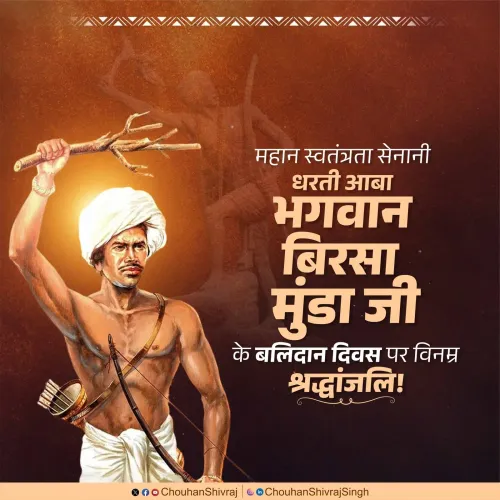
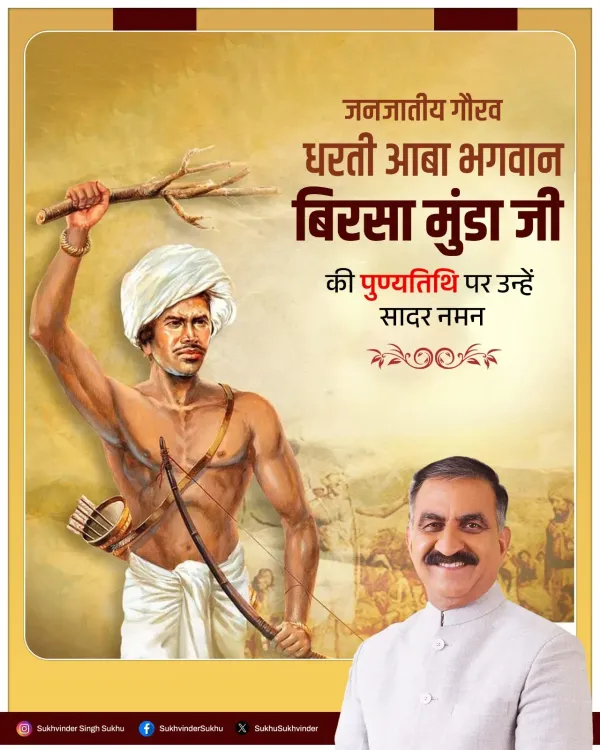
In his post on X, CM Sukhu wrote — 'जल, जंगल और जमीन के अधिकारों की आवाज को सशक्त करने वाले, महान स्वतंत्रता संग्राम सेनानी धरती आबा बिरसा मुंडा जी की पुण्यतिथि पर उन्हें सादर नमन' — ['Respectful salute to the great freedom fighter Dharti Aaba Birsa Munda, who amplified the voice for rights over water, forests and land, on his death anniversary.'] He added that Birsa Munda dedicated his entire life to protecting the rights of tribal society and preserving folk culture, and that his ideals continue to inspire people toward self-respect and social justice. The post closed with the salutation 'Jai Johar', a traditional Adivasi greeting of solidarity.
Context
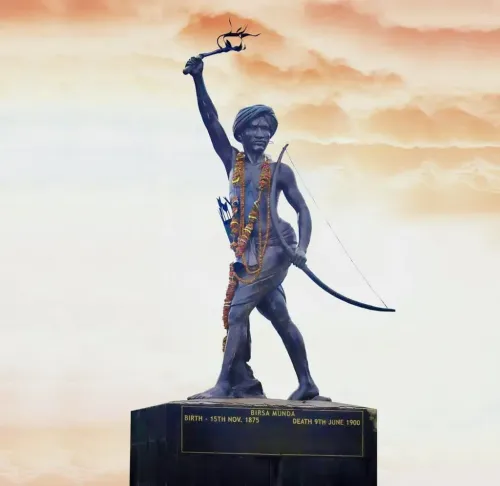
Birsa Munda was born in 1875 in the Chotanagpur plateau region and became one of the most celebrated tribal leaders in Indian history. He led the Ulgulan — meaning 'the great tumult' — a movement that directly challenged British land-alienation policies and demanded that Adivasi communities retain control over their customary resources. He died on 9 June 1900 in Ranchi Central Jail at the age of just 25, and is revered by the honorific Dharti Aaba, meaning 'Father of the Earth.'
His legacy is particularly associated with the rallying cry of jal, jungle aur zameen — water, forests, and land — which remains central to Adivasi rights movements across India to this day.
Policy Backdrop
In 2021, the Government of India instituted Janjatiya Gaurav Diwas on 15 November — Birsa Munda's birth anniversary — to formally commemorate tribal freedom fighters and their contributions to the independence struggle. The move signalled a broader national effort to mainstream Adivasi history within India's freedom narrative.
The Forest Rights Act, 2006 remains the principal legislative instrument for recognising individual and community rights of Scheduled Tribes and other traditional forest dwellers over forest land — a direct policy descendant of the principles Birsa Munda championed. Implementation of the Act, including the distribution of land titles, continues to be closely monitored by tribal rights groups.
Stakeholders and Impact
Birsa Munda's legacy resonates most immediately with Adivasi communities concentrated across Jharkhand, Chhattisgarh, Odisha, Madhya Pradesh, and parts of West Bengal. His death anniversary serves as a moment of political and cultural reaffirmation for these communities, and tributes from state and national leaders are read as signals of continued commitment to tribal welfare and resource rights.
Statements such as CM Sukhu's also carry electoral and symbolic weight for the Indian National Congress, which positions itself as a historical ally of marginalised communities including Adivasis.
What's Next
Attention will now turn to concrete state-level actions — particularly progress on Forest Rights Act title distribution in tribal-dominated districts and any fresh budget allocations for tribal development programmes. For Himachal Pradesh, which has its own significant tribal population in districts such as Kinnaur, Lahaul-Spiti, and parts of Chamba, the tribute underscores pressure on the state government to translate rhetorical solidarity into measurable policy outcomes for indigenous communities.
Point of View
Such messaging is part of a broader effort to reclaim its identity as a party of the marginalised at a time of intense competition for tribal votes. The invocation of 'jal, jungle aur zameen' is not merely ceremonial; it implicitly endorses the unfinished agenda of Forest Rights Act implementation, placing quiet pressure on both state and central governments. The real test, as tribal rights advocates consistently note, lies in the pace of land-title distribution and budget allocations — not in anniversary tributes alone.
NationPress
25 Sept 2026
Frequently Asked Questions
When did Birsa Munda die and why is 9 June observed?
Birsa Munda died on 9 June 1900 in Ranchi Central Jail at the age of 25. The date is observed annually as his death anniversary, with leaders across parties paying tribute to his role in the Adivasi freedom struggle.
What was the Ulgulan movement led by Birsa Munda?
The Ulgulan , meaning 'the great tumult,' was a tribal uprising led by Birsa Munda in the late 19th century against British land-alienation policies in the Chotanagpur plateau . It demanded that Adivasi communities retain customary rights over water, forests, and land.
What is Janjatiya Gaurav Diwas and when is it celebrated?
Janjatiya Gaurav Diwas is observed on 15 November — Birsa Munda's birth anniversary — and was instituted by the Government of India in 2021 to honour tribal freedom fighters and their contributions to India's independence struggle.
What is the Forest Rights Act and how does it relate to Birsa Munda's legacy?
The Forest Rights Act, 2006 recognises the rights of Scheduled Tribes and traditional forest dwellers over forest land and resources. It is widely seen as a legislative expression of the jal, jungle aur zameen principles that Birsa Munda championed more than a century ago.
Why did CM Sukhu say 'Jai Johar' in his tribute post?
'Jai Johar' is a traditional salutation used among Adivasi communities, particularly the Munda and related groups of Jharkhand and central India. Using it in a tribute signals solidarity with tribal culture and identity.