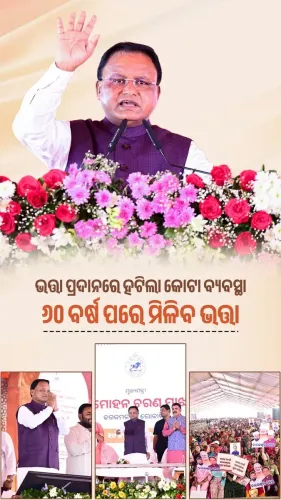
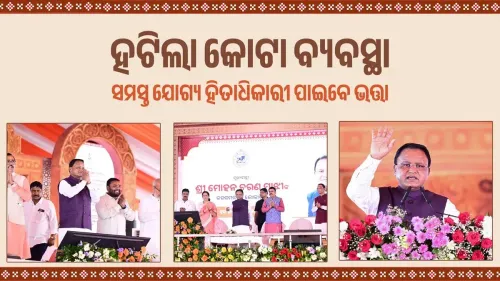
CM Majhi ends pension quota, shifts to eligibility-based access
Synopsis
Odisha CM Mohan Charan Majhi declares an end to quota-based pension allocation for the elderly, replacing it with an eligibility-first model under the banner of 'PensionForAll', while simultaneously pledging new employment avenues for the state's youth.
Key Takeaways
Quota system abolished: Odisha's elderly pension allocation no longer follows a fixed quota per district or block; eligibility alone now determines access.
No more waiting lists: Qualified senior citizens will not have to wait years for pension enrolment under the new framework.
Youth employment push: CM Majhi's announcement pairs the pension reform with a stated commitment to expand jobs and livelihood opportunities for younger Odias.
BJP's welfare narrative: The reform is framed as a 'promise delivered' moment for the BJP government that came to power in Odisha in 2024 , ending 24 years of BJD rule.
Saturation model: The hashtag #PensionSaturation signals alignment with zero-exclusion coverage targets used in central government schemes.
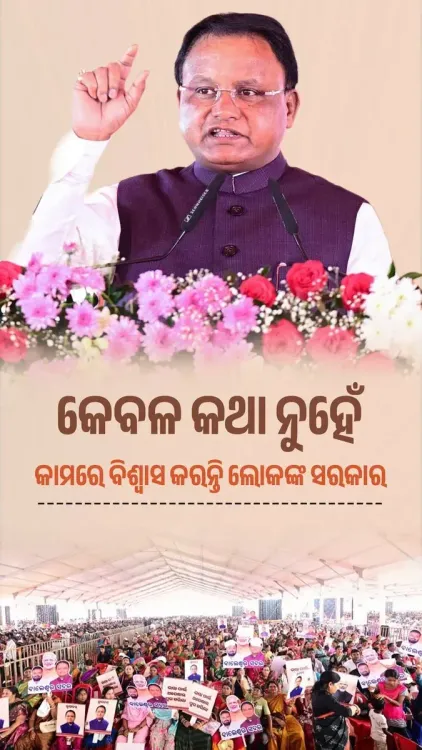
No more waiting years for a pension that should have arrived long ago. Odisha Chief Minister Mohan Charan Majhi announced on Tuesday, 10 November 2026 that his government has dismantled the quota-based allocation system for elderly welfare allowances, replacing it with a merit-and-eligibility framework that guarantees eligible senior citizens receive their due without bureaucratic delay.
Posting in Odia and English, CM Majhi framed the reform in the language of a promise kept: 'ଲୋକଙ୍କ ସରକାର' — 'the people's government' — prioritising the dignity and social security of the elderly above all. 'Pension access is now based on eligibility, not quotas,' he wrote, adding that employment and livelihood opportunities are being expanded to empower the youth simultaneously.
What the quota system meant — and why scrapping it matters
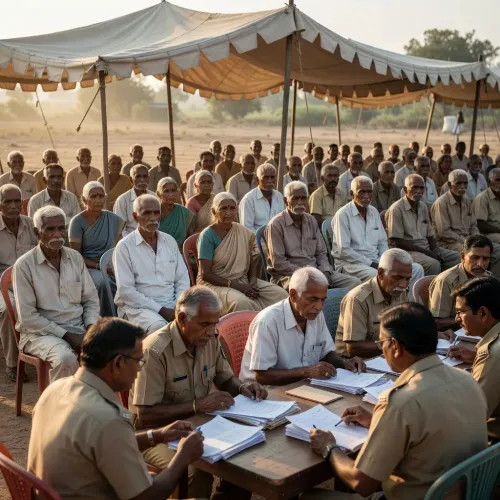
Under the old quota model, state pension disbursements were capped district- or block-wise, meaning even a fully eligible elderly person could be denied a pension simply because the local 'seat' was filled. The backlog it created was well-documented across Indian states: deserving beneficiaries spent years — sometimes the final years of their lives — on waiting lists. CM Majhi's government has now moved to a demand-driven, eligibility-first model, theoretically removing the ceiling on who can be enrolled.
The hashtag #ଭତ୍ତାପାଇଁଅପେକ୍ଷାରଯୁଗଶେଷ — roughly, 'the era of waiting for allowances is over' — signals this is designed as a flagship messaging moment, not a footnote. The accompanying tags #PensionSaturation and #PensionForAll echo the saturation-approach language that the central government has used in schemes like PM Awas Yojana, where coverage targets zero exclusion rather than fixed quotas.
Youth employment as the second pillar
Majhi's post is careful not to let pension reform stand alone. In the same breath, the government claims it is creating jobs and livelihood avenues for younger Odias, with the stated goal of making them 'self-reliant' — a word that maps directly onto the Centre's Atmanirbhar vocabulary. Odisha, with its large tribal population and significant out-migration of young workers to other states, has long faced structural unemployment pressure. Linking a pension success story to a youth jobs agenda is a deliberate political architecture: it tells two generations they are both seen.
BJP's Odisha government, which came to power in 2024 ending nearly 24 years of BJD rule, has been building its welfare delivery narrative since taking office. The elderly pension reform — if implemented at scale — would represent one of its more tangible departures from the previous administration's approach.
Delivery versus declaration
The core test is straightforward: how many newly eligible senior citizens have actually been enrolled since the quota was lifted? Ground-level coverage numbers will determine whether #PensionSaturation is a governance milestone or a campaign slogan. Advocates for the elderly have consistently argued that application processes, Aadhaar linkages, and local bureaucratic inertia can frustrate even a quota-free system. The Odisha government now owns both the promise and its proof.
Point of View
The messaging reaches emotionally before it reaches politically. The dual framing — pensioners and youth together — mirrors the Centre's own practice of bundling social security with Atmanirbhar language, suggesting Odisha's BJP is consciously aligning its state welfare brand with the national party identity. The real political test arrives when enrolment data becomes public: in Indian welfare programmes, the gap between announced eligibility and actual coverage has historically been the credibility fault line.
NationPress
10 Nov 2026
Frequently Asked Questions
What change has the Odisha government made to the elderly pension system?
The Odisha government has ended the quota-based system for elderly pension allocation and replaced it with an eligibility-based model, meaning any senior citizen who qualifies will receive the allowance without being placed on a waiting list due to fixed regional caps.
What was wrong with the old pension quota system in Odisha?
Under the quota system, pensions were capped at a set number per district or block. Even eligible elderly citizens could be denied or delayed because the local quota was full, forcing many to wait years — sometimes for the rest of their lives.
What is 'PensionSaturation' that CM Majhi is referring to?
'PensionSaturation' refers to a coverage approach aimed at enrolling every eligible beneficiary rather than limiting enrolment to a fixed quota, similar to saturation models used in central government welfare schemes where zero exclusion is the target.
What is CM Mohan Charan Majhi doing for Odisha's youth?
Alongside the pension reform, CM Majhi has stated that his government is creating employment and livelihood opportunities to make Odisha's youth self-reliant, though specific programme details have not been outlined in the announcement.
When did BJP come to power in Odisha?
The BJP formed its first government in Odisha in 2024 , winning the state assembly elections and ending nearly 24 years of Biju Janata Dal (BJD) rule. Mohan Charan Majhi was sworn in as Chief Minister.