CM Majhi's 2 Years: Odisha Touts Health, Housing Gains
Synopsis
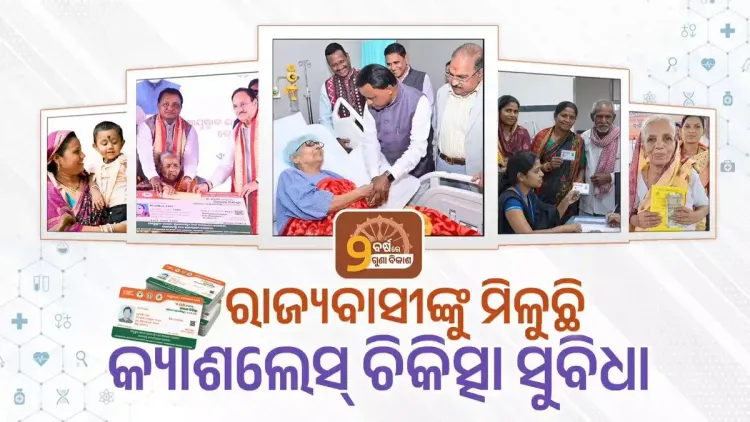
The Chief Minister's Office of Odisha marked two years of CM Mohan Charan Majhi's BJP government on 17 June 2026, highlighting reforms in universal healthcare, pucca housing construction, and social security pensions as steps toward 'Healthy Odisha — Prosperous Odisha.'
Key Takeaways
The Chief Minister's Office of Odisha on 17 June 2026 marked two years of the Mohan Charan Majhi -led BJP government with a post in Odia on X.
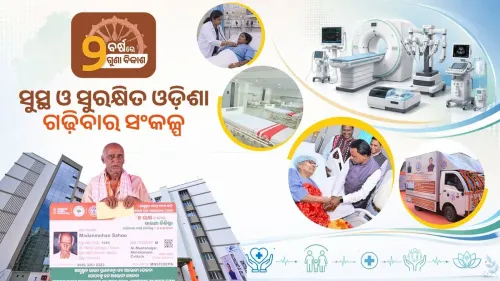
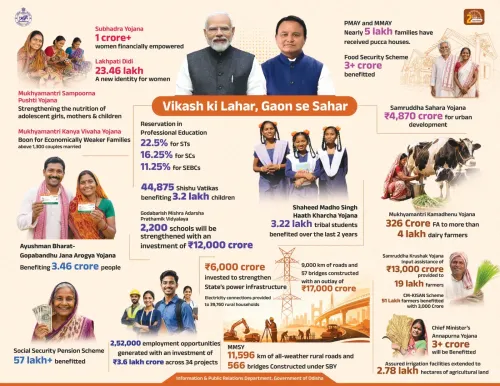
The government cited progress in three areas: universal healthcare, pucca house construction, and strengthened social security pensions .
The Biju Swasthya Kalyan Yojana , Pradhan Mantri Awas Yojana-Gramin , and Madhu Babu Pension Yojana are the primary scheme frameworks underpinning the claims.
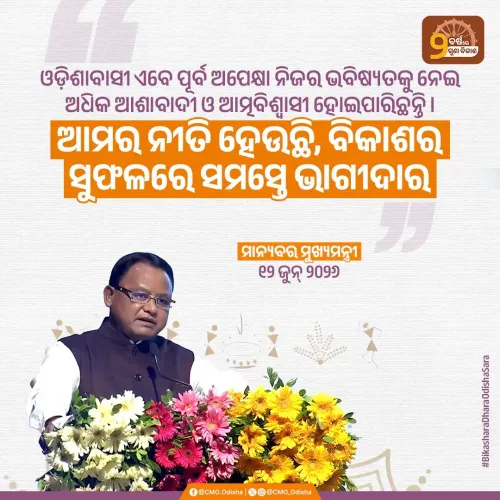
The government's stated vision is 'Sustha Odisha — Samridha Odisha' (Healthy Odisha — Prosperous Odisha).
Majhi became Chief Minister in June 2024 , ending over two decades of BJD rule under Naveen Patnaik .
Independent quantitative verification of living-standard improvements over the two-year period remains pending from established public records.
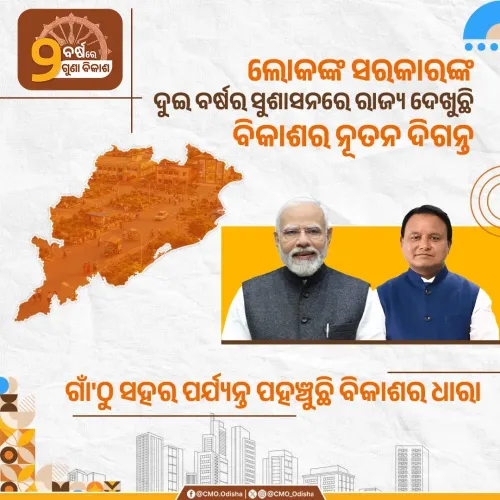
The Chief Minister's Office of Odisha on Wednesday, 17 June 2026, marked two years of the Mohan Charan Majhi-led government by highlighting what it described as a new chapter in administrative transparency and holistic development across the state, with particular emphasis on health coverage, pucca housing, and social security reforms.
The post, written in Odia, stated that under the 'visionary leadership' of Chief Minister Majhi, 'Odisha praashaasanik swachhata o saamagrik bikashar ek nutan adhyaaya rachana karichi' — meaning Odisha has written a new chapter of administrative transparency and overall development in the past two years. It credited the state government's welfare-oriented policies with empowering 'genuine beneficiaries' in health, housing, and social protection.
Context
Mohan Charan Majhi was sworn in as Odisha's Chief Minister in June 2024 after the Bharatiya Janata Party (BJP) won the state assembly elections, ending more than two decades of rule by the Biju Janata Dal (BJD) under Naveen Patnaik. The transition marked a significant political shift for the state. The two-year milestone, marked with the hashtags #2YearsofLokankaSarakar, #BikasharaDharaOdishaSara, and #2YearsofSwasthyaSurakhya, is being presented by the government as a moment to take stock of welfare delivery.
Policy Backdrop
The three pillars cited — universal healthcare, pucca housing, and social security pensions — correspond to established scheme frameworks. The Biju Swasthya Kalyan Yojana, introduced in 2018, provides universal health coverage; the current administration has claimed greater transparency in identifying eligible beneficiaries under it. On housing, the state has worked within the Pradhan Mantri Awas Yojana-Gramin framework, with renewed emphasis on timely construction since 2024.
The Madhu Babu Pension Yojana, a long-running social security scheme for the elderly, widows, and persons with disabilities, has seen Aadhaar-linked digital disbursal drives highlighted as a reform measure under the present government. The CMO's post frames these efforts as fulfilling the vision of 'Sustha Odisha — Samridha Odisha' ('Healthy Odisha — Prosperous Odisha'), the government's stated development slogan.
Stakeholders and Impact
The stated beneficiaries of these reforms are Odisha's rural poor, healthcare recipients, pensioners, and marginalised communities. The post specifically noted that 'neglected and poor citizens' have seen a 'notable improvement' in their standard of living through universal medical facilities, pucca house construction, and strengthened social security allowances. Independent verification of the scale of improvement over exactly two years remains unavailable from established public records.
The BJP's governance approach in Odisha mirrors the national party's focus on targeted beneficiary schemes and digital governance, positioning welfare delivery as a measurable political and administrative achievement ahead of future electoral cycles.
What's Next
Analysts and opposition parties are likely to scrutinise the 2026-27 budget session for annual performance data on health coverage saturation and housing completion rates. Any mid-term evaluation of beneficiary numbers under the Biju Swasthya Kalyan Yojana and Madhu Babu Pension Yojana will serve as a concrete test of the claims made at the two-year mark. The government's ability to sustain momentum on these three fronts will be a key metric as Odisha approaches the next phase of its political cycle.
Point of View
Housing, and pensions, the government is targeting the same rural and marginalised voter base that sustained Naveen Patnaik for over two decades, signalling that the political contest for this constituency is far from settled. The 'Sustha Odisha — Samridha Odisha' slogan also mirrors the national BJP's beneficiary-centric branding, suggesting Odisha is being positioned as a model state within the party's broader governance story. The absence of hard numbers in the post, however, leaves the claims open to scrutiny as the opposition and civil society await verifiable performance data.
NationPress
19 Sept 2026
Frequently Asked Questions
How long has Mohan Charan Majhi been Chief Minister of Odisha?
Mohan Charan Majhi completed two years as Chief Minister of Odisha in June 2026 , having been sworn in after the BJP won the state assembly elections in June 2024 .
What is the 'Sustha Odisha Samridha Odisha' vision?
'Sustha Odisha — Samridha Odisha' means 'Healthy Odisha — Prosperous Odisha' and is the Mohan Majhi government's stated development slogan, focused on improving healthcare access, housing, and social security for the poor.
What welfare schemes has the Odisha government highlighted at its two-year mark?
The Odisha government has highlighted the Biju Swasthya Kalyan Yojana for universal health coverage, the Pradhan Mantri Awas Yojana-Gramin for pucca housing, and the Madhu Babu Pension Yojana for social security pensions as key reform areas.
When did BJP come to power in Odisha?
The BJP came to power in Odisha in June 2024 , ending more than two decades of Biju Janata Dal (BJD) rule under Naveen Patnaik .
What is the Madhu Babu Pension Yojana in Odisha?
The Madhu Babu Pension Yojana is a long-running Odisha state social security scheme providing pensions to the elderly, widows, and persons with disabilities; the current government has emphasised Aadhaar-linked digital disbursal as a reform measure.