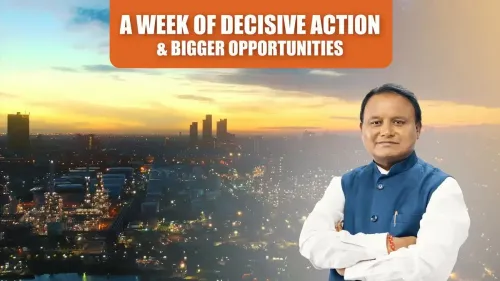
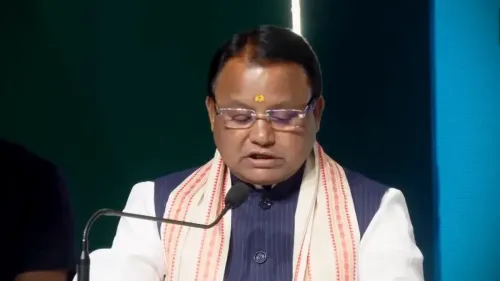
CM Majhi marks 2 years with health, housing and pension push
Synopsis
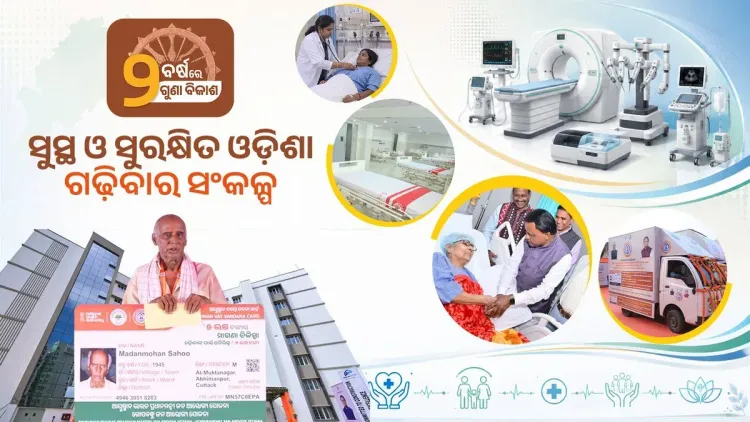
On his government's second anniversary, Odisha Chief Minister Mohan Charan Majhi outlined welfare gains in health, social security and housing, pledging continued expansion of medical infrastructure, cashless coverage, enhanced pensions and pucca homes for every poor family in the state.
Key Takeaways
CM Mohan Charan Majhi marked two years of his BJP government in Odisha on 17 June 2026 .
The state government claims an unprecedented increase in the health budget and is building world-class medical infrastructure in every district.
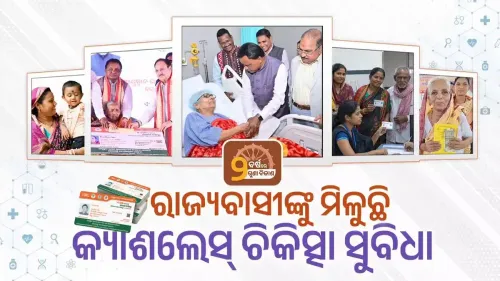
Cashless and universal health treatment is being made available to Odisha residents across the country through central scheme integration.
Monthly pension support for elderly and differently-abled citizens has been enhanced under the current government.
A state housing mission is providing pucca homes to poor families, building on earlier central and state housing programmes.
Budget allocations for 2026-27 and on-ground infrastructure rollout will be the key metrics to watch going forward.
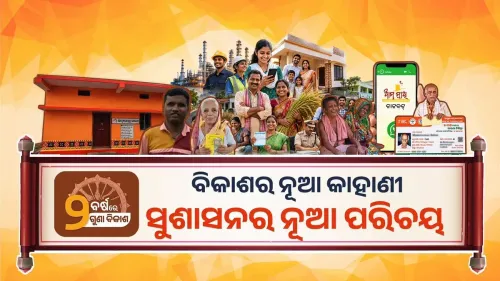
Odisha Chief Minister Mohan Charan Majhi on Wednesday, 17 June 2026 highlighted two years of welfare delivery by his government, citing an unprecedented rise in the state health budget, expansion of cashless medical coverage, enhanced monthly pensions for the elderly and differently-abled, and a housing drive to provide pucca homes to every poor family in Odisha.
Context
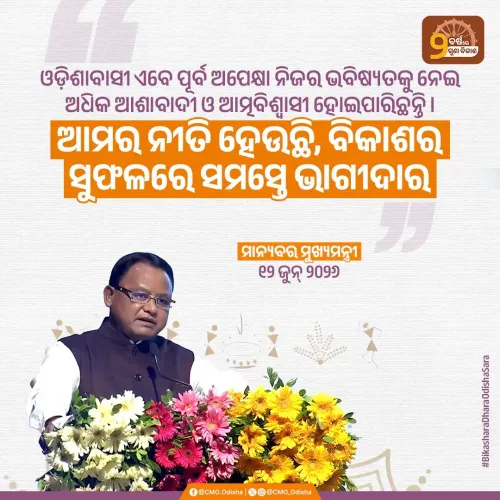
Posting in Odia on the occasion of his government's second anniversary, CM Majhi wrote: 'ଓଡ଼ିଶାବାସୀଙ୍କ ସ୍ୱାସ୍ଥ୍ୟ, ସମ୍ମାନ ଓ ସାମାଜିକ ସୁରକ୍ଷାକୁ ସୁନିଶ୍ଚିତ କରିବା ଆମ ସରକାରଙ୍କ ସର୍ବୋଚ୍ଚ ପ୍ରାଥମିକତା' ['Ensuring the health, dignity and social security of the people of Odisha is the highest priority of our government']. He added that the resolve has been translated into reality over the past two years through a 'world-class medical infrastructure network' being built in every district of the state.
The post was tagged with the hashtags #2YearsofLokankaSarakar, #BikasharaDharaOdishaSara and #2YearsofSwasthyaSurakhya, marking the BJP government's second anniversary in office since taking power in June 2024.
Policy Backdrop
Majhi became Odisha's first BJP Chief Minister in June 2024, ending the Biju Janata Dal's uninterrupted 24-year rule in the state. The incoming government inherited a welfare architecture that included the Madhu Babu Pension Yojana for elderly and differently-abled beneficiaries and the Biju Pucca Ghar Yojana for rural housing, both flagship programmes of the previous administration.
On health coverage, Odisha has deepened its integration with the central government's Ayushman Bharat PM-JAY scheme, which enables cashless treatment for eligible beneficiaries across empanelled hospitals nationwide. CM Majhi specifically highlighted this benefit in his post, noting that people can now access 'universal and cashless treatment facilities across the country.'
The post also referenced the state's housing mission, through which the government says it is extending the right to a permanent, pucca home to every poor family — building on both state and central rural housing programmes.
Stakeholders and Impact
The welfare measures cited by CM Majhi target some of Odisha's most vulnerable populations: elderly citizens and differently-abled persons dependent on monthly pension support, rural poor families seeking permanent housing, and the broader population seeking accessible public healthcare. The state has a significant share of below-poverty-line households and tribal communities concentrated in its interior districts.
The push for district-level medical infrastructure is particularly significant for Odisha's remote regions, where healthcare access has historically been limited. The government's stated goal of a 'world-class' hospital network in every district would, if realised, mark a structural shift in how public health services are delivered across the state.
What's Next
The Odisha state budget for 2026-27 and its specific allocations for health infrastructure, pension disbursements, and housing completions will be the clearest indicator of whether the government's stated priorities are matched by financial commitments. Progress on new medical colleges and district hospitals, as well as the pace of pucca house construction, will be closely tracked by welfare advocates and political observers alike. With the BJP seeking to consolidate its foothold in Odisha, delivery on these social-sector promises is expected to remain central to the party's political messaging in the state.
Point of View
A strategy the party has consistently deployed in states it governs. By foregrounding health, pensions and housing, the government is directly competing on the legacy terrain of the BJD, which built its dominance on exactly these social-sector pillars. The emphasis on district-level infrastructure signals an attempt to project governance reach beyond urban centres into the rural heartland that ultimately decides Odisha elections. Whether the rhetoric translates into verifiable outcomes will determine how durable this political capital proves to be.
NationPress
18 Sept 2026
Frequently Asked Questions
What has Odisha CM Mohan Majhi's government done in two years?
In two years, CM Mohan Charan Majhi's government has claimed an unprecedented increase in Odisha's health budget, expansion of cashless medical coverage under Ayushman Bharat, enhanced monthly pensions for elderly and differently-abled citizens, and a housing mission to provide pucca homes to poor families.
What is the Odisha government's health scheme for cashless treatment?
Odisha has integrated with the central government's Ayushman Bharat PM-JAY scheme, which provides cashless treatment to eligible beneficiaries at empanelled hospitals across India. CM Majhi highlighted this as a key achievement of his government's first two years.
What pension scheme does the Odisha government offer to the elderly and differently-abled?
Odisha provides monthly pension support to elderly and differently-abled citizens. The current BJP government has enhanced this assistance, building on the earlier Madhu Babu Pension Yojana that was in place under the previous administration.
What is the Odisha housing mission for poor families?
The Odisha government is running a housing mission aimed at providing permanent pucca houses to every poor family in the state. It builds on earlier state and central rural housing programmes such as the Biju Pucca Ghar Yojana.
When did Mohan Charan Majhi become Chief Minister of Odisha?
Mohan Charan Majhi became Chief Minister of Odisha in June 2024, making him the state's first BJP Chief Minister after the party ended the Biju Janata Dal's 24-year rule in the assembly elections.