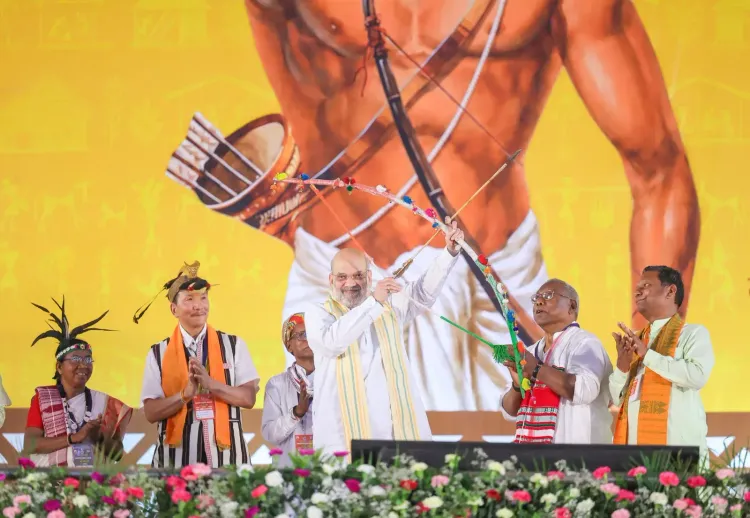
Amit Shah addresses 550+ tribal delegates at Birsa Munda 150th birth anniversary event in Delhi
Synopsis
Union Home Minister Amit Shah addressed over 550 tribal community representatives in New Delhi on 25 May 2026, marking the 150th birth anniversary year of Bhagwan Birsa Munda. Shah invoked the Ulgulan movement's dual legacy of motherland defence and resistance to religious conversion, calling Birsa Munda's heritage an eternal inspiration for social unity.
Key Takeaways
Amit Shah addressed more than 550 tribal community members from across India in New Delhi on 25 May 2026 .
The event marked the 150th birth anniversary year of tribal leader Bhagwan Birsa Munda (1875–1900) .
Shah highlighted the Ulgulan movement's twin themes: uniting tribal society in defence of the motherland and resisting religious conversion.
The central government instituted Janjatiya Gaurav Divas on 15 November in 2021 to honour tribal contributions to India's freedom struggle.
Further commemorative programmes are expected through 2026 , culminating in Janjatiya Gaurav Divas on 15 November 2026 .
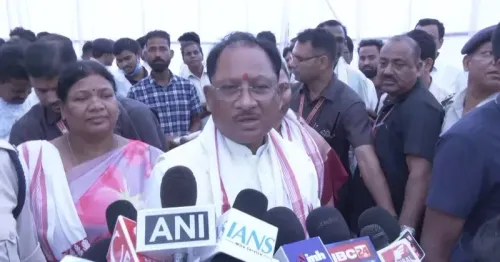
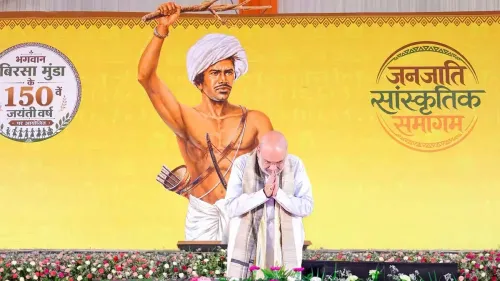
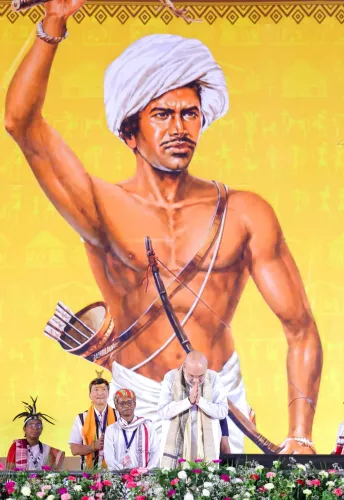
Union Home Minister Amit Shah on Sunday, 25 May 2026, addressed more than 550 tribal community members from across India at an event in New Delhi marking the 150th birth anniversary year of tribal icon Bhagwan Birsa Munda. The gathering brought together representatives of tribal societies from every corner of the country for a dialogue session centred on Birsa Munda's legacy.
What Shah said
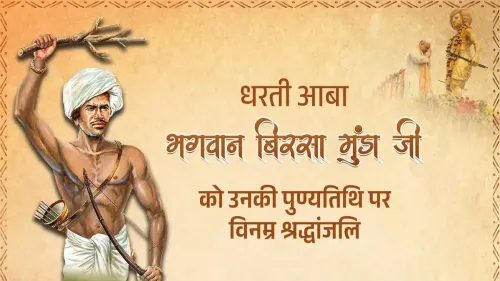
Posting on X after the event, Shah wrote that he had interacted with brothers and sisters from more than 550 tribal communities who had come to Delhi from across the country. He described Birsa Munda — reverentially called Dharti Aaba (Father of the Earth) — as a leader who, through the Ulgulan movement, both united tribal society in defence of the motherland and awakened it against religious conversion. Shah added that 'the legacy of Bhagwan Birsa will continue to inspire this nation towards social unity and the integrity of the motherland for eternity.'
Context: Who was Birsa Munda
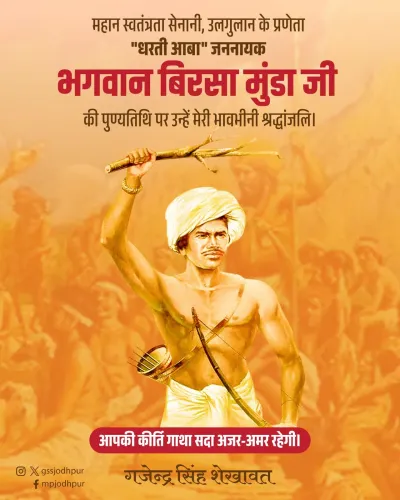
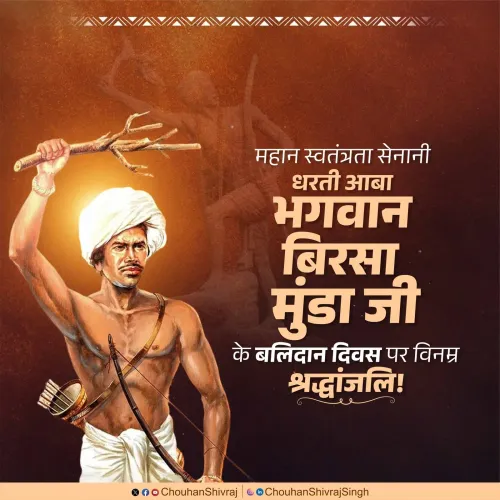
Birsa Munda (1875–1900) was a Munda tribal leader from the Chota Nagpur plateau in present-day Jharkhand. He led the Ulgulan — meaning 'Great Tumult' — a late-19th-century uprising that combined socio-religious reform with armed resistance against British colonial authority and landlord exploitation. The movement also pushed back against missionary influence in tribal areas, a dimension that Shah explicitly invoked in his remarks. Birsa Munda died in British custody in 1900 at the age of 25 and has since become a central figure in India's tribal freedom narrative.
Policy backdrop
The central government declared 15 November — Birsa Munda's birth anniversary — as Janjatiya Gaurav Divas (Tribal Pride Day) in 2021, institutionalising annual commemorations of his contribution and that of tribal communities to India's independence struggle. The 2026 observances form part of the 150th birth anniversary year celebrations. The government has also invested in museum projects and official programmes to integrate 19th-century tribal leaders more prominently into the national freedom narrative. Separately, the Scheduled Tribes and Other Traditional Forest Dwellers (Recognition of Forest Rights) Act, 2006, remains the principal legislative framework recognising individual and community rights over forest land historically occupied by tribal groups.
Stakeholders and impact
India's Scheduled Tribe population — spread across states such as Jharkhand, Odisha, Chhattisgarh, Madhya Pradesh and the Northeast — is a significant electoral and social constituency. Outreach events of this kind carry weight in states with large tribal populations. The explicit reference to resistance against religious conversion reflects a recurring theme in the ruling party's tribal messaging, which frames indigenous identity as inseparable from traditional belief systems and positions conversion as a threat to social cohesion.
What's next
With the 150th birth anniversary year of Birsa Munda continuing through 2026, further official programmes — including Janjatiya Gaurav Divas on 15 November 2026 — are expected. Observers will watch for any new legislative or budgetary proposals on tribal welfare, forest rights or anti-conversion measures in the coming sessions of Parliament, and whether this anniversary year translates into policy announcements targeting tribal communities.
Point of View
The government is signalling that tribal outreach remains a priority well beyond election cycles in Jharkhand or Odisha. The explicit anti-conversion messaging connects a 19th-century historical narrative to contemporary policy debates, reinforcing the party's long-standing position on protecting 'indigenous' cultural identity. How this translates into concrete legislative or budgetary action in Parliament will be the real test of the anniversary year's political weight.
NationPress
26 Sept 2026
Frequently Asked Questions
Who was Birsa Munda and why is he important?
Birsa Munda (1875–1900) was a tribal leader from the Chota Nagpur plateau who led the Ulgulan uprising against British colonial rule and missionary activity. He is revered as 'Dharti Aaba' (Father of the Earth) and is a central figure in India's tribal freedom narrative.
What is Janjatiya Gaurav Divas?
Janjatiya Gaurav Divas (Tribal Pride Day) is observed on 15 November each year, coinciding with Birsa Munda's birth anniversary. The Government of India declared it in 2021 to honour tribal communities' contributions to the freedom struggle.
What is the Ulgulan movement?
The Ulgulan, meaning 'Great Tumult,' was a late-19th-century tribal uprising in present-day Jharkhand led by Birsa Munda. It combined socio-religious reform with armed resistance against British colonial authority, landlord exploitation, and missionary influence.
Why did Amit Shah mention religious conversion at the Birsa Munda event?
Shah invoked Birsa Munda's historical resistance to missionary activity as part of his legacy, stating that Birsa Munda had 'awakened' tribal society against conversion. This reflects a recurring theme in the ruling party's tribal outreach, which frames indigenous identity as linked to traditional belief systems.
What is the significance of Birsa Munda's 150th birth anniversary in 2026?
The year 2026 marks 150 years since Birsa Munda's birth in 1875. The central government is observing it with commemorative events across the country, with Janjatiya Gaurav Divas on 15 November 2026 expected to be the centrepiece.