Shekhawat Greets Nation on Govats Dwadashi
Synopsis
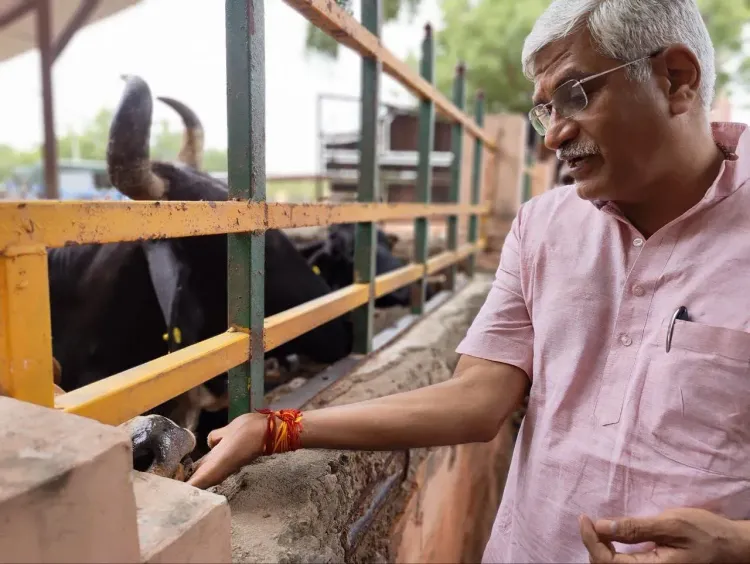
Union Culture and Tourism Minister Gajendra Singh Shekhawat greeted the nation on Govats Dwadashi (Bachh Baras), calling Gaumata an inseparable part of India's lifestyle and describing service to cattle as a humane expression of reverence for nature and the environment.
Key Takeaways
Union Minister Gajendra Singh Shekhawat posted Govats Dwadashi greetings on 5 November 2026 .
The festival, also called Bachh Baras , falls on the twelfth day of Krishna Paksha in Kartik, two days before Dhanteras.
Shekhawat described Gaumata as 'an inseparable part of India's lifestyle' and worship as 'a symbol of gratitude.' He framed service to cattle ( Govans seva ) as a 'humane expression of reverence towards nature and the environment.' The festival is especially prominent in Rajasthan, Gujarat, and Madhya Pradesh .
On the auspicious morning of Govats Dwadashi (Bachh Baras), Union Culture and Tourism Minister Gajendra Singh Shekhawat extended warm wishes to the nation on Thursday, 5 November 2026, calling the sacred cow an inseparable part of India's way of life.
Posting on X in Hindi, Shekhawat wrote: 'गोवत्स द्वादशी (बच्छ बारस) की मंगलकामनाएँ!' — 'Greetings on Govats Dwadashi (Bachh Baras)!' He described Gaumata, the revered cow, as 'an inseparable part of India's lifestyle' and called worshipping her 'a symbol of gratitude towards her.' He added that the service of cattle (Govans) is 'a humane expression of reverence towards nature and the environment.'
Govats Dwadashi: What the festival marks
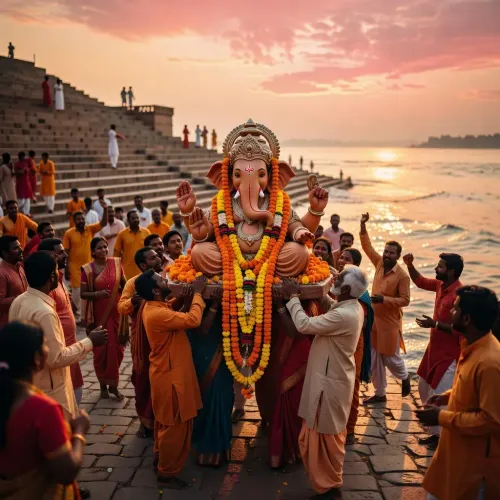
Govats Dwadashi, also known as Bachh Baras, falls on the twelfth day (Dwadashi) of the Krishna Paksha in the Hindu month of Kartik — typically observed two days before Dhanteras, in the run-up to the Diwali festival week. On this day, devotees traditionally worship the cow and her calf, offer fodder and jaggery, and pray for the welfare of their families. The festival is especially prominent in Rajasthan, Gujarat, and parts of Madhya Pradesh.
Cow as cultural and environmental symbol
Shekhawat's message wove together two distinct threads: the deep cultural and religious reverence for the cow in Hindu tradition, and a broader ecological framing of Govans seva (service to cattle) as an act of environmental responsibility. This dual framing — spiritual duty aligned with ecological consciousness — reflects a recurring motif in how senior BJP leaders articulate cow-related sentiment to a wide public audience during festive seasons.
As a Lok Sabha MP from Jodhpur, Rajasthan — a state where cattle-rearing communities form a significant social and electoral constituency — Shekhawat's message carries both cultural resonance and political salience during the high-footfall festive week.
Point of View
Not just religious duty. As a Rajasthan MP, the message speaks directly to cattle-rearing communities whose cultural identity is closely tied to these traditions. It is a low-stakes but deliberate act of political communication during the most high-attention week of India's festive calendar. The dual-register framing — devotion plus ecology — reflects the BJP's ongoing effort to anchor cultural conservatism within a modern, development-compatible vocabulary.
NationPress
5 Nov 2026
Frequently Asked Questions
What is Govats Dwadashi or Bachh Baras?
Govats Dwadashi, also called Bachh Baras, is a Hindu festival observed on the twelfth day of Krishna Paksha in the month of Kartik. Devotees worship the cow and her calf, offer fodder and jaggery, and pray for family welfare. It falls two days before Dhanteras, in the Diwali festival week.
Why did Gajendra Singh Shekhawat post about Govats Dwadashi?
As Union Culture and Tourism Minister and a senior BJP leader from Rajasthan, Shekhawat extended festival greetings, calling the cow an inseparable part of India's lifestyle and describing service to cattle as a humane act of reverence for nature and the environment.
In which states is Govats Dwadashi most prominently celebrated?
Govats Dwadashi is especially prominent in Rajasthan, Gujarat, and parts of Madhya Pradesh, where cattle-rearing communities observe it with traditional worship, offerings, and prayers.
What does 'Govans seva' mean in the context of this festival?
'Govans seva' refers to the service and care of cattle. Shekhawat used the term to describe it not only as a religious act but also as a humane expression of reverence for nature and the environment.
When is Govats Dwadashi in 2026?
In 2026, Govats Dwadashi (Bachh Baras) falls on 5 November , two days before Dhanteras, in the lead-up to the Diwali festival week.