BJP MP Arun Govil cites India's SC rulings on right to health at UN dialogue
Synopsis
BJP MP Arun Govil told the UN Special Rapporteur on health rights that India's Supreme Court has, since 1995, treated the right to health as part of the constitutional right to life — and went further in 2024 by recognising freedom from climate change effects as a constitutional right. It is a pointed effort to position India's judiciary as a global reference point on justiciable health rights.
Key Takeaways
BJP MP Arun Govil addressed a UN Special Rapporteur dialogue on the right to health in New York on 23 October 2026 .
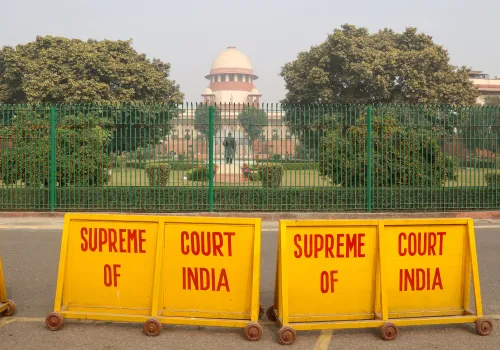
He cited the Supreme Court's expansive reading of Article 21 to include the right to health and medical care, dating back to a 1995 ruling .
A 2024 Supreme Court judgment recognised freedom from the adverse effects of climate change as a constitutional right under Article 21 .
Govil acknowledged persistent barriers of cost, language, distance, and legal awareness limiting citizens' access to health rights.
He also referenced recent judicial directions on front-of-pack food warning labels as part of the commercial determinants of health.
India reaffirmed its commitment to healthcare accessibility, affordability, and equity on the global platform.
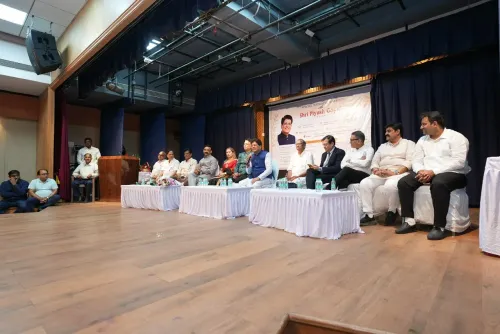
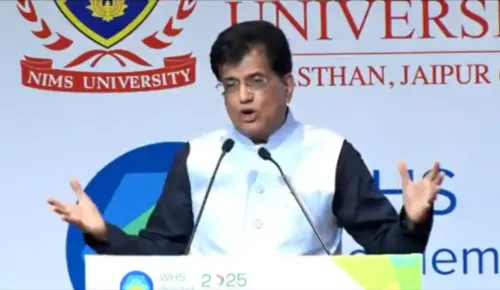
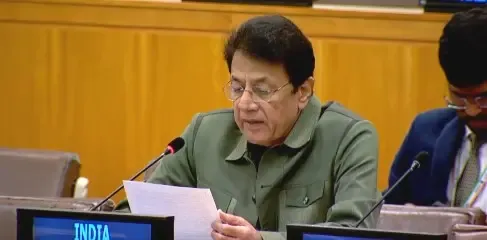
Bharatiya Janata Party (BJP) Member of Parliament Arun Govil on 23 October 2026 represented India at an interactive dialogue with the United Nations Special Rapporteur on the right to the enjoyment of the highest attainable standard of physical and mental health in New York, highlighting how India's Supreme Court has progressively expanded the right to health through landmark constitutional interpretations.
Key Developments at the UN Dialogue
The engagement, organised around the theme 'Justiciability of the right to health to ensure justice and accountability', saw Govil acknowledge real-world barriers that limit citizens' access to healthcare. According to details shared by the Permanent Mission of India to the United Nations, New York, he noted that issues of cost, language, distance, and limited legal awareness continue to restrict citizens' ability to fully enjoy their right to health.
Govil also took note of concerns raised in the Special Rapporteur's report about corporate power evading accountability, while commending the report's focus on good practices from member states across the world.
Supreme Court's Expansive Reading of Article 21
Central to Govil's address was India's judicial track record on health rights. He pointed to the Supreme Court's broad interpretation of Article 21 of the Constitution — which guarantees the right to life — to encompass the right to health and medical care.
'The report's theme particularly resonates with India's own experience. Over the years the Supreme Court of India has expansively interpreted Article 21 of our Constitution that is right to life to include right to health,' Govil said.
He drew attention to a 1995 Supreme Court ruling which held that the right to health and medical care are fundamental rights, directing employers to provide health insurance and safe working conditions so that industrial growth did not come at the cost of workers' well-being. This judgment is widely regarded as a foundational precedent linking labour welfare to constitutional guarantees.
Climate, Environment and Food Labelling
Govil broadened the conversation to include what he described as the determinants of health. He noted that Indian courts have recognised a clean and healthy environment as integral to Article 21, and highlighted a 2024 Supreme Court ruling that recognised freedom from the adverse effects of climate change as a constitutional right — one of the more recent and expansive judicial interpretations in this domain.
He also referred to recent judicial directions on front-of-pack warning labels on packaged foods, connecting the issue to commercial determinants of health, and welcomed the Special Rapporteur's reference to an Indian Supreme Court ruling on access to reproductive care.
India's Commitment to Healthcare Equity
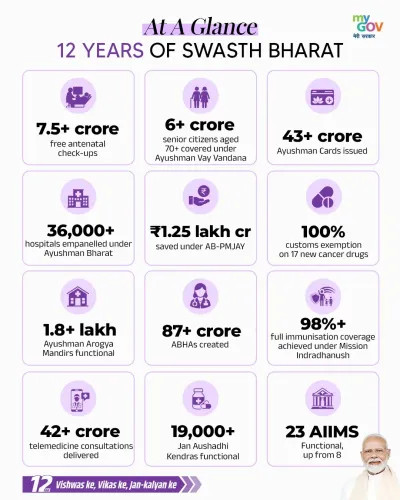
Concluding his remarks, Govil reaffirmed India's commitment to making healthcare more accessible, affordable, and equitable. 'India has overhauled its health care system to ensure accessibility, affordability and equity. We remain committed to ensure that every citizen has access to affordable and quality health care services,' he said.
This intervention at the UN underscores India's broader diplomatic posture of presenting its domestic judicial and policy record as a model for the Global South, even as critics note that ground-level healthcare access in rural India remains uneven. How India's court-driven health rights framework translates into enforceable outcomes for the most marginalised citizens will remain a key measure of its credibility on the global stage.
Point of View
But it carries an implicit tension: the court's landmark rulings on the right to health have not uniformly translated into enforceable outcomes for India's most marginalised populations, where out-of-pocket health expenditure remains among the highest globally. Citing the 2024 climate-change-as-constitutional-right ruling is bold and genuinely notable, but mainstream coverage will miss the fact that such rulings still await robust enforcement mechanisms. The real question the UN dialogue should press India on is not whether the Supreme Court has said the right things — it clearly has — but whether the executive has built the institutional plumbing to make those rulings real for a daily-wage worker in rural Bihar or Odisha.
NationPress
23 Oct 2026
Frequently Asked Questions
What did BJP MP Arun Govil say at the UN health rights dialogue?
Arun Govil represented India at an interactive dialogue with the UN Special Rapporteur on the right to health in New York on 23 October 2026, citing the Supreme Court's expansive interpretation of Article 21 of the Constitution to include the right to health. He highlighted landmark rulings from 1995 and 2024, and acknowledged barriers such as cost, language, distance, and limited legal awareness that restrict citizens' access to healthcare.
What is Article 21 and how has India's Supreme Court interpreted it?
Article 21 of the Indian Constitution guarantees the right to life. The Supreme Court has progressively expanded this to include the right to health, medical care, a clean environment, and — in a 2024 ruling — freedom from the adverse effects of climate change, making these enforceable fundamental rights.
What is the significance of the 1995 Supreme Court ruling Govil referenced?
The 1995 ruling held that the right to health and medical care are fundamental rights under Article 21, directing employers to provide health insurance and safe working conditions to workers. It established the principle that industrial growth must not come at the cost of workers' health, and is widely cited as a foundational precedent on health rights in India.
What was the 2024 Supreme Court ruling on climate change Govil mentioned?
In 2024, the Supreme Court of India recognised freedom from the adverse effects of climate change as a constitutional right under Article 21. It is one of the most expansive recent judicial interpretations linking environmental conditions to fundamental rights.
Why is India highlighting its judicial record on health rights at the UN?
India is presenting its domestic judicial track record as a model for other member states, particularly in the Global South, at a time when the UN is focused on the justiciability of health rights — meaning whether health rights can be enforced through courts. The engagement positions India's Supreme Court jurisprudence as a benchmark for turning health into an enforceable right rather than a policy aspiration.