Rijiju Marks 12 Years of Healthcare Reforms Under BJP Rule
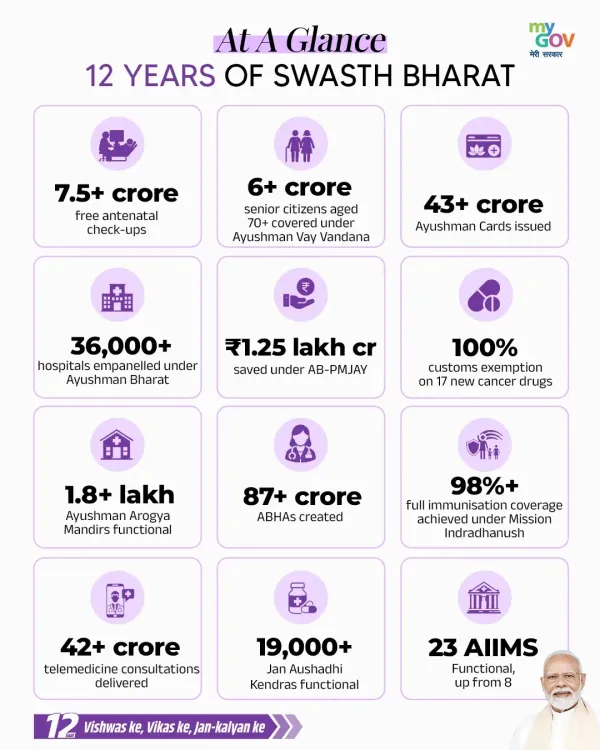
Synopsis
Union Parliamentary Affairs Minister Kiren Rijiju marked 12 years of government healthcare reforms on June 14, 2026, highlighting expanded insurance coverage, affordable generic medicines, digital health infrastructure, and technology-driven access as pillars of a healthier India.
Key Takeaways
Kiren Rijiju posted on June 14, 2026 under #12YearsOfSwasthBharat , marking a decade-plus of BJP-led health reforms.
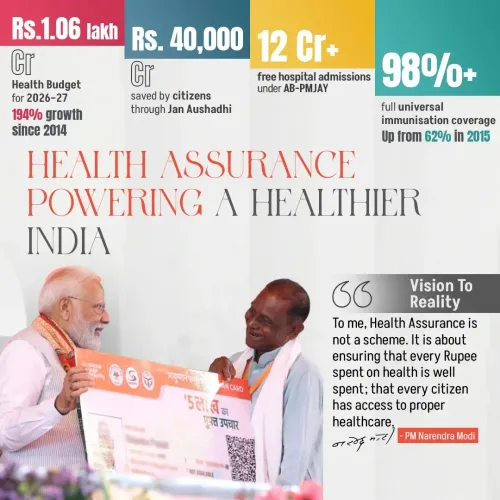
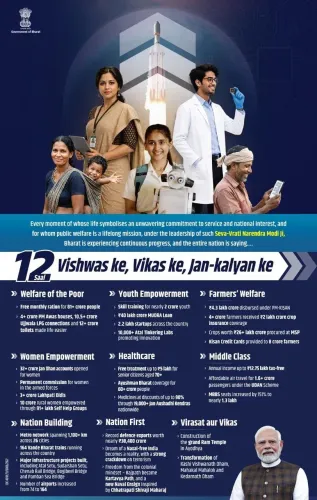
Ayushman Bharat PM-JAY , launched in 2018 , offers up to Rs 5 lakh annual hospitalisation cover targeting over 50 crore beneficiaries.
Pradhan Mantri Jan Aushadhi Yojana operates over 10,000 Kendras selling generic medicines at 50–90 per cent lower prices.
The National Digital Health Mission (2020) introduced health IDs, digital records, and telemedicine via eSanjeevani .
The government's strategy combines demand-side insurance financing with supply-side primary care and generic drug access.
Parliamentary scrutiny of the next health budget and PM-JAY expansion targets is expected in the coming months.
Union Parliamentary Affairs Minister Kiren Rijiju on Sunday, June 14, 2026, hailed twelve years of healthcare reforms under the current government, asserting that expanded coverage, affordable medicines, stronger infrastructure, and technology-driven delivery have built a more inclusive health ecosystem across India.
Context
Posting under the hashtag #12YearsOfSwasthBharat (12 Years of Healthy India), Rijiju wrote: 'The true measure of progress is when quality healthcare reaches every household.' The post marks a political milestone — twelve years since the Bharatiya Janata Party came to power at the Centre in May 2014 — and frames the anniversary through the lens of public health delivery.
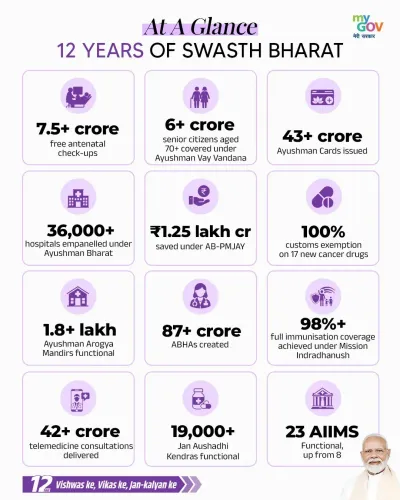
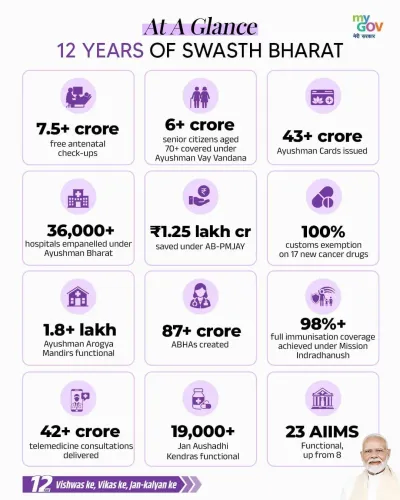
The message highlights four broad pillars: expanded coverage, strengthened infrastructure, access to affordable medicines, and technology-enabled services. While the post does not cite specific figures, it reflects the government's broader communications strategy of framing health as a flagship achievement of the decade in power.
Policy Backdrop
Ayushman Bharat PM-JAY, launched in 2018, is the centrepiece of this narrative — a national health insurance scheme providing up to Rs 5 lakh annual hospitalisation cover per family, targeting over 50 crore beneficiaries from low-income households. It combined demand-side insurance with supply-side investment in Health and Wellness Centres, moving the country toward universal health coverage.
The Pradhan Mantri Jan Aushadhi Yojana, operational since 2016, has expanded to over 10,000 Jan Aushadhi Kendras selling quality generic medicines at 50–90 per cent lower prices than branded alternatives, directly addressing affordability for rural and low-income patients. On the technology front, the National Digital Health Mission, rolled out from 2020, introduced unique health IDs, digital health records, and telemedicine platforms such as eSanjeevani — an infrastructure that proved critical during and after the pandemic.
The National Health Policy 2017 had earlier set a target of raising public health expenditure to 2.5 per cent of GDP and strengthening primary care, while Mission Indradhanush, expanded from 2014–15, accelerated full immunisation in high-risk and underserved districts. Successive Union budgets since 2014 have steadily raised allocations across these programmes, with states encouraged to supplement central coverage.
Stakeholders and Impact
The primary beneficiaries of these reforms are low-income households and rural patients — segments historically underserved by both public and private health systems. The combination of insurance cover, generic drug access, and telemedicine has, in principle, reduced out-of-pocket expenditure and improved geographic reach.
Technology integration, particularly telemedicine, accelerated sharply after 2020 to address access gaps exposed by the pandemic, extending specialist consultations to districts with limited physical infrastructure. The government's approach — blending demand-side financing with supply-side strengthening — has become a model cited in its own policy communications as a template for emerging economies.
What's Next
Attention will now turn to parliamentary discussions on the next health budget and any new targets for PM-JAY beneficiary expansion or the operationalisation of additional Health and Wellness Centres. The #12YearsOfSwasthBharat campaign signals that health will remain a central political and policy theme as the government approaches the mid-term of its current tenure, with further announcements on digital health infrastructure and generic medicine access likely to follow.
Point of View
Timed to the twelfth anniversary of the BJP's return to power, framing public health delivery as a core governance achievement. By invoking coverage, affordability, infrastructure, and technology in a single message, the party signals that health — once seen as a political liability — is now a campaign asset. The hashtag-driven campaign suggests a coordinated messaging effort across the ruling party ahead of budget season, when health allocations will face parliamentary scrutiny. The post also reflects a broader pattern: the government increasingly uses social media milestones to set the narrative on welfare schemes before formal policy announcements.
NationPress
24 Sept 2026
Frequently Asked Questions
What is #12YearsOfSwasthBharat?
#12YearsOfSwasthBharat is a hashtag campaign marking twelve years of BJP-led healthcare reforms since the party came to power in May 2014, used by ministers including Kiren Rijiju to highlight progress in health coverage, medicines, and digital health.
What is Ayushman Bharat PM-JAY and who benefits from it?
Ayushman Bharat PM-JAY is India's national health insurance scheme launched in 2018, providing up to Rs 5 lakh annual hospitalisation cover per family and targeting over 50 crore beneficiaries from low-income households.
How does Pradhan Mantri Jan Aushadhi Yojana help patients?
The scheme sells quality generic medicines through over 10,000 Jan Aushadhi Kendras at prices 50–90 per cent lower than branded drugs, reducing out-of-pocket healthcare costs for ordinary citizens.
What is the National Digital Health Mission?
Rolled out in 2020, the National Digital Health Mission creates unique health IDs and digital health records for citizens and supports telemedicine platforms like eSanjeevani to extend healthcare access to remote areas.
What healthcare targets has the Indian government set?
The National Health Policy 2017 set a target of raising public health expenditure to 2.5 per cent of GDP, while Mission Indradhanush aims for full immunisation coverage in high-risk and underserved districts across India.