PM Modi marks 12 years of health sector transformation

Synopsis
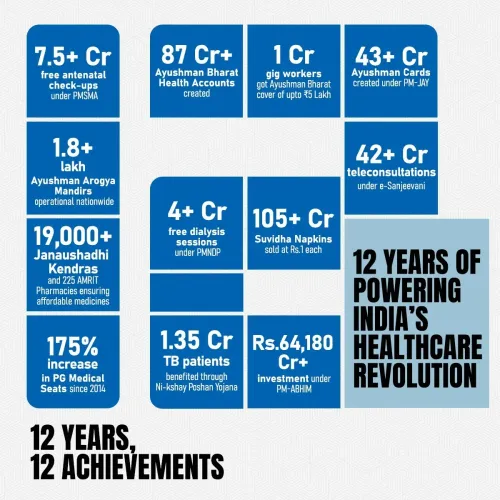
Prime Minister Narendra Modi marked twelve years of health sector governance on June 14, 2026, spotlighting the Ayushman Bharat umbrella programme, PM-JAY insurance cover of up to Rs 5 lakh, Mission Indradhanush, and the 2021 health infrastructure mission as pillars of a transformed public health landscape.
Key Takeaways
PM Modi posted on June 14, 2026 to mark 12 years of health sector transformation under his government.
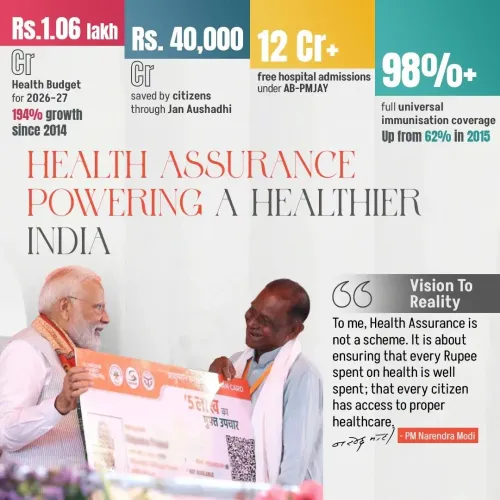
Ayushman Bharat , launched in 2018 , provides health insurance of up to Rs 5 lakh per year to eligible low-income families under PM-JAY .
Mission Indradhanush , initiated in 2014 , targeted full vaccination coverage in high-risk and underserved districts.
The PM-Ayushman Bharat Health Infrastructure Mission was added in 2021 to strengthen critical care and disease surveillance at district level.
The policy framework is anchored in the National Health Policy 2017 , whose public spending targets remain under parliamentary review.
ASHA workers and rural populations are the primary frontline stakeholders of this scheme-based health delivery architecture.
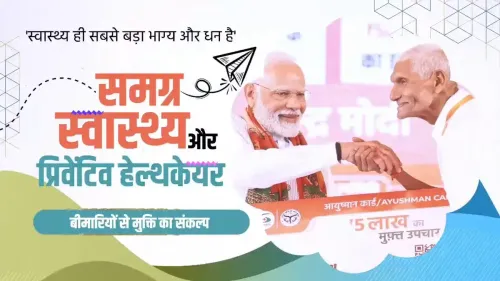
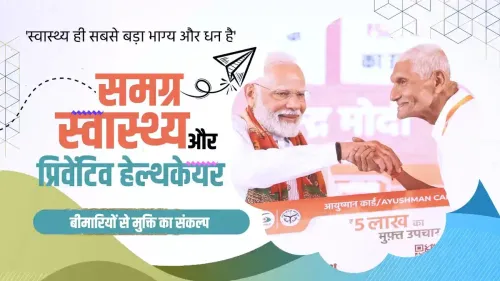
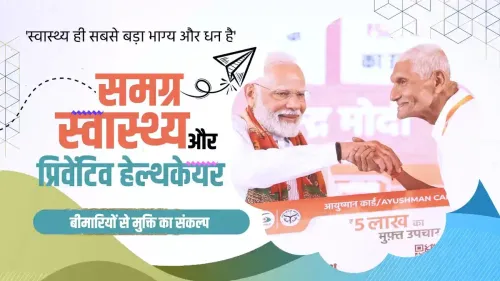
Prime Minister Narendra Modi on Sunday, June 14, 2026, shared a post on X highlighting what he described as a transformation of India's health sector over the past twelve years, marking the occasion with the hashtag #12YearsOfSwasthBharat — translating broadly to '12 Years of a Healthy India'.
Context
The post, brief in text, uses the phrase 'a glimpse of how the health sector has been transformed' to frame twelve years of central government health policy under the Bharatiya Janata Party-led administration. Modi has been Prime Minister since May 2014, making this anniversary a marker of his government's full tenure in health policymaking. The hashtag signals a coordinated communication push around the milestone.
The twelve-year arc spans several landmark interventions, beginning with the launch of Mission Indradhanush in 2014, an immunisation campaign targeting full vaccination coverage in high-risk and underserved districts across the country.
Policy Backdrop
The centrepiece of the government's health architecture is Ayushman Bharat, announced in the 2018 Union Budget. The umbrella programme combines two pillars: the Pradhan Mantri Jan Arogya Yojana (PM-JAY), which provides health insurance cover of up to Rs 5 lakh per year for eligible low-income families for secondary and tertiary hospitalisation, and a network of Health and Wellness Centres aimed at strengthening primary care.
In 2021, the government added a third layer through the PM-Ayushman Bharat Health Infrastructure Mission, designed to bolster critical care facilities and disease surveillance infrastructure at district and block levels. These schemes were anchored in the National Health Policy 2017, which set targets for raising public health expenditure and advancing universal health coverage.
Running alongside insurance and infrastructure initiatives has been a push for digital health records and the integration of AYUSH services into the mainstream health delivery system, reflecting a broader preference for scheme-based, centrally sponsored delivery mechanisms.
Stakeholders and Impact
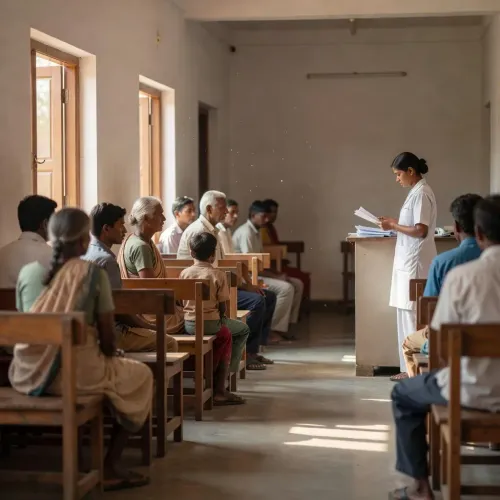
Low-income households and rural populations are the primary intended beneficiaries of this policy architecture, with ASHA workers — Accredited Social Health Activists — serving as the frontline link between communities and government programmes. The expansion of wellness centres has been particularly significant for populations in districts that historically lacked access to primary care facilities.
The scheme-based approach has drawn both support and scrutiny: proponents argue it has extended a formal health safety net to previously uncovered families, while critics have noted that overall public health expenditure as a share of GDP has remained a subject of ongoing parliamentary debate. The National Health Policy 2017 targets on spending remain under review.
What's Next
Attention will now turn to the Union Budget health allocations for 2026-27 and whether the government announces new phases or expanded coverage under Ayushman Bharat. A parliamentary review of the National Health Policy targets is also anticipated, which will provide a formal assessment of progress against the benchmarks set nearly a decade ago. The anniversary communication is likely a precursor to further policy announcements in the health space.
Point of View
Visible, centrally branded delivery over broader federal health financing. This approach has successfully extended formal coverage to millions but leaves the structural question of public health expenditure as a share of GDP unresolved. The anniversary framing is likely a runway for fresh announcements in the 2026-27 budget cycle.
NationPress
19 Sept 2026
Frequently Asked Questions
What is #12YearsOfSwasthBharat about?
#12YearsOfSwasthBharat marks twelve years of health sector policy under Prime Minister Narendra Modi's government since 2014, highlighting schemes such as Ayushman Bharat, PM-JAY, and Mission Indradhanush.
What is Ayushman Bharat and who benefits from it?
Ayushman Bharat is an umbrella health programme launched in 2018 that combines PM-JAY health insurance — providing up to Rs 5 lakh cover — with Health and Wellness Centres, primarily benefiting low-income and rural families.
What is the Pradhan Mantri Jan Arogya Yojana (PM-JAY)?
PM-JAY is the insurance component of Ayushman Bharat that provides up to Rs 5 lakh per year in health cover for secondary and tertiary hospitalisation to eligible low-income households across India.
What is Mission Indradhanush?
Mission Indradhanush is an immunisation campaign launched in 2014 to achieve full vaccination coverage in high-risk and underserved districts of India, targeting children and pregnant women.
What health policy announcements are expected next from the Modi government?
Analysts are watching the Union Budget 2026-27 for new health allocations and possible expanded phases of Ayushman Bharat, alongside a parliamentary review of the National Health Policy 2017 targets.