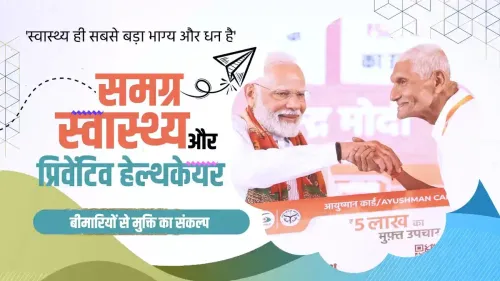
CM Mohan Yadav Hails 12 Years of Health Reforms Under Modi
Synopsis
MP Chief Minister Dr. Mohan Yadav marked the BJP's '12 Years of Swasth Bharat' campaign on June 14, 2026, crediting PM Modi's government with transforming Indian healthcare through Ayushman Bharat, Jan Aushadhi Kendras, new AIIMS campuses, and digital health infrastructure.
Key Takeaways
Mohan Yadav posted on June 14, 2026 praising 12 years of health sector transformation under PM Narendra Modi .
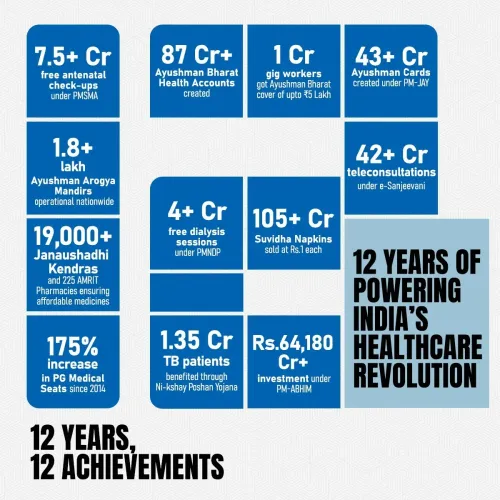
Ayushman Bharat provides up to Rs 5 lakh annual insurance cover targeting over 10.74 crore families since its September 2018 launch.
Jan Aushadhi Kendras have been scaled toward a target of over 10,000 outlets nationwide, offering affordable generic medicines.
New AIIMS campuses , including one for Madhya Pradesh , were approved across Union Budgets from 2015 to 2023 .
The Ayushman Bharat Digital Mission launched in August 2020 established a national digital health ecosystem with unique health IDs.
CM Yadav reaffirmed Madhya Pradesh government's commitment to delivering quality health services to every citizen in the state.
Madhya Pradesh Chief Minister Dr. Mohan Yadav on Sunday, June 14, 2026, credited the 12-year tenure of Prime Minister Narendra Modi with delivering 'unprecedented transformation' in India's healthcare sector, citing flagship initiatives including Ayushman Bharat, Jan Aushadhi Kendras, new AIIMS campuses, and digital health services as pillars of expanded health security for crores of families.
Context
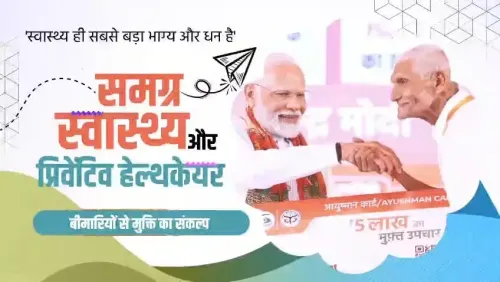
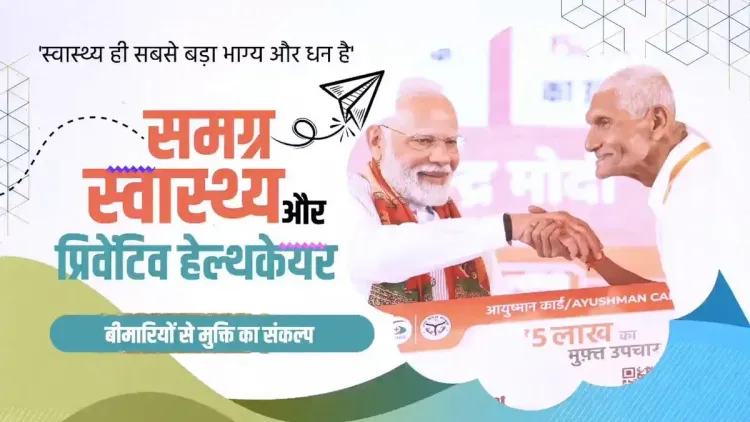
Opening with the Sanskrit verse 'Aarogyam paramam bhaagyam, swasthyam sarvaarthasaadhanam' ('Good health is the greatest fortune; wellness is the means to all ends'), CM Yadav's post marked the #12YearsOfSwasthBharat campaign — a BJP-driven social media initiative commemorating a dozen years of the Modi government's health agenda. The post underscores the ruling party's effort to consolidate its welfare narrative ahead of political cycles, drawing a direct line between central policy design and grassroots health outcomes.
Policy Backdrop
Ayushman Bharat Pradhan Mantri Jan Arogya Yojana, launched in September 2018, provides insurance cover of up to Rs 5 lakh per family per year for secondary and tertiary hospitalisation, targeting over 10.74 crore families — primarily from low-income and vulnerable groups. The scheme is among the world's largest publicly funded health insurance programmes and has been a centrepiece of the BJP's social welfare pitch.
Parallel to insurance coverage, the Pradhan Mantri Bharatiya Janaushadhi Pariyojana has scaled Jan Aushadhi Kendras — outlets dispensing quality generic medicines at significantly reduced prices — with a target of over 10,000 centres nationwide since its relaunch in 2015. New AIIMS campuses, including one for Madhya Pradesh, were announced across successive Union Budgets from 2015 to 2023, aiming to decentralise tertiary medical education and care beyond legacy metropolitan hubs. The Ayushman Bharat Digital Mission, launched in August 2020, added a fourth layer by creating a national digital health ecosystem with unique health IDs for citizens.
Stakeholders and Impact
The primary beneficiaries of these interlocking schemes are low-income families and rural populations who historically faced high out-of-pocket medical expenditure and limited access to specialist care. State governments, including Madhya Pradesh, carry co-financing and implementation responsibilities — translating central scheme design into on-ground delivery through district hospitals, sub-centres, and empanelled private facilities.
CM Yadav affirmed that the Madhya Pradesh government continues to work 'with full commitment' to provide quality health services to every citizen of the state. This positions the state administration as an active partner in the Centre's health architecture rather than a passive recipient, reflecting the broader model of cooperative federalism the BJP has promoted across its governed states.
What's Next
Observers will watch Madhya Pradesh's state budget allocations and the physical progress of its new AIIMS campus as concrete indicators of how the state translates this political commitment into measurable outcomes. Annual targets for Jan Aushadhi Kendras and the enrolment pace under Ayushman Bharat in the state will serve as the clearest benchmarks. As the BJP consolidates its health welfare narrative nationally, CM Yadav's alignment with the #12YearsOfSwasthBharat messaging signals that state-level leaders are expected to amplify and operationalise this record heading into future electoral contests.
Point of View
With the '#12YearsOfSwasthBharat' hashtag functioning as a coordinated political messaging exercise. By invoking a Sanskrit health aphorism alongside specific scheme names, the post blends cultural resonance with policy credibility — a formula the party has refined over successive electoral cycles. The emphasis on Madhya Pradesh's own commitment signals that the state government is eager to be seen as a proactive implementer, not merely a beneficiary, of central health architecture. This alignment is particularly significant as the BJP seeks to consolidate its social-welfare record as a durable electoral asset across Hindi-heartland states.
NationPress
23 Sept 2026
Frequently Asked Questions
What is the Ayushman Bharat scheme and who benefits from it?
Ayushman Bharat Pradhan Mantri Jan Arogya Yojana provides up to Rs 5 lakh per year in health insurance cover per family for secondary and tertiary hospitalisation, targeting over 10.74 crore low-income families across India. It was launched in September 2018.
What are Jan Aushadhi Kendras?
Jan Aushadhi Kendras are government-backed outlets under the Pradhan Mantri Bharatiya Janaushadhi Pariyojana that sell quality generic medicines at significantly lower prices than branded alternatives. The network has been scaled toward a target of over 10,000 centres since the scheme's relaunch in 2015.
Is there a new AIIMS in Madhya Pradesh?
Yes, a new AIIMS campus for Madhya Pradesh was among those announced in successive Union Budgets between 2015 and 2023 as part of the central government's effort to decentralise tertiary medical education and care beyond established metros. Physical progress remains a key metric to watch.
What is the Ayushman Bharat Digital Mission?
The Ayushman Bharat Digital Mission, launched in August 2020, aims to create a national digital health ecosystem by issuing unique health IDs to citizens and linking health records across providers, making healthcare data portable and accessible.
What did MP CM Mohan Yadav say about health reforms on June 14, 2026?
CM Dr. Mohan Yadav posted on X crediting PM Narendra Modi's 12-year tenure with 'unprecedented transformation' in Indian healthcare, highlighting Ayushman Bharat, Jan Aushadhi Kendras, new AIIMS campuses, and digital health services, while reaffirming Madhya Pradesh's own commitment to quality healthcare for every citizen.