CM Sawant Hails 12 Years of Modi Govt Healthcare Reforms
Synopsis
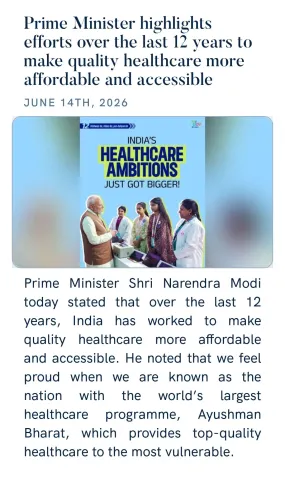
Goa Chief Minister Pramod Sawant on June 14, 2026 credited PM Narendra Modi's government with transforming India's healthcare over 12 years, citing Ayushman Bharat, Jan Aushadhi Kendras, new AIIMS campuses, expanded medical seats, and the Ayushman Bharat Digital Mission as pillars of an accessible, affordable, and inclusive health system.
Key Takeaways
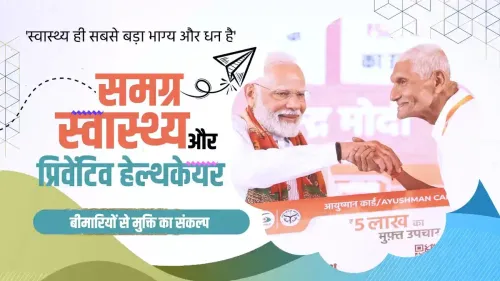
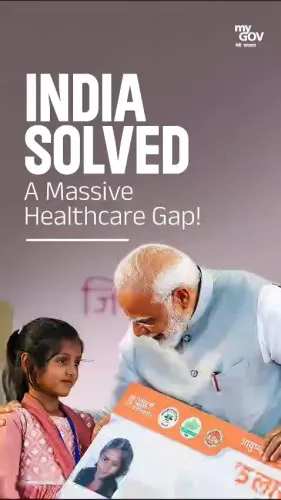
Goa CM Pramod Sawant posted on June 14, 2026 marking #12YearsOfSwasthBharat under PM Narendra Modi .
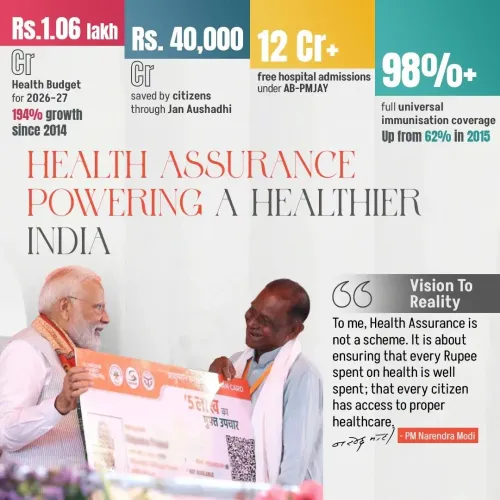
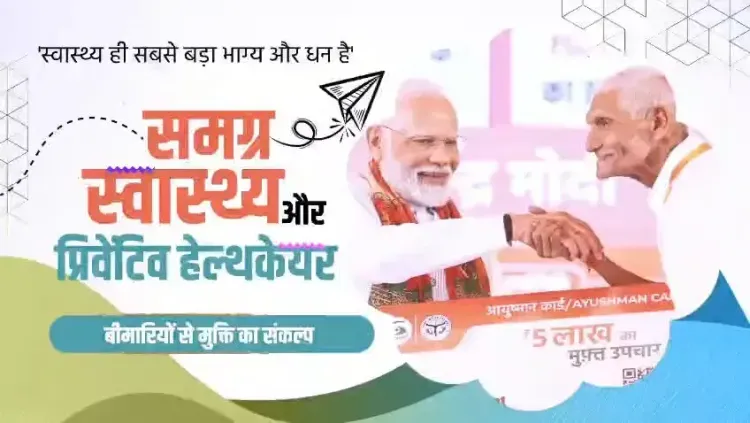
Ayushman Bharat provides health coverage of up to Rs 5 lakh per family per year for secondary and tertiary care.
Jan Aushadhi Kendras , scaled up from 2015 , sell quality generic medicines at reduced prices to lower out-of-pocket costs.
New AIIMS campuses were approved in phases between 2015 and 2019 under the Pradhan Mantri Swasthya Suraksha Yojana .
The Ayushman Bharat Digital Mission , announced in August 2020 , aims to build a digital health backbone through unique health IDs and interoperable records.
State co-financing and implementation capacity remain key variables in determining how uniformly these reforms reach citizens across India .
Goa Chief Minister Pramod Sawant on Sunday, June 14, 2026 took to X to credit Prime Minister Narendra Modi's government with a 'historic transformation' of India's healthcare sector over the past 12 years, citing flagship schemes spanning insurance coverage, affordable medicines, new medical institutions, and digital health infrastructure.
Context
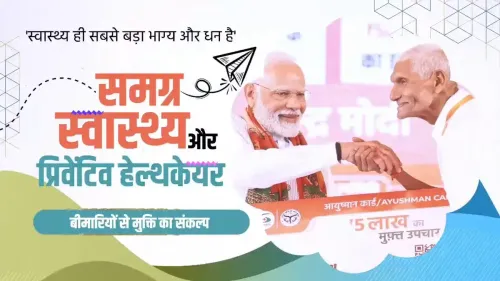
Sawant's post, tagged #12YearsOfSwasthBharat, frames the anniversary of the Modi government as a milestone in public health delivery. He lists several central government initiatives — from Ayushman Bharat to Jan Aushadhi Kendras to the Ayushman Bharat Digital Mission — as evidence of a citizen-centric shift in how healthcare reaches ordinary Indians. The post also highlights the promotion of Ayurveda and traditional medicine as part of a broader wellness agenda.
The message reflects a coordinated BJP communications effort marking over a decade of central health policy, with state leaders amplifying the national narrative.
Policy Backdrop
Ayushman Bharat Pradhan Mantri Jan Arogya Yojana, launched in September 2018, provides health coverage of up to Rs 5 lakh per family per year for secondary and tertiary hospitalisation, targeting economically vulnerable households. It is among the largest government-funded health assurance programmes in the world by intended coverage.
The Pradhan Mantri Bhartiya Janaushadhi Pariyojana — which operates Jan Aushadhi Kendras selling quality generic medicines at significantly reduced prices — was relaunched and scaled up from 2015 onwards under the Department of Pharmaceuticals. Cabinet approvals for new AIIMS campuses were issued in phases between 2015 and 2019 under the Pradhan Mantri Swasthya Suraksha Yojana, aimed at expanding tertiary care capacity in underserved states.
The Ayushman Bharat Digital Mission — initially announced as the National Digital Health Mission in August 2020 — seeks to assign unique health IDs to citizens and build interoperable electronic health records, laying a digital backbone for the broader health ecosystem.
Stakeholders and Impact
The schemes highlighted by Sawant primarily target low-income families and rural patients who historically faced high out-of-pocket medical expenditure. By combining demand-side financing through insurance with supply-side investments in tertiary infrastructure, the central government's approach aims to reduce financial catastrophe caused by medical emergencies.
Expansion of MBBS seats and new medical colleges addresses a long-standing shortage of trained doctors, particularly relevant for smaller states and districts. State health departments remain critical implementation partners, as most centrally sponsored health schemes require co-financing and active state-level administration, leading to variation in outcomes across regions.
Medical students and the broader AYUSH ecosystem — practitioners of Ayurveda, Yoga, Naturopathy, Unani, Siddha, and Homeopathy — are also direct beneficiaries of the policy emphasis on traditional medicine and wellness promotion.
What's Next
Attention will now turn to state budget allocations for 2026-27 and whether states including Goa have committed matching contributions to sustain Ayushman Bharat coverage at the ground level. The operationalisation timelines of recently sanctioned AIIMS campuses and the reach of digital health ID registration under the Ayushman Bharat Digital Mission will be key benchmarks for evaluating the claims of last-mile delivery.
Parliamentary committee reviews of the digital health mission's grievance redressal mechanisms are also anticipated, which could provide an independent assessment of how far the transformation has actually reached underserved populations.
Point of View
Where state leaders reinforce central government messaging on policy anniversaries to build a cumulative narrative of governance achievement. The framing of 'last-mile delivery' and 'self-reliance' directly echoes the Modi government's Atmanirbhar Bharat vocabulary, signalling disciplined on-message coordination ahead of any electoral cycle. However, the post sidesteps the well-documented challenge of uneven state adoption of centrally sponsored health schemes — a gap that independent assessments have repeatedly flagged. The real test of the '12-year transformation' claim lies in whether states like Goa have sustained their own budgetary commitments to match central outlays.
NationPress
24 Sept 2026
Frequently Asked Questions
What is Ayushman Bharat and who does it cover?
Ayushman Bharat Pradhan Mantri Jan Arogya Yojana, launched in September 2018, provides health insurance coverage of up to Rs 5 lakh per family per year for hospitalisation costs, targeting economically vulnerable households across India.
What are Jan Aushadhi Kendras?
Jan Aushadhi Kendras are government-backed stores that sell quality generic medicines at significantly lower prices than branded alternatives. The scheme was relaunched and expanded from 2015 under the Pradhan Mantri Bhartiya Janaushadhi Pariyojana.
How many new AIIMS have been approved under the Modi government?
Cabinet approvals for multiple new AIIMS campuses were issued in phases between 2015 and 2019 under the Pradhan Mantri Swasthya Suraksha Yojana, aimed at expanding tertiary healthcare in states that lacked such facilities. Exact current operational counts beyond training data cannot be confirmed.
What is the Ayushman Bharat Digital Mission?
The Ayushman Bharat Digital Mission, announced in August 2020, aims to assign unique digital health IDs to citizens and create interoperable electronic health records, building a digital infrastructure layer for India's health system.
Why is Goa CM Pramod Sawant posting about central health schemes?
Sawant's post is part of a broader BJP communication effort marking 12 years of the Modi government's health policy under the hashtag #12YearsOfSwasthBharat, with state leaders amplifying the central government's record on national schemes.