Shekhawat Highlights 12 Years of Healthcare Gains Under Modi Govt
Synopsis
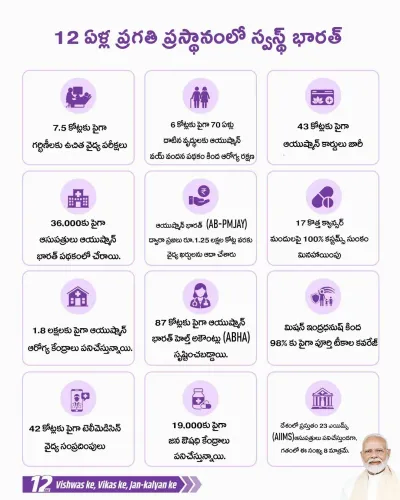
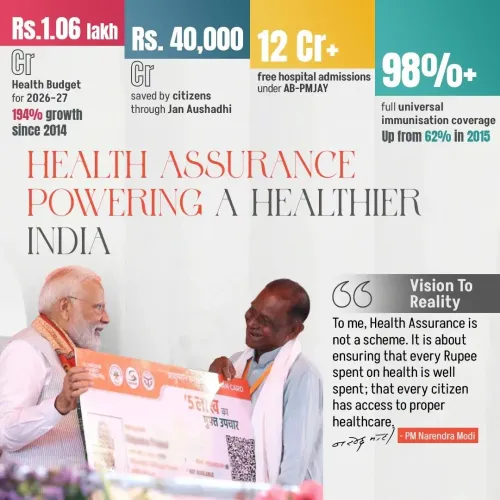
Union Minister Gajendra Singh Shekhawat has highlighted India's healthcare overhaul since 2014, citing Rs 1.25 lakh crore in free Ayushman Bharat treatment, 42 crore e-Sanjeevani consultations, AIIMS expansion from 8 to 23 campuses, and Rs 40,000 crore in public medicine savings through Jan Aushadhi Kendras.
Key Takeaways
Ayushman Bharat has reportedly delivered Rs 1.25 lakh crore worth of free treatment since the scheme's launch in 2018 .
Jan Aushadhi Kendras offer medicines at 50–90 per cent below market price, with claimed public savings of Rs 40,000 crore .
The Ayushman Vay Vandana Card extends cashless health cover to all citizens above 70 years of age .
The number of AIIMS campuses has grown from 8 in 2014 to 23 , while medical colleges have risen from 842 to over 2,100 .
The e-Sanjeevani telemedicine platform has facilitated more than 42 crore digital consultations, extending specialist access to rural India.
The post is part of the BJP's #12YearsOfSwasthBharat campaign marking twelve years of the Modi government .
Union Culture and Tourism Minister Gajendra Singh Shekhawat on Sunday, 14 June 2026, took to X to enumerate what he described as a decade-plus transformation of India's public healthcare system under the BJP-led Union government since 2014. The post, hashtagged #12YearsOfSwasthBharat, cited figures spanning insurance coverage, affordable medicines, medical infrastructure and digital health delivery.
Context
Shekhawat's post opens with the Sanskrit aphorism 'Aarogyam Paramam Bhagyam' (Health is the greatest fortune) and frames the 2014–2026 period as one in which helplessness was replaced by assured access. He argues that illness once drained the savings of middle-class families, a vulnerability the government set out to address through a series of interlocking schemes. The post is part of a coordinated BJP messaging campaign marking twelve years of the Modi government's social-sector record.
Policy Backdrop
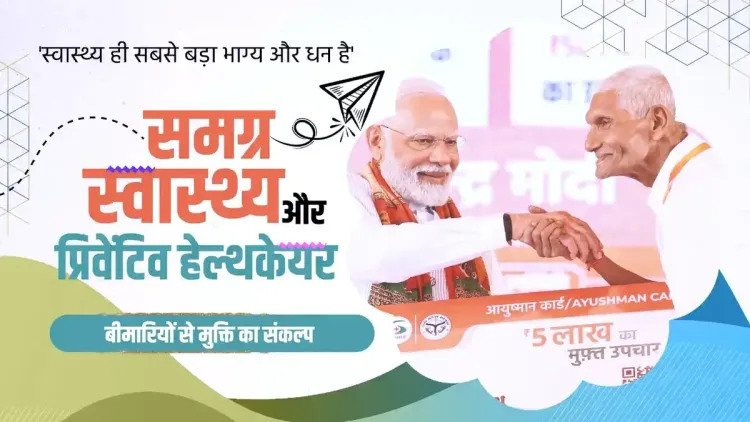
Ayushman Bharat, launched in 2018, is the flagship health-insurance programme providing cashless coverage of up to Rs 5 lakh per family annually for secondary and tertiary hospitalisation. Shekhawat's post claims Rs 1.25 lakh crore worth of free treatment has been delivered under the scheme. The Pradhan Mantri Bhartiya Janaushadhi Pariyojana, which expanded the network of Jan Aushadhi Kendras from 2015 onward, is credited with making medicines available at 50–90 per cent below market price, with the post asserting public savings of Rs 40,000 crore.
The Ayushman Vay Vandana Card, an extension of Ayushman Bharat, guarantees cashless treatment for every citizen above 70 years of age. On the infrastructure side, the post states that the number of AIIMS campuses rose from 8 in 2014 to 23, and medical colleges from 842 to more than 2,100, producing a record number of doctors. The National Health Policy 2017 had set universal health coverage and reduced out-of-pocket expenditure as overarching goals that these programmes were designed to serve.
Stakeholders and Impact
The primary beneficiaries highlighted are middle-class families, senior citizens aged 70 and above, and rural patients who previously lacked access to specialist care. The e-Sanjeevani national telemedicine platform, scaled significantly during and after the COVID-19 period, is cited as having delivered more than 42 crore digital consultations, bringing specialist advice to villages across the country. The expansion of medical colleges is also positioned as a supply-side intervention that addresses the longstanding doctor-to-population ratio gap in India.
The Jan Aushadhi network directly targets households that rely on out-of-pocket spending for routine medicines, a segment that bears a disproportionate share of India's healthcare burden. Together, these schemes represent a multi-pronged approach combining insurance, generic-drug access, infrastructure and digital delivery.
What's Next
Policy watchers will track the budgetary allocation for Ayushman Vay Vandana in the next Union Budget as a measure of the government's fiscal commitment to senior-citizen health coverage. Parliamentary standing committees are also expected to review the pace and quality of the medical-college seat expansion to assess whether infrastructure growth is translating into improved healthcare outcomes on the ground. The #12YearsOfSwasthBharat campaign signals that health will remain a central plank of BJP's political communication ahead of upcoming electoral cycles.
Point of View
Which means the post functions more as political signalling than a formal policy statement. Nonetheless, the underlying programmes such as Ayushman Bharat and Jan Aushadhi do have documented scale, and the campaign reflects a broader pattern of the Union government anchoring its re-election pitch on measurable welfare delivery.
NationPress
26 Sept 2026
Frequently Asked Questions
What is Ayushman Bharat and who benefits from it?
Ayushman Bharat is India's flagship government health-insurance scheme, launched in 2018, that provides cashless coverage of up to Rs 5 lakh per family per year for hospitalisation. It targets economically vulnerable families for secondary and tertiary care.
What is the Ayushman Vay Vandana Card?
The Ayushman Vay Vandana Card is an extension of the Ayushman Bharat programme that guarantees free, cashless health treatment to all Indian citizens aged 70 years and above, regardless of income.
How many AIIMS are there in India in 2026?
According to the figures cited by Minister Shekhawat, the number of AIIMS campuses in India has grown from 8 in 2014 to 23 by 2026, as part of the Union government's medical infrastructure expansion.
What is e-Sanjeevani and how does it help rural India?
e-Sanjeevani is the Union government's national telemedicine platform that connects patients — particularly in rural and remote areas — with specialist doctors via digital consultations. The minister's post claims it has facilitated over 42 crore consultations.
What are Jan Aushadhi Kendras?
Jan Aushadhi Kendras are government-backed outlets that sell quality generic medicines at 50–90 per cent below the market price of branded drugs. The network was significantly expanded from 2015 onward under the Pradhan Mantri Bhartiya Janaushadhi Pariyojana.