Shekhawat highlights Ayushman Bharat cover for 60 crore Indians

Synopsis
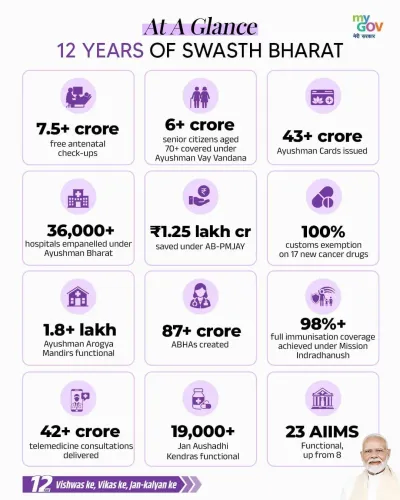
Union Minister Gajendra Singh Shekhawat on 14 June 2026 promoted Ayushman Bharat, citing free hospitalisation cover of up to ₹5 lakh for over 60 crore people and medicines at up to 90% discount through 19,000-plus Jan Aushadhi Kendras, under the government's #12YearsOfSwasthBharat campaign.
Key Takeaways
Union Minister Gajendra Singh Shekhawat posted on 14 June 2026 highlighting the Ayushman Bharat health scheme.
Ayushman Bharat PM-JAY claims to provide cashless treatment of up to ₹5 lakh per family annually for over 60 crore people.
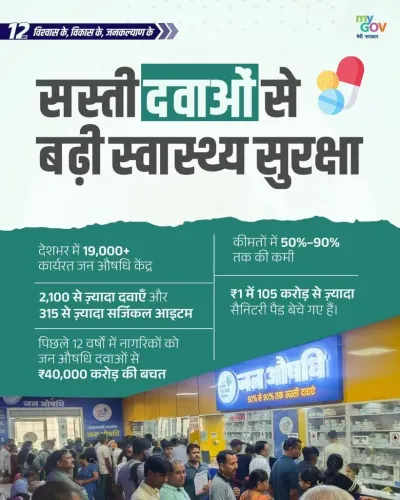
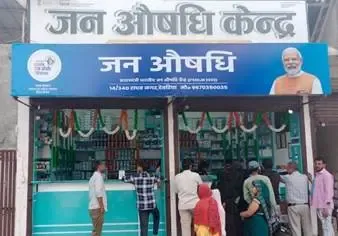
More than 19,000 Jan Aushadhi Kendras are said to offer generic medicines at up to 90% lower prices than branded alternatives.
The post was part of the #12YearsOfSwasthBharat campaign marking over a decade of central government health initiatives since 2014.
Ayushman Bharat PM-JAY was originally launched in September 2018 to cover the bottom 40% of India's population.
The government is also advancing the Ayushman Bharat Digital Mission to create unified digital health records alongside the insurance and medicine access programmes.
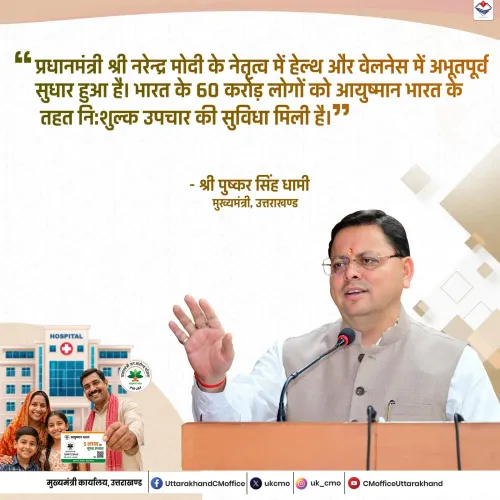
Union Culture and Tourism Minister Gajendra Singh Shekhawat on Sunday, 14 June 2026, highlighted the reach of the Ayushman Bharat health scheme, pointing to free treatment coverage of up to ₹5 lakh for more than 60 crore people and affordable medicines through over 19,000 Jan Aushadhi Kendras across India.
Context
Shekhawat's post, captioned 'Ayushman Bharat: Suraksha bhi, Samman bhi!' ('Ayushman Bharat: Security as well as dignity!'), underscores the central government's framing of public health as a core welfare entitlement. He wrote that 'illness never comes with prior notice, but now there is no need to worry about the cost of treatment,' reflecting the scheme's cashless, paperless hospitalisation promise for economically weaker sections.
The post was tagged with #12YearsOfSwasthBharat, situating it within a broader government communication drive marking over a decade of health-sector initiatives since 2014.
Policy Backdrop
Ayushman Bharat Pradhan Mantri Jan Arogya Yojana (PM-JAY) was launched in September 2018 under Prime Minister Narendra Modi to provide cashless secondary and tertiary hospitalisation coverage to the bottom 40 per cent of India's population. It is widely regarded as one of the world's largest government-funded health assurance schemes by beneficiary count.
The Pradhan Mantri Bhartiya Janaushadhi Pariyojana, which operates the Jan Aushadhi Kendra network, was scaled up significantly from 2014 onward, building on a 2008 pilot. The programme supplies quality generic medicines at prices 50 to 90 per cent lower than branded equivalents, directly addressing out-of-pocket medicine expenditure that has historically pushed low-income households into financial distress.
Stakeholders and Impact
The primary beneficiaries of both schemes are low-income families and patients requiring hospitalisation or regular medication. Catastrophic health expenditure — where medical costs push households below the poverty line — has been a persistent challenge in India, and the twin interventions of cashless hospitalisation and subsidised medicines are designed to act as complementary buffers.
Shekhawat's amplification of these figures, as a senior BJP Lok Sabha MP from Jodhpur, Rajasthan, also reflects the party's electoral messaging around welfare delivery ahead of future state and national cycles. The Jan Aushadhi network's physical footprint in small towns and rural areas makes it a visible, on-the-ground indicator of scheme reach.
What's Next
Parliamentary discussions on health budget allocations and any further expansion of beneficiary numbers or medicine coverage under both schemes will be closely watched. The government is also advancing the Ayushman Bharat Digital Mission, which aims to create unified digital health IDs and interoperable health records, potentially deepening the administrative infrastructure that supports PM-JAY. Whether the 60 crore beneficiary figure translates into equivalent active claim numbers remains a metric that policymakers and health economists will scrutinise in forthcoming parliamentary sessions.
Point of View
Signalling that health delivery has become a cross-cutting political asset for the BJP rather than the exclusive messaging territory of the Health Ministry. The #12YearsOfSwasthBharat hashtag is a deliberate narrative device, framing a decade of health policy as a unified arc rather than a series of discrete programmes. By pairing hospitalisation coverage with medicine affordability in a single post, the messaging attempts to address both acute and chronic healthcare cost anxieties simultaneously. The credibility of the 60-crore beneficiary figure will, however, remain a point of scrutiny for opposition parties and independent health economists in parliamentary forums.
NationPress
14 Sept 2026
Frequently Asked Questions
What is Ayushman Bharat and who is eligible?
Ayushman Bharat PM-JAY is a central government scheme providing cashless hospitalisation cover of up to ₹5 lakh per family per year for secondary and tertiary care, targeting the bottom 40 per cent of India's population by income.
How many people are covered under Ayushman Bharat?
The government claims that over 60 crore people are covered under Ayushman Bharat PM-JAY, though independent verification of active versus enrolled beneficiaries is an ongoing area of policy scrutiny.
What are Jan Aushadhi Kendras and how do they help patients?
Jan Aushadhi Kendras are government-backed outlets that sell quality generic medicines at prices 50 to 90 per cent lower than branded alternatives, reducing out-of-pocket medicine expenditure for low-income households.
How many Jan Aushadhi Kendras are there in India?
According to the government's current claim, there are over 19,000 Jan Aushadhi Kendras operating across India, providing affordable generic medicines in urban, semi-urban, and rural areas.
What is the #12YearsOfSwasthBharat hashtag about?
#12YearsOfSwasthBharat is a government communication campaign marking over a decade of health sector initiatives since 2014, encompassing schemes such as Ayushman Bharat, Jan Aushadhi, Mission Indradhanush, and the Ayushman Bharat Digital Mission.