Gadkari Hails Modi Govt's 12-Year Health Reforms
Synopsis
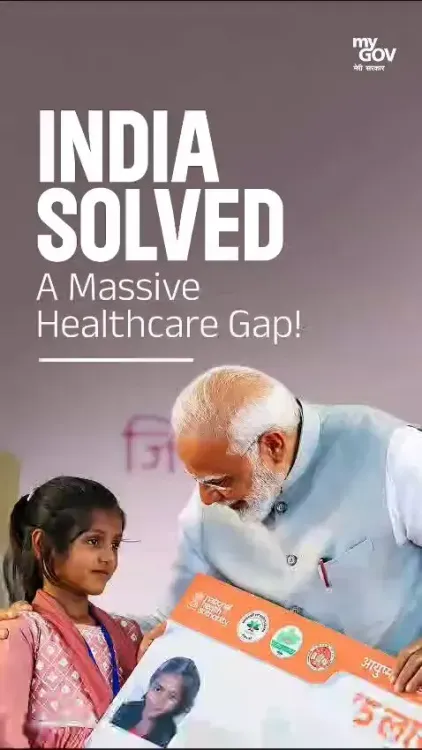
On 14 June 2026, Union Minister Nitin Gadkari marked twelve years of the Modi government's health reforms, highlighting Ayushman Bharat's cashless coverage, Jan Aushadhi Kendras' affordable medicines, e-Sanjeevani telemedicine, and the Swachh Bharat Mission as pillars of an inclusive healthcare ecosystem.
Key Takeaways
Nitin Gadkari posted on 14 June 2026 marking #12YearsOfSwasthBharat , amplifying the Modi government's health record.
Ayushman Bharat provides up to Rs 5 lakh annual cashless hospitalisation cover and has been extended to elderly citizens.
Jan Aushadhi Kendras sell generic medicines at substantially lower prices, targeting out-of-pocket drug expenditure for low-income families. e-Sanjeevani , launched in 2019 , offers free telemedicine consultations and is integrated into the Ayushman Bharat Digital Mission .
Swachh Bharat Mission , inaugurated on 2 October 2014 , is cited as a preventive health pillar reducing open defecation and improving public health outcomes.
The government's model combines demand-side insurance, supply-side medicine access, sanitation, and digital delivery to build a layered health ecosystem.
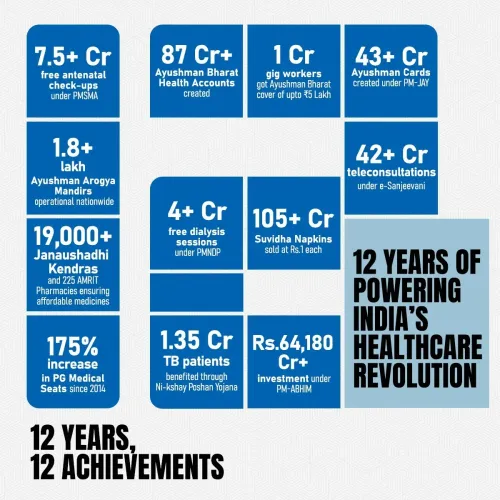
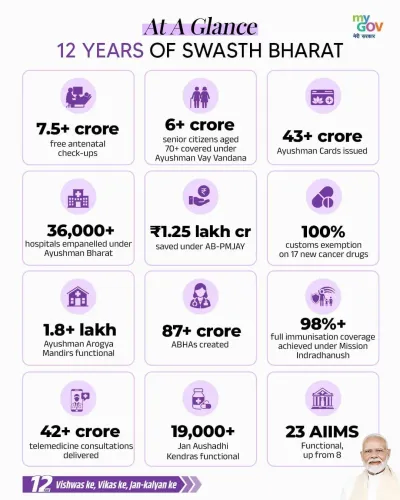
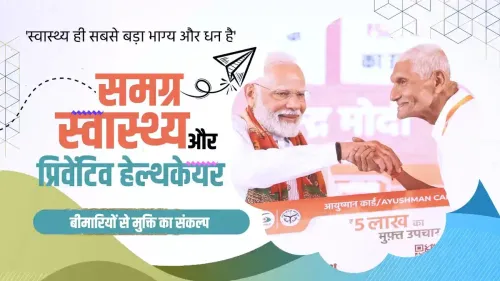
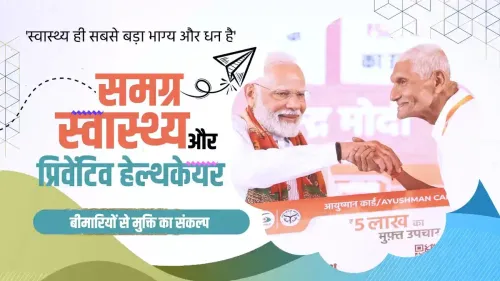
Union Road Transport and Highways Minister Nitin Gadkari on Sunday, 14 June 2026, highlighted a decade-plus of health sector transformation under Prime Minister Narendra Modi, crediting flagship schemes with advancing the vision of a Swasth Bharat (Healthy India). Gadkari's post on X invoked the hashtag #12YearsOfSwasthBharat, marking twelve years of the Modi government's layered approach to public health.
Context
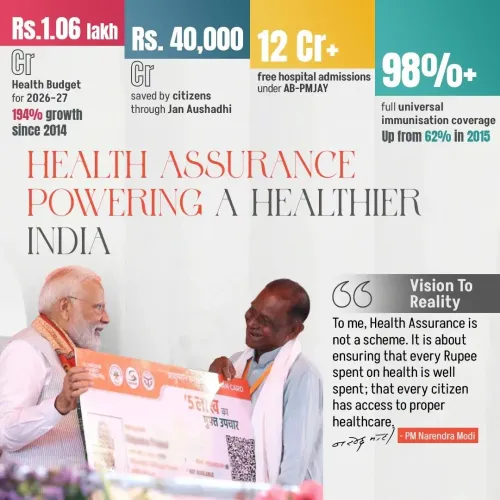
Gadkari described the past twelve years as 'a transformative decade' that has 'redefined India's healthcare landscape.' His post singled out Ayushman Bharat as having 'ensured cashless health coverage for millions,' with coverage now extended to the elderly — a reference to the scheme's expansion to senior citizens announced by the central government. The post also cited Jan Aushadhi Kendras for making 'affordable medicines widely accessible, reducing out-of-pocket expenses.'
The statement is part of a broader ruling-party communication drive marking twelve years of the Narendra Modi-led government, with multiple Union Ministers amplifying health-sector achievements simultaneously.
Policy Backdrop
Ayushman Bharat Pradhan Mantri Jan Arogya Yojana was launched in September 2018, providing up to Rs 5 lakh annual hospitalisation cover to economically vulnerable families for secondary and tertiary care. It remains one of the world's largest publicly funded health insurance programmes by beneficiary count.
The Pradhan Mantri Bhartiya Jan Aushadhi Pariyojana, relaunched and scaled from 2014 onwards, operates Jan Aushadhi Kendras that sell quality generic medicines at substantially lower prices than branded equivalents, directly targeting out-of-pocket drug expenditure for low-income households. The Swachh Bharat Mission, formally inaugurated on 2 October 2014, addressed the upstream determinant of sanitation, aiming to eliminate open defecation and improve population-level health outcomes.
The e-Sanjeevani telemedicine platform, rolled out by the Ministry of Health in 2019 and later integrated into the Ayushman Bharat Digital Mission, has enabled free remote consultations between patients and doctors, extending specialist access to rural and remote populations without requiring physical travel.
Stakeholders and Impact
The schemes cited by Gadkari collectively target low-income families, rural households, and elderly citizens — segments historically most exposed to catastrophic health expenditure. Ayushman Bharat's extension to the elderly addresses a demographic particularly vulnerable to high hospitalisation costs and chronic disease burden.
Jan Aushadhi Kendras have reduced the price barrier on essential medicines, while e-Sanjeevani has lowered the geographic barrier to consultation. Together, these represent the government's stated 'demand-side financing plus supply-side intervention plus digital delivery' model for health access — a pattern consistent across multiple social-sector programmes since 2014.
What's Next
Policy watchers will track further expansion of Ayushman Bharat coverage to additional age groups or income categories, as well as rollout milestones for health IDs under the Ayushman Bharat Digital Mission. The government's ability to deepen last-mile delivery of e-Sanjeevani services and sustain the Jan Aushadhi network at scale will be key indicators of whether the health access gains become structurally durable beyond the current political cycle.
Point of View
Using health as a high-salience voter issue. By foregrounding Ayushman Bharat, Jan Aushadhi, and e-Sanjeevani together, the BJP is reinforcing its 'welfare-state' credentials ahead of the next electoral cycle, countering opposition narratives on public health spending. The inclusion of elderly coverage under Ayushman Bharat signals a deliberate outreach to a demographic with high voter turnout. The broader pattern — a senior minister outside the health portfolio amplifying health achievements — reflects a whole-of-government messaging discipline that the BJP has consistently deployed on anniversary milestones.
NationPress
13 Sept 2026
Frequently Asked Questions
What is Ayushman Bharat and who is eligible?
Ayushman Bharat Pradhan Mantri Jan Arogya Yojana is a government health insurance scheme launched in September 2018 that provides up to Rs 5 lakh annual cashless hospitalisation cover to economically vulnerable families; coverage has since been extended to elderly citizens.
What are Jan Aushadhi Kendras?
Jan Aushadhi Kendras are government-run outlets under the Pradhan Mantri Bhartiya Jan Aushadhi Pariyojana that sell quality generic medicines at prices substantially lower than branded equivalents, aiming to reduce out-of-pocket medical expenses for low-income households.
What is e-Sanjeevani telemedicine?
e-Sanjeevani is a free telemedicine platform launched by the Ministry of Health in 2019 that connects patients with doctors remotely; it has been integrated into the Ayushman Bharat Digital Mission and scaled to serve rural and remote populations.
Why did Nitin Gadkari post about health schemes?
Gadkari's post is part of a ruling-party communication drive marking twelve years of the Modi government, with the hashtag #12YearsOfSwasthBharat, highlighting health-sector achievements across multiple Union Ministers simultaneously.
What is the Swachh Bharat Mission's role in health?
The Swachh Bharat Mission, inaugurated on 2 October 2014, targets sanitation and the elimination of open defecation, which are upstream determinants of public health; the government cites it as a preventive pillar of its broader healthcare strategy.