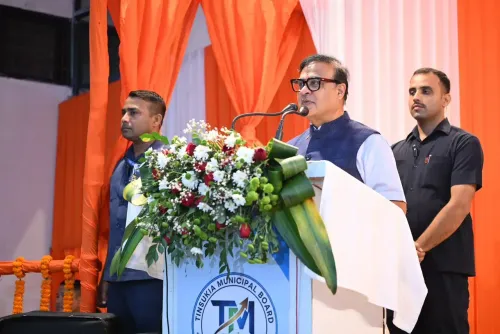
CM Himanta lays foundation stones for Tinsukia's ₹258 cr urban push
Synopsis
Chief Minister Himanta Biswa Sarma laid foundation stones for four major projects and launched the Samagra Seva civic app in Tinsukia on 28 October 2026, committing over ₹258 crore to roads, drainage, a 1,000-seat auditorium, green spaces and digital governance for Assam's easternmost district.
Key Takeaways
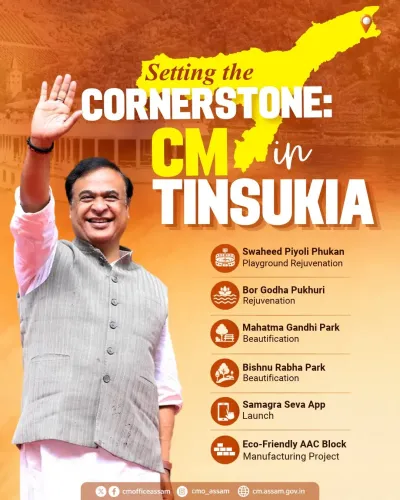
₹200 crore committed for road and drainage improvements across Tinsukia district. ₹50 crore allocated for a modern 1,000-seat auditorium in Tinsukia. ₹8 crore for development of Shaheed Piyoli Phukan Playground , Bor Godha Pond rejuvenation and park beautification.
Foundation stones laid for an Integrated District Commissioner's Office , bus terminal, multi-level car parking and Kachujan stadium . 'Samagra Seva' integrated digital application launched at ₹1.50 crore to centralise civic services for residents.
Announcements follow Assam's established pattern of bundling physical and e-governance projects during CM visits to eastern district headquarters.
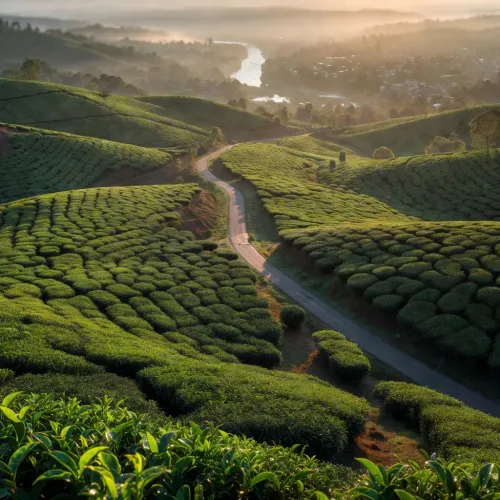
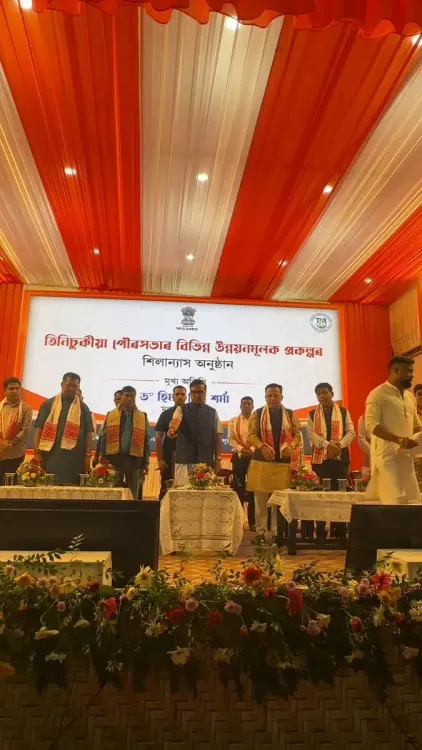
Over ₹258 crore in urban infrastructure is headed to Tinsukia — Assam's easternmost district and a gateway to both the tea gardens and the Arunachal Pradesh border. Chief Minister Dr Himanta Biswa Sarma laid foundation stones for four key projects in the district on Wednesday, 28 October 2026, and simultaneously launched a new digital platform designed to put civic services within a smartphone's reach.
What goes into ₹258 crore of Tinsukia's transformation
The centrepiece of the day's announcements is a ₹200 crore road and drainage improvement programme — the kind of bread-and-butter infrastructure that determines whether a district town functions or floods. Alongside it, the government committed ₹50 crore for a modern 1,000-seat auditorium, giving Tinsukia a cultural and civic venue commensurate with its regional importance.
An additional ₹8 crore will go toward the development of the Shaheed Piyoli Phukan Playground, rejuvenation of Bor Godha Pond, and beautification of Mahatma Gandhi Park and Bishnu Rabha Park. Public green space often gets squeezed out of infrastructure budgets. That it figures explicitly here is telling.
Rounding out the package: an Integrated District Commissioner's Office, a new bus terminal, multi-level car parking, a stadium at Kachujan, modernisation of the District Library, and upgrades to street lighting. In one visit, the state has effectively committed to rebuilding the administrative, recreational and transport spine of the district.
Samagra Seva: the ₹1.50 crore app bridging citizens and civic offices
Beyond bricks and tarmac, CM Sarma launched the 'Samagra Seva' integrated digital application — built at a cost of ₹1.50 crore — to consolidate civic services into a single platform. The goal is direct: reduce the number of office visits a resident needs to make, and bring routine government transactions online.
The launch fits squarely into a pattern the Assam government has pursued since 2021 — pairing physical infrastructure announcements with e-governance tools during CM visits to district headquarters. The question now is adoption: how quickly Tinsukia's residents migrate to the app will be the real test of its utility.
Why Tinsukia — and why now
Tinsukia's economy rests on three pillars: tea estates, oil production, and cross-border trade with Arunachal Pradesh. Each of those pillars depends on roads that don't buckle in the monsoon, administrative offices that function efficiently, and public spaces that signal the state hasn't forgotten its eastern frontier. The projects announced today address all three pressure points.
The Chief Minister's Office framed the package as advancing 'the vision of a modern, greener and citizen-friendly Tinsukia.' For a district that often watches large-ticket projects materialise closer to Guwahati, a ₹258 crore commitment — anchored by foundation stones, not just promises — is a concrete signal of intent. Whether the auditorium, the stadium, and the integrated commissioner's office arrive on schedule will be watched closely.
Point of View
And the speed at which the auditorium, the stadium and the commissioner's office materialise will define whether this visit is remembered as a turning point or a photo opportunity.
NationPress
29 Oct 2026
Frequently Asked Questions
What projects did CM Himanta Biswa Sarma launch in Tinsukia?
CM Himanta Biswa Sarma laid foundation stones for four infrastructure projects in Tinsukia on 28 October 2026, including a ₹200 crore road and drainage upgrade, a ₹50 crore 1,000-seat auditorium, an Integrated District Commissioner's Office, a bus terminal, multi-level car parking, a stadium at Kachujan, and park and library upgrades, plus the ₹1.50 crore Samagra Seva digital civic app.
What is the Samagra Seva app launched in Assam?
'Samagra Seva' is a ₹1.50 crore integrated digital application launched by the Assam government to consolidate civic services on a single platform, reducing the need for residents to visit multiple government offices for routine transactions.
How much money has Assam committed to Tinsukia's development?
The Assam government has committed over ₹258 crore to Tinsukia, with ₹200 crore for roads and drainage, ₹50 crore for a new auditorium, and ₹8 crore for playgrounds, pond rejuvenation and park beautification, alongside several other projects.
Where is Tinsukia district located in Assam?
Tinsukia is the easternmost district of Assam, bordering Arunachal Pradesh, with an economy centred on tea, oil production and cross-border trade.
What is Shaheed Piyoli Phukan Playground in Tinsukia?
Shaheed Piyoli Phukan Playground is a public playground in Tinsukia for which the Assam government has allocated ₹8 crore as part of a broader package that also includes rejuvenation of Bor Godha Pond and beautification of Mahatma Gandhi Park and Bishnu Rabha Park.