Mandaviya Marks 12 Years of Modi Govt's Health Push
Synopsis
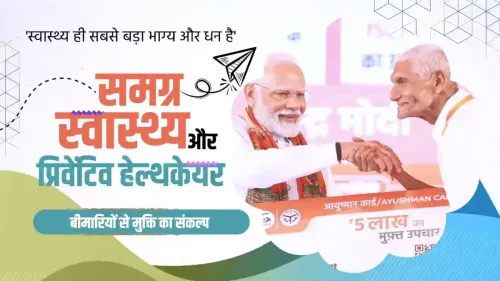
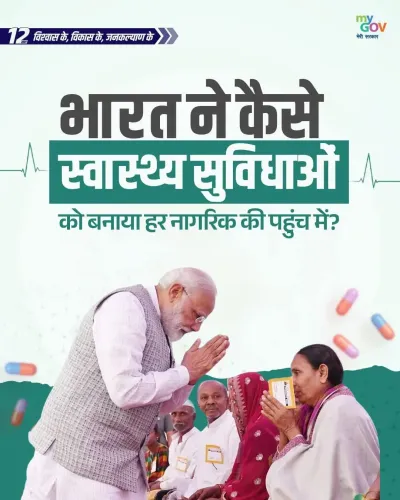
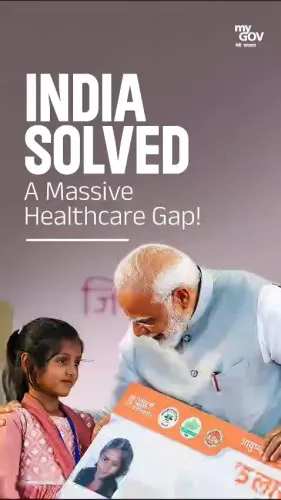
Union Minister Mansukh Mandaviya marked twelve years of the Modi government's health drive on June 14, 2026, crediting flagship schemes like Ayushman Bharat and the National Health Policy 2017 with building the foundation of a resilient Swasth Bharat.
Key Takeaways
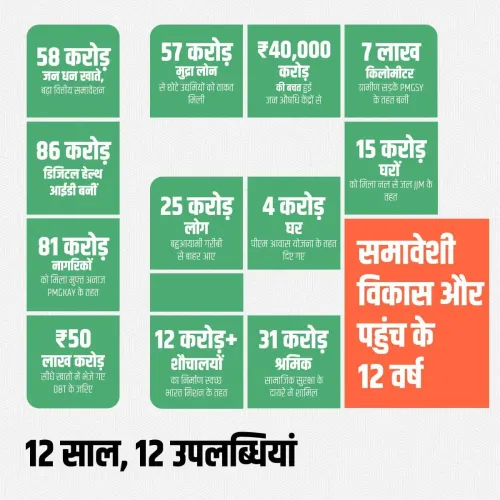
Union Minister Mansukh Mandaviya posted on June 14, 2026 marking 12 years of the Modi government's healthcare push under the #12YearsOfSwasthBharat campaign.
Ayushman Bharat PM-JAY , launched in September 2018 , provides up to Rs 5 lakh annual health insurance cover to low-income families.
The National Health Policy 2017 set a target of raising public health spending to 2.5 per cent of GDP and prioritised universal health coverage.
The National Digital Health Mission (announced 2020) aims to create unique health IDs and electronic health records across states.
A network of Health and Wellness Centres complements PM-JAY by extending primary and preventive care to rural and underserved areas.
State-level implementation capacity remains central to whether the federal health architecture delivers consistent outcomes on the ground.
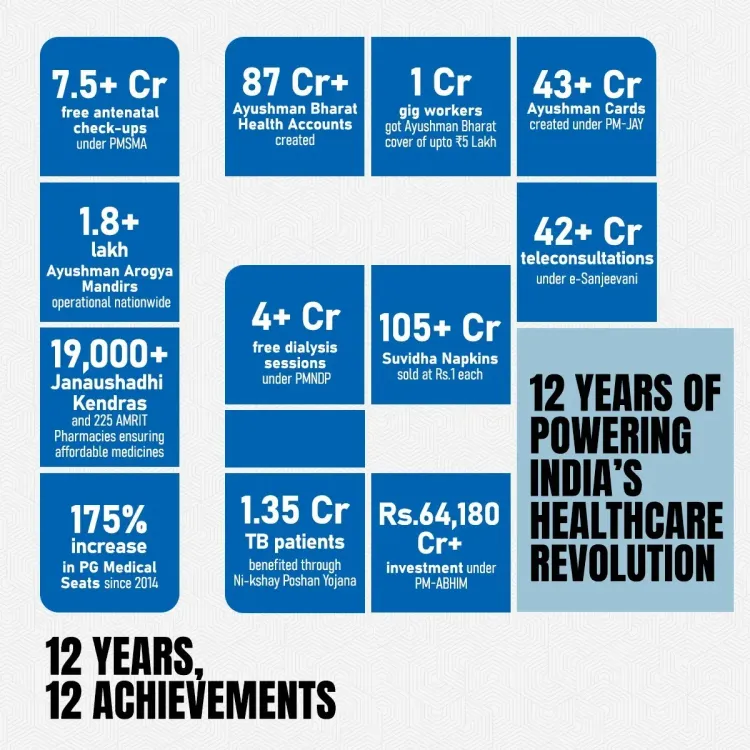
Union Labour and Sports Minister Mansukh Mandaviya on Sunday, June 14, 2026, highlighted what he described as twelve years of healthcare transformation under Prime Minister Narendra Modi, saying the period had laid the foundation for a resilient Swasth Bharat (Healthy India).
Context
Mandaviya posted on X with the hashtag #12YearsOfSwasthBharat, marking the BJP-led government's twelfth year in office since May 2014. His message — 'Bridging the gap between hope and healing, the last 12 years of healthcare revolution under PM Shri Narendra Modi ji have laid the foundation for a resilient Swasth Bharat' — frames the government's health record as a structural shift rather than a collection of individual schemes.
Mandaviya has been closely associated with the health portfolio, having served as Union Health Minister before his current assignment overseeing labour, youth affairs and sports. His post signals continued political ownership of the government's health narrative at the senior cabinet level.
Policy Backdrop
The National Health Policy 2017 set the directional framework, targeting universal health coverage and committing to raise public health spending to 2.5 per cent of GDP. That was followed in September 2018 by the launch of Ayushman Bharat Pradhan Mantri Jan Arogya Yojana (PM-JAY), which extended health insurance cover of up to Rs 5 lakh per year to economically vulnerable families — one of the world's largest publicly funded health insurance programmes by beneficiary count.
The Ayushman Bharat architecture also includes a network of Health and Wellness Centres designed to strengthen primary and preventive care at the village level, complementing the insurance-based tertiary coverage. In 2020, the government announced the National Digital Health Mission, aimed at creating unique health IDs and interoperable electronic health records to integrate care delivery across states.
The broader welfare architecture around 'Swasth Bharat' messaging has run alongside programmes in housing, sanitation and nutrition, positioning health as one pillar of a multi-sector push on human development.
Stakeholders and Impact
Low-income households and rural patients are the primary intended beneficiaries of these schemes, particularly through PM-JAY's cashless hospitalisation cover and the expansion of wellness centres in underserved areas. States retain significant implementation responsibility, meaning the on-ground impact varies across the country depending on administrative capacity and co-financing.
The integration of AYUSH systems — Ayurveda, Yoga, Unani, Siddha and Homoeopathy — into the formal health architecture has also been a consistent feature of the government's approach, broadening the definition of healthcare delivery beyond allopathic medicine alone.
What's Next
Attention will focus on the Union Budget's health outlay and the pace of National Digital Health Mission integration with state-level systems, both of which will determine whether the policy architecture built over twelve years translates into measurable improvements in health outcomes. The government's ability to close gaps in rural infrastructure and skilled-workforce availability remains a key test of the 'Swasth Bharat' vision going forward.
Point of View
Timed to the BJP government's twelfth year in office and designed to consolidate the party's identity as the architect of mass-access healthcare. By invoking 'hope and healing,' the framing moves beyond scheme enumeration into an emotional register that appeals to the rural and low-income voter base that PM-JAY was built to serve. The post also keeps Mandaviya — who has moved portfolios — visibly anchored to the health legacy he helped build, reinforcing continuity in the government's welfare messaging. Whether the rhetoric holds depends on how robustly the National Digital Health Mission and budget allocations translate the twelve-year policy architecture into verifiable outcome data.
NationPress
14 Sept 2026
Frequently Asked Questions
What is Swasth Bharat and why is it trending?
'Swasth Bharat' means 'Healthy India' and is the overarching theme of the Modi government's health agenda since 2014. It trended on June 14, 2026 as ministers including Mansukh Mandaviya marked twelve years of the BJP government's health policies under the hashtag #12YearsOfSwasthBharat.
What is Ayushman Bharat and who benefits from it?
Ayushman Bharat is a flagship government programme with two pillars: PM-JAY, which provides up to Rs 5 lakh per year in health insurance to economically vulnerable families, and a network of Health and Wellness Centres for primary care. It primarily targets low-income and rural households.
What did Mansukh Mandaviya say about Modi's health record?
Mandaviya said the last 12 years of healthcare efforts under PM Narendra Modi had 'bridged the gap between hope and healing' and laid the foundation for a resilient Swasth Bharat, posting the message on X alongside the #12YearsOfSwasthBharat hashtag.
What is the National Digital Health Mission?
The National Digital Health Mission, announced in 2020, is a government initiative to create unique digital health IDs for citizens and build interoperable electronic health records, aiming to integrate care delivery across central and state health systems.
How much does India spend on public healthcare?
The National Health Policy 2017 set a target of raising public health expenditure to 2.5 per cent of GDP. Actual spending has been a subject of ongoing policy discussion, and progress toward that target is tracked through successive Union Budgets.