Saudi Aramco building in Riyadh targeted in attempted Houthi attack

Synopsis
Houthi forces targeted a Saudi Aramco administrative building in Riyadh with what Saudi officials confirmed caused minor shrapnel damage and no casualties — the same day the coalition intercepted four Houthi missiles over the capital. With 11 killed in Sanaa airstrikes and 30 dead in a Taiz market strike the day before, the Yemen conflict is in one of its most intense escalatory phases.
Key Takeaways
Saudi Arabia's Ministry of Energy confirmed an administrative Saudi Aramco building in Riyadh was struck in an attempted attack on 8 November , causing minor damage and no casualties.
The Saudi-led coalition said it intercepted two cruise missiles and two ballistic missiles launched by Houthi forces toward Riyadh on the same day.
At least 11 people were reportedly killed in airstrikes on Ash Sharyah village near Sanaa on Saturday, according to Houthi-run al-Masirah TV ; the death toll was described as preliminary.
A day earlier, an attack on a market in Taiz province killed at least 30 people and wounded 8 , with both sides trading blame.
The 2019 Aramco strikes on Abqaiq and Khurais provide historical context — Sunday's incident signals continued Houthi intent to strike Saudi economic infrastructure.
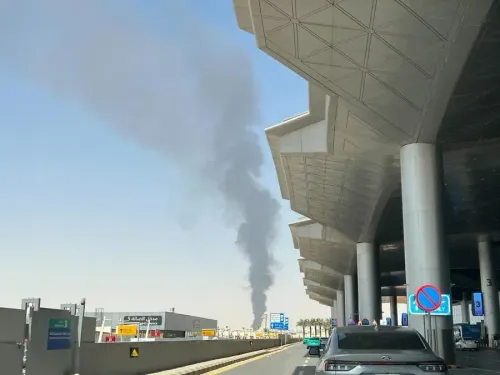
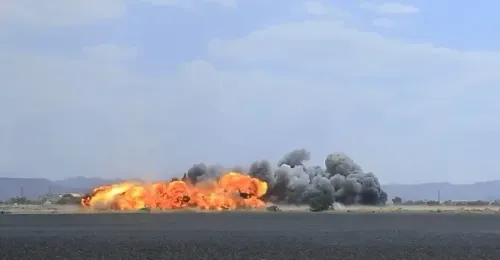
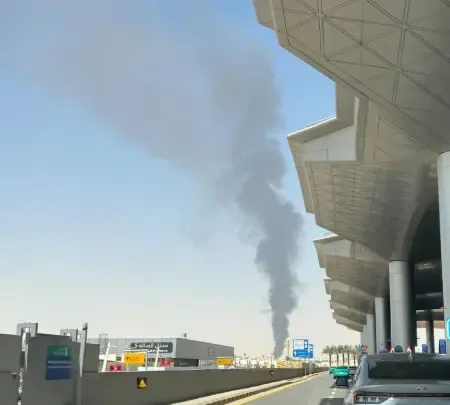
Saudi Arabia's Ministry of Energy confirmed on Sunday, 8 November that an administrative building belonging to Saudi Aramco in Riyadh had been targeted in an attempted attack, causing minor structural damage but no casualties. The ministry said falling shrapnel was responsible for the limited damage, and that relevant authorities had responded and taken necessary measures.
What Happened at the Aramco Building
The ministry's statement, posted on its official X handle, described the incident as an attempted attack on the Aramco administrative facility. It did not specify the nature of the projectile but confirmed the damage was minor. No injuries were reported among personnel at the site.
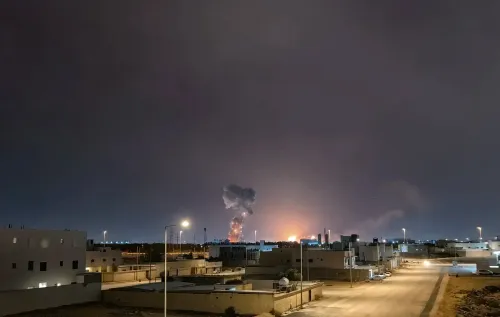
The disclosure came after the Saudi-led coalition announced earlier the same day that it had intercepted two cruise missiles over Riyadh and southern regions, as well as two ballistic missiles launched by the Houthi group toward Riyadh. The sequence of events suggests the Aramco building may have been struck by shrapnel or debris from one of the intercepted projectiles.
Escalating Hostilities Across the Region
The attempted strike on the Aramco facility is the latest episode in a sharp escalation of hostilities between the Saudi-led coalition and Yemen's Houthi forces. This comes amid a broader surge in cross-border attacks that has intensified over recent weeks.
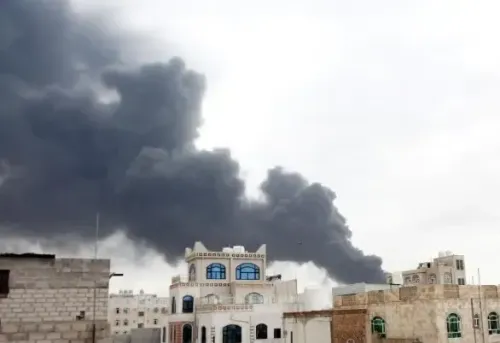
At least 11 people were reportedly killed on Saturday in airstrikes on a village near Yemen's capital Sanaa, according to Houthi-run al-Masirah TV. The channel attributed the strikes to Saudi warplanes, saying they destroyed five residential houses in Ash Sharyah village in Bani Hushaysh district, east of Sanaa, with women and children among the dead. The head of the district's health office said rescue teams had recovered 11 bodies from the rubble, adding that the death toll was preliminary as search and recovery operations continued.
Al-Masirah also alleged that Saudi warplanes launched two additional airstrikes targeting rescue workers and struck roads leading to the village. Military aircraft reportedly continued to fly over the area. These reports could not be independently verified, and the Saudi-led coalition had not issued an immediate response.
Taiz Market Strike Adds to the Death Toll
The renewed violence follows a devastating attack on a crowded market in Yemen's southwestern Taiz province a day earlier, which killed at least 30 people and wounded eight others. The Houthis and Yemeni government authorities each accused the other of responsibility for the Taiz strike, with no independent verification available at the time of reporting.
A local resident in Sanaa told reports that warplanes had been circling over the capital before a series of airstrikes struck the city. The pattern mirrors previous escalation cycles in the Yemen conflict, which has claimed hundreds of thousands of lives since the Saudi-led coalition intervened in 2015.
Strategic Significance of the Aramco Target
Saudi Aramco is the world's largest oil company by production capacity and a cornerstone of the Saudi economy. Any sustained or successful attack on its infrastructure carries global energy market implications. The 2019 drone and missile strikes on Aramco's Abqaiq and Khurais facilities — also attributed to Houthi or Iran-linked forces — temporarily knocked out roughly 5% of global oil supply, sending crude prices surging. Sunday's incident caused only minor damage, but the targeting of an Aramco facility in the capital signals a continued intent to strike high-value Saudi economic assets.
As fighting escalates on both sides, international calls for a ceasefire have so far failed to produce a durable halt to hostilities. The situation remains fluid, with the death toll from recent Yemeni strikes still considered preliminary by local health officials.
Point of View
Not a stray projectile. The Houthis have consistently used strikes on Saudi economic landmarks as leverage, and Sunday's incident fits a pattern of probing high-value targets when diplomatic momentum stalls. What mainstream coverage underweights is the symmetry: for every Houthi missile intercepted over Riyadh, airstrikes are killing civilians in Yemeni villages, with both cycles reinforcing the other. The Yemen war has outlasted multiple ceasefire frameworks, and the absence of a durable peace mechanism means these flare-ups will recur. The real question is whether the latest escalation spills into energy markets — 2019 showed how quickly it can.
NationPress
8 Nov 2026
Frequently Asked Questions
What happened at the Saudi Aramco building in Riyadh?
An administrative building belonging to Saudi Aramco in Riyadh was targeted in an attempted attack on 8 November, with falling shrapnel causing minor damage to the structure. Saudi Arabia's Ministry of Energy confirmed the incident, stating there were no casualties and that authorities had responded and taken necessary measures.
Who is responsible for the attack on the Aramco building?
Saudi Arabia's Ministry of Energy did not explicitly name a perpetrator in its statement about the Aramco building. However, the incident occurred on the same day the Saudi-led coalition intercepted two cruise missiles and two ballistic missiles launched by Houthi forces toward Riyadh, suggesting a Houthi link.
How serious was the damage to the Aramco facility?
The damage was described as minor and limited to the administrative building. No personnel casualties were reported. The Ministry of Energy said relevant authorities responded promptly and took necessary measures following the incident.
What is the broader context of this attack?
The attempted strike on Aramco is part of an escalating cycle of violence between the Saudi-led coalition and Houthi forces in Yemen. At least 11 people were reportedly killed in airstrikes near Sanaa on Saturday, and 30 died in a market strike in Taiz province the day before. The Yemen conflict has been ongoing since 2015.
How does this compare to past Houthi attacks on Aramco?
In 2019, coordinated drone and missile strikes attributed to Houthi or Iran-linked forces hit Aramco's Abqaiq and Khurais facilities, temporarily disrupting roughly 5% of global oil supply and causing a sharp spike in crude prices. Sunday's incident caused only minor damage, but the targeting of an Aramco site in Riyadh signals a continued intent to strike Saudi economic infrastructure.