Houthis claim missile, drone strikes on Riyadh and Yanbu in major escalation
Synopsis
Houthi forces claimed a sweeping missile and drone assault on Riyadh and an Aramco facility in Yanbu on 20 September — the most audacious strike on Saudi soil in this latest escalation cycle. With the Bab al-Mandab Strait already under a Houthi shipping ban and energy infrastructure now reportedly targeted, the conflict is moving from Yemen's borders toward Saudi Arabia's economic heartland.
Key Takeaways
Yemen's Houthi group claimed ballistic missile, cruise missile, and drone strikes on Riyadh and Yanbu on 20 September 2026 .
Houthi spokesperson Yahya Sarea said one strike targeted an Aramco facility in Yanbu; the group claimed 'large fires' broke out at both sites.
The Saudi-led coalition said its air defences intercepted a Houthi ballistic missile over Riyadh and thwarted attacks on Baish, Taif, Farasan, and Yanbu.
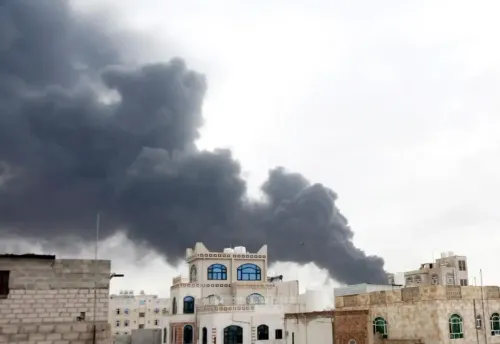
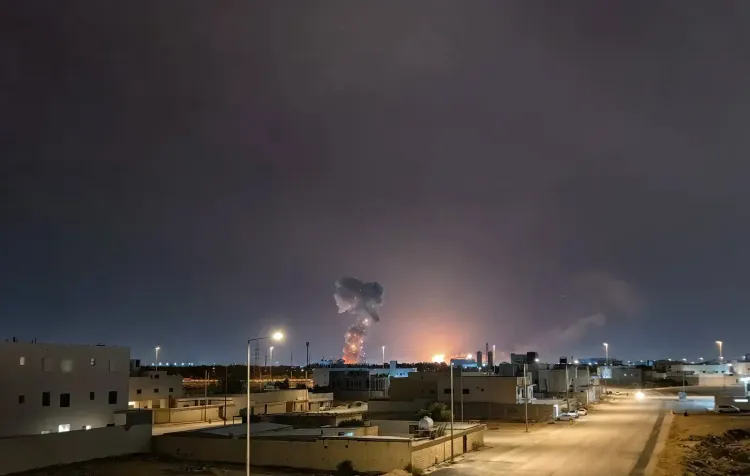
Explosions were heard in Riyadh twice on Saturday; smoke was seen near King Khalid International Airport and some flights were delayed.
The current escalation began in mid-July after strikes on Sanaa International Airport ; the Houthis have since banned Saudi shipping through the Bab al-Mandab Strait .
The Yemen conflict dates to late 2014 , with a Saudi-led coalition intervening in March 2015 .
Yemen's Houthi group claimed on 20 September 2026 that it had launched large-scale ballistic missile, cruise missile, and drone strikes targeting the Saudi capital Riyadh and Yanbu — a major industrial and energy hub on Saudi Arabia's Red Sea coast — marking what analysts are calling the sharpest escalation in the conflict between the two sides in months.
What the Houthis claimed
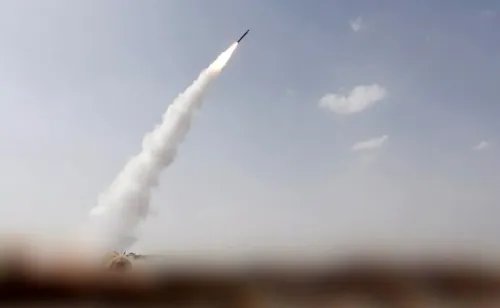
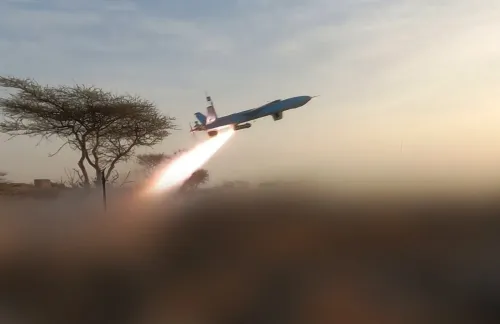
In a statement broadcast by Houthi-run al-Masirah TV, Houthi military spokesperson Yahya Sarea said the operations involved 'a large number of ballistic and cruise missiles and drones.' He described the first operation as targeting 'sensitive targets' in Riyadh, while the second struck a facility belonging to Saudi oil giant Aramco in Yanbu. 'The two operations were successful,' Sarea said, claiming that large fires broke out at both sites.
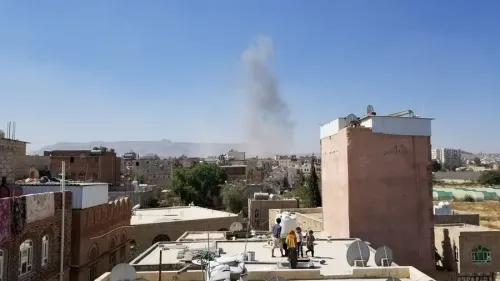
Residents reported hearing explosions in Riyadh twice on Saturday. Smoke was seen rising near King Khalid International Airport in the northeastern part of the capital following the second incident, and some flights were delayed.
Saudi coalition's response
Saudi authorities had earlier issued an aerial threat alert for Riyadh — reportedly the first such alert for the capital since tensions with the Houthis escalated recently — before announcing that the danger had passed. A subsequent statement from the Saudi-led coalition said its air defences intercepted and destroyed a Houthi ballistic missile targeting Riyadh and thwarted additional attacks on Baish, Taif, Farasan, and Yanbu.
Coalition spokesperson Turki Al-Maliki said the attacks targeted 'civilians and civilian objects' and vowed 'appropriate measures' to deter further strikes. Sarea denied that civilians were deliberately targeted, framing the operations as retaliation for intensified Saudi airstrikes on Houthi-held areas in Yemen.
The escalation timeline
This latest round of conflict traces back to mid-July, when Yemeni government-aligned forces struck Houthi-controlled Sanaa International Airport to prevent an Iranian passenger plane from landing. That plane was carrying a senior Houthi delegation returning from Iran after attending the funeral of Supreme Leader Khamenei. The Houthis blamed Saudi Arabia — a key backer of the internationally recognised Yemeni government — for the strike and launched retaliatory ballistic missile and drone attacks.
On 20 July, the Houthis announced a ban on Saudi shipping through the strategically vital Bab al-Mandab Strait and have since claimed a series of attacks on Saudi tankers and oil facilities. The Aramco strike in Yanbu, if confirmed, would represent a significant escalation in targeting energy infrastructure.
Broader conflict context
Yemen's war erupted in late 2014 when the Houthis seized the capital Sanaa and much of northern Yemen. A Saudi-led coalition intervened in March 2015 in support of the internationally recognised government. The conflict has since drawn in regional and global actors, periodically threatening global energy supplies through Red Sea shipping lanes.
Sarea vowed the Houthis would continue operations under an 'escalation for escalation' strategy until Saudi airstrikes cease and restrictions on Yemen are lifted. With Aramco infrastructure now reportedly in the crosshairs and the Bab al-Mandab Strait under threat, global energy markets and shipping insurers will be watching the next Saudi response closely.
Point of View
A critical Red Sea export terminal, is a message to global oil markets as much as it is to Riyadh. Saudi Arabia's aerial threat alert for its own capital — reportedly the first since tensions spiked — underlines how dramatically the threat calculus has shifted. The 'escalation for escalation' doctrine announced by the Houthis, combined with the Bab al-Mandab shipping ban, risks pulling in broader regional and economic stakeholders in ways that previous rounds of this conflict did not.
NationPress
20 Sept 2026
Frequently Asked Questions
What did the Houthis claim to have attacked in Saudi Arabia?
The Houthis claimed large-scale ballistic missile, cruise missile, and drone strikes on the Saudi capital Riyadh and on an Aramco facility in Yanbu, a major industrial hub on Saudi Arabia's Red Sea coast. Houthi military spokesperson Yahya Sarea said 'large fires' broke out at both sites, though Saudi authorities said their air defences intercepted at least one ballistic missile over Riyadh.
How did Saudi Arabia respond to the Houthi strikes?
The Saudi-led coalition said its air defences intercepted and destroyed a Houthi ballistic missile targeting Riyadh and thwarted additional attacks on Baish, Taif, Farasan, and Yanbu. Coalition spokesperson Turki Al-Maliki said the strikes targeted civilians and vowed 'appropriate measures' in response.
What triggered this latest round of escalation between the Houthis and Saudi Arabia?
The current cycle began in mid-July when strikes hit Houthi-controlled Sanaa International Airport to prevent an Iranian passenger plane from landing. The Houthis blamed Saudi Arabia, launched retaliatory missile and drone strikes, and on 20 July announced a ban on Saudi shipping through the Bab al-Mandab Strait.
What is the Houthis' stated strategy going forward?
Houthi spokesperson Yahya Sarea vowed continued operations under an 'escalation for escalation' strategy, saying the attacks would persist until Saudi airstrikes on Houthi-held areas in Yemen cease and restrictions on Yemen are lifted.
How long has the Yemen conflict been going on?
Yemen's war erupted in late 2014 when the Houthis seized Sanaa and much of northern Yemen. A Saudi-led coalition intervened in March 2015 in support of the internationally recognised Yemeni government, and the conflict has continued with shifting intensity ever since.