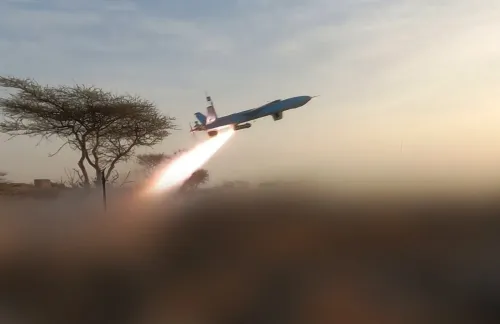
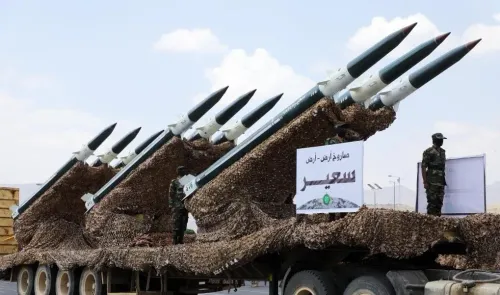
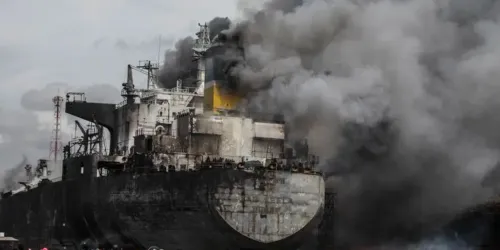
Houthis claim missile, drone strikes on Saudi Aramco's Khurais complex
Synopsis
The Houthis claim they hit Saudi Aramco's Khurais oil complex — one of Saudi Arabia's largest — with ballistic missiles and drones on 4 October 2026. If verified, it echoes the 2019 Abqaiq-Khurais attack that briefly halved Saudi oil output and rattled global energy markets. With 1,460 strikes tallied since the latest escalation and Sanaa shaking from overnight blasts, Yemen's conflict is at one of its most dangerous inflection points in years.
Key Takeaways
The Houthi group claimed on 4 October 2026 it struck two Saudi Aramco facilities, including the Khurais oil complex , with ballistic missiles and drones.
Houthi spokesperson Yahya Sarea said both operations 'achieved their objectives,' causing large fires — claims that could not be independently verified.
The Houthis cited 50 Saudi air and missile strikes in the preceding 12 hours , and a cumulative total of 1,460 strikes since the current escalation began.
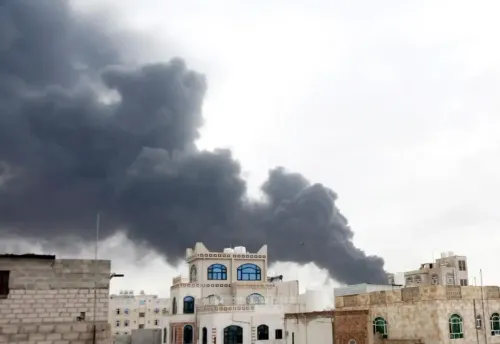
Loud explosions rocked Sanaa late Saturday, with residents describing powerful blasts that shook buildings and terrified children.
Saudi Aramco and Saudi authorities had not responded to the claims at the time of reporting.
Yemen's conflict, which began in late 2014 , is now at one of its sharpest escalation points in years.
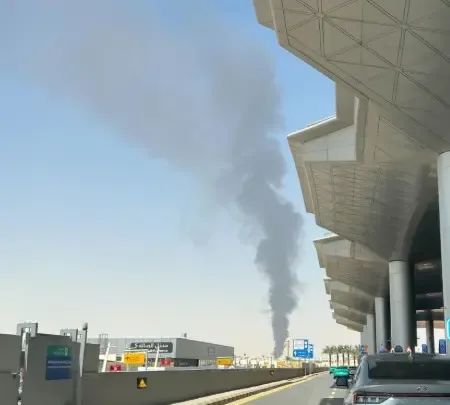
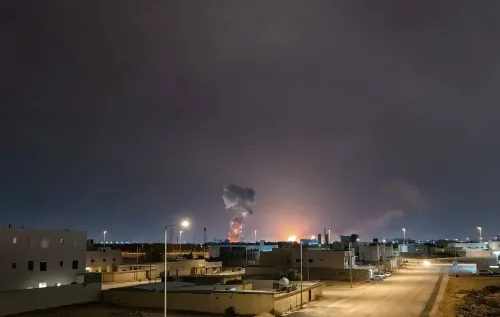
Yemen's Houthi group claimed on Sunday, 4 October 2026 that it launched ballistic missiles and drones at two Saudi Aramco facilities, including the Khurais oil complex southeast of Riyadh, in what marks a fresh and sharp escalation of direct cross-border hostilities between the two sides. The claims could not be independently verified, and there was no immediate response from Saudi Aramco or Saudi authorities.
What the Houthis Claimed
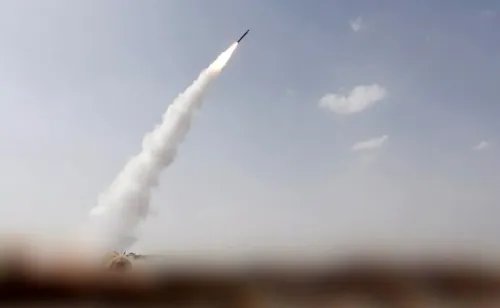
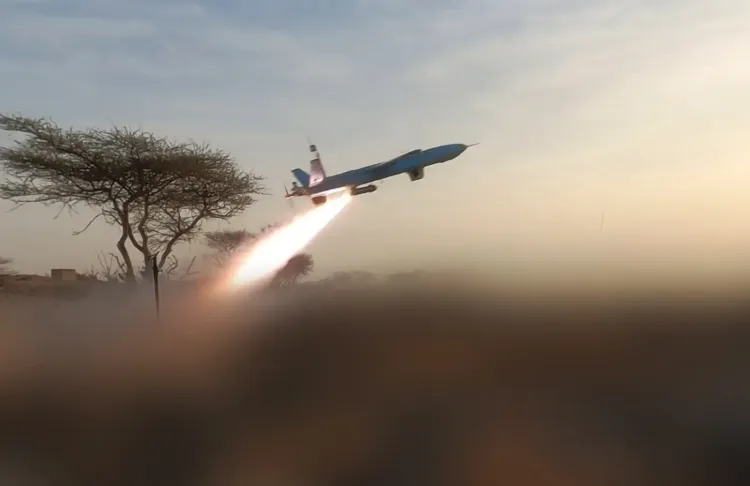
Houthi military spokesperson Yahya Sarea announced the strikes in a statement broadcast on the Houthi-run al-Masirah TV, saying the group executed two separate operations using 'a number of ballistic missiles and drones.' He claimed one operation targeted an Aramco facility in Riyadh while the other struck the company's oil infrastructure at Khurais, southeast of the Saudi capital. Sarea asserted both attacks 'achieved their objectives' with precision hits that ignited large fires — claims that remain unverified.
Houthi Justification and Reported Saudi Strikes
Sarea framed Sunday's operations as a direct response to what the Houthis described as sustained Saudi aerial and missile bombardment of territory under their control in Yemen. He alleged that 50 Saudi air and missile strikes had struck Sanaa and the provinces of Al-Jawf, Taiz, Amran, Hajjah, and Saada in the preceding 12 hours alone, bringing the cumulative total of such strikes since the latest escalation began to 1,460, according to Houthi tallies. These figures have not been independently confirmed.
Explosions Rock Sanaa
Separately, loud explosions were reported across Sanaa late on Saturday (local time), with al-Masirah TV attributing them to renewed Saudi airstrikes on the city. A Sanaa resident, speaking to reports on condition of anonymity, described warplanes circling overhead as powerful blasts shook buildings and rattled windows across the capital. 'The blasts were so powerful that the ground shook beneath us,' the resident said. 'It felt like an earthquake. Our windows were rattling, and the children woke up terrified.'
Context: Conflict at One of Its Sharpest Points in Years
The strikes come as Yemen's decade-long conflict enters what analysts describe as one of its most acute escalations in years, with heavy fighting spreading across southwestern Yemen and renewed missile, drone, and aerial exchanges reviving direct Houthi-Saudi hostilities. Yemen's war began in late 2014 when the Houthis seized Sanaa and much of northern Yemen, prompting a Saudi-led coalition to intervene in March 2015 in support of the internationally recognised Yemeni government. Notably, the Khurais complex was previously targeted in a high-profile attack in September 2019 that briefly knocked out roughly half of Saudi Arabia's oil output and sent global crude prices surging — raising the stakes of any verified damage this time.
What Comes Next
With no immediate Saudi or Aramco comment on the latest Houthi announcement, the extent of any damage remains unknown. Energy markets will be watching closely: any confirmed disruption to Aramco output at a major facility could trigger fresh volatility in global crude prices. Diplomatic channels, already strained, face mounting pressure as the casualty and strike toll on both sides continues to climb.
Point of View
The signalling is clear: the Houthis are escalating toward Saudi economic infrastructure, not just military targets. What mainstream coverage often underweights is the cumulative strain on Saudi Arabia's domestic political calculus — sustaining a costly air campaign while absorbing high-profile strikes on its crown jewel energy assets is increasingly difficult to justify publicly. The absence of any Saudi or Aramco response hours after the claim is itself significant, and energy markets will interpret that silence carefully.
NationPress
5 Oct 2026
Frequently Asked Questions
What did the Houthis claim to have struck in Saudi Arabia on 4 October 2026?
The Houthis claimed to have struck two Saudi Aramco facilities: an Aramco site in Riyadh and the Khurais oil complex southeast of Riyadh, using ballistic missiles and drones. Spokesperson Yahya Sarea said both operations caused large fires, though the claims could not be independently verified.
Why did the Houthis say they carried out these attacks?
The Houthis framed the strikes as retaliation for what they described as continued Saudi air and missile attacks on Houthi-held areas of Yemen. Sarea alleged 50 Saudi strikes hit Sanaa and five Yemeni provinces in the 12 hours preceding the Aramco attacks, bringing the cumulative total to 1,460 since the current escalation began.
Has Saudi Arabia or Saudi Aramco confirmed any damage?
No. There was no immediate comment from Saudi authorities or Saudi Aramco on the Houthi claims at the time of reporting, leaving the extent of any damage unconfirmed.
Why is the Khurais oil complex significant?
Khurais is one of Saudi Arabia's largest oil-producing complexes, operated by Saudi Aramco. It was previously targeted in a high-profile attack in September 2019, which briefly disrupted roughly half of Saudi Arabia's oil output and caused a sharp spike in global crude prices, underlining its strategic importance to global energy supply.
What is the background to the Yemen conflict?
Yemen's war began in late 2014 when the Houthis seized the capital Sanaa and large parts of northern Yemen. A Saudi-led coalition intervened in March 2015 in support of the internationally recognised Yemeni government. The conflict has since become one of the world's most prolonged humanitarian crises, with the current escalation representing one of the sharpest flare-ups in years.