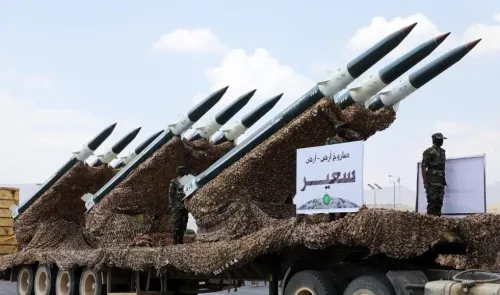
Houthis launch 7 missile and drone strikes on Saudi Arabia; coalition airstrikes kill 8 in Sanaa
Synopsis
Houthis claim seven missile and drone strikes on Riyadh, Dammam, and other Saudi cities in a single day while Saudi-led coalition airstrikes kill at least eight in Sanaa — the sharpest escalation in Yemen's grinding conflict in recent weeks, coming as a major coalition ground offensive intensifies and Washington updates travel warnings for seven Middle East nations.
Key Takeaways
Houthi spokesman Yahya Sarea claimed seven missile and drone attacks on Saudi cities including Riyadh , Dammam , and Yanbu on Saturday, 25 October .
King Khalid International Airport in Riyadh and Saudi Aramco facilities in Yanbu were among the stated targets.
The Saudi-led coalition said it intercepted several missiles; debris from two fell in the Mecca and Medina regions — claims the Houthis denied.
Coalition airstrikes killed at least 8 people and wounded more than 10 after hitting a workers' housing block in Hamdan district , Sanaa province .
The Houthis said the strikes retaliated against 100 Saudi airstrikes in the preceding 24 hours .
The US State Department updated travel advisories for seven Middle East countries, citing Houthi threats.
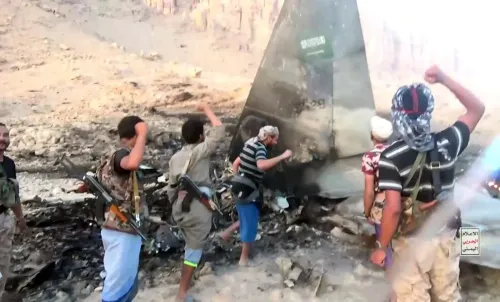
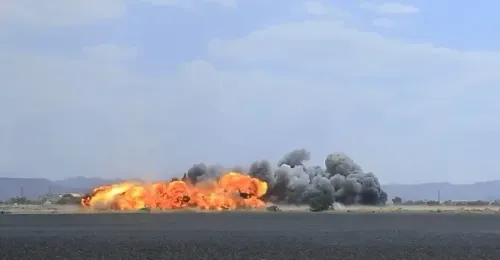
Yemen's Houthi group and the Saudi-led coalition exchanged their most intense wave of cross-border attacks in weeks on Saturday, 25 October, with the Houthis claiming seven coordinated missile and drone strikes on major Saudi cities while coalition airstrikes on Houthi-held Yemen killed at least eight people and wounded more than 10 others. The escalation marks a sharp intensification of a conflict that has ground on since 2014.
Houthi Strike Claims
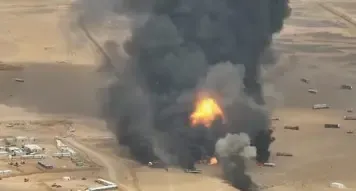
Houthi military spokesman Yahya Sarea said in a statement that the group targeted airports, oil installations, and a military base across Riyadh, Yanbu, Rabigh, Dammam, Najran, and Khamis Mushait. According to Sarea, King Khalid International Airport in Riyadh was struck in two separate stages, while Saudi Aramco facilities in Yanbu and King Fahd International Airport in Dammam were also targeted.
Sarea said the Saturday attacks were launched in retaliation for what the group described as 100 Saudi airstrikes on Houthi-held areas over the preceding 24 hours, including the Houthi-held capital Sanaa and the Red Sea port city of Mocha in the southwestern province of Taiz.
Coalition Response and Interceptions
The Saudi-led coalition announced it had intercepted and destroyed several Houthi missiles aimed at Riyadh, Taif, and Yanbu, as well as a drone in the Eastern Province. Saudi Arabia's General Directorate of Civil Defense confirmed that debris from two intercepted missiles fell in the Mecca and Medina regions.
The Houthi group subsequently denied targeting the two holy cities, calling such claims 'false and unfounded.' The dispute over the debris complicates an already volatile information environment in which both sides routinely contest each other's accounts.
Casualties and Damage in Yemen
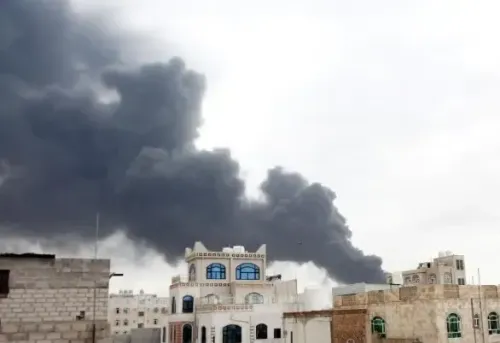
Houthi-run al-Masirah TV reported that coalition airstrikes hit housing for cement factory workers in the Hamdan district of Sanaa province, killing eight people and wounding more than 10 others. The civilian nature of the site, if confirmed, would add to longstanding international concerns about the conduct of the air campaign.
In a separate development, Sarea said Houthi forces targeted what he described as Saudi-backed 'mobilizations' at Al-Nasr camp and a naval base in the southern port city of Aden, where Yemen's internationally recognised government is headquartered. A local security official said the Houthis fired nearly four ballistic missiles at Aden, with some striking near Aden International Airport and key military facilities in the Khormaksar district, and another hitting the Coast Guard Troops headquarters in the Al-Tawahi district.
'Dawn of Yemen' Offensive and US Travel Warning
The strikes came as forces loyal to Yemen's internationally recognised government, backed by the Saudi-led coalition, intensified a ground push called the 'Dawn of Yemen' offensive against Houthi positions — with Saturday's aerial and missile exchange representing the conflict's sharpest flare-up in recent weeks.
The US Department of State said on Saturday it had updated its travel advisories for multiple Middle East countries — including Saudi Arabia, Qatar, the United Arab Emirates, Bahrain, Iraq, Lebanon, and Israel — explicitly citing Houthi threats as the basis for the revision.
Background
Yemen has been engulfed in conflict since late 2014, when the Houthi movement seized Sanaa and large swathes of northern Yemen. A Saudi-led coalition intervened militarily in 2015 to restore the internationally recognised government, triggering what the United Nations has repeatedly described as one of the world's worst humanitarian crises. Despite intermittent truces, a durable ceasefire has remained out of reach. With the 'Dawn of Yemen' offensive under way and Houthi missile capabilities apparently intact, the prospects for de-escalation in the near term appear limited.
Point of View
Which has predictably triggered Houthi escalation across the Saudi border. What is new is the breadth of the target list: civil airports and Aramco facilities in the same operational window signal that the Houthis are deliberately raising the economic cost for Riyadh. The debris in the Mecca and Medina regions — regardless of who is telling the truth — introduces a symbolically explosive dimension that could harden Saudi public opinion and constrain any back-channel diplomacy. Washington's sweeping travel advisory update, covering seven countries in one move, suggests US intelligence sees the escalation as structurally wider than a bilateral Yemen-Saudi exchange.
NationPress
25 Oct 2026
Frequently Asked Questions
What happened between the Houthis and the Saudi-led coalition on 25 October?
The Houthi group claimed seven coordinated missile and drone strikes on major Saudi cities, including Riyadh, Dammam, and Yanbu, while the Saudi-led coalition conducted airstrikes on Houthi-held areas of Yemen, killing at least eight people in Sanaa. It was described as one of the sharpest single-day escalations in the ongoing Yemen conflict.
Did Houthi strikes hit near Mecca and Medina?
Saudi Arabia's General Directorate of Civil Defense said debris from two intercepted Houthi missiles fell in the Mecca and Medina regions. The Houthi group denied targeting the two holy cities, calling such claims 'false and unfounded.'
What is the 'Dawn of Yemen' offensive?
'Dawn of Yemen' is a military campaign by Yemen's internationally recognised government forces, backed by the Saudi-led coalition, aimed at pushing back Houthi territorial control. The offensive has intensified in recent weeks and is widely seen as a catalyst for the latest round of Houthi retaliatory strikes on Saudi Arabia.
Why did the US update its Middle East travel advisories?
The US Department of State updated travel advisories on Saturday for Saudi Arabia, Qatar, the UAE, Bahrain, Iraq, Lebanon, and Israel, explicitly citing the threat posed by Houthi missile and drone attacks. The sweeping update across seven countries signals Washington's assessment that the escalation extends beyond the Yemen-Saudi bilateral conflict.
How long has the Yemen conflict been going on?
Yemen has been in conflict since late 2014, when Houthi forces seized the capital Sanaa and much of northern Yemen. The Saudi-led coalition intervened militarily in 2015 to support the internationally recognised government, triggering a war the United Nations has called one of the world's worst humanitarian crises. No durable ceasefire has been reached despite intermittent truces.