Trump backs local approval, pay for data centres in US-China race
Synopsis
Trump told a Georgia TV interviewer he supports local approval of data centres and wants host communities paid 'a lot of money' — but offered no federal framework, no payment formula, and no timetable. With AI driving a data centre construction boom, the gap between presidential rhetoric and enforceable policy is the real story.
Key Takeaways
President Donald Trump endorsed local community approval of data centres in an interview with WANF-TV's Atlanta News First on Saturday before a rally in Perry, Georgia .
Trump said communities hosting data centres should be paid 'a lot of money,' suggesting payments in the form of taxes or similar arrangements.
He cited competition with China as justification for continued rapid data centre construction in the US , without providing a comparative metric.
No new federal approval process, payment formula, or legislative measure was announced.
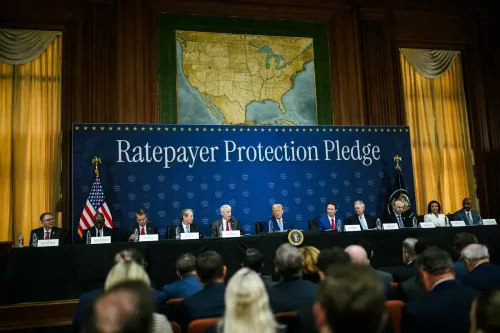
The White House 's 4 March Ratepayer Protection Pledge already requires participating tech companies to cover electricity and infrastructure costs, plus local hiring and training commitments.
The US Department of Energy identifies reliable power and heat removal as the core operational demands of data centres — the source of much local resistance.
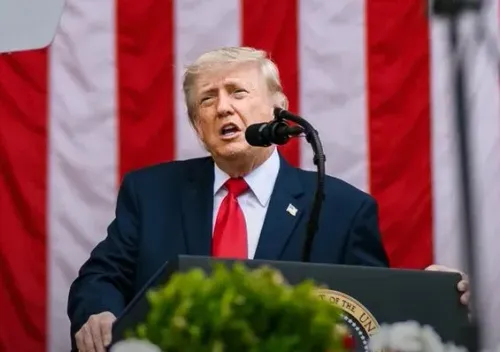
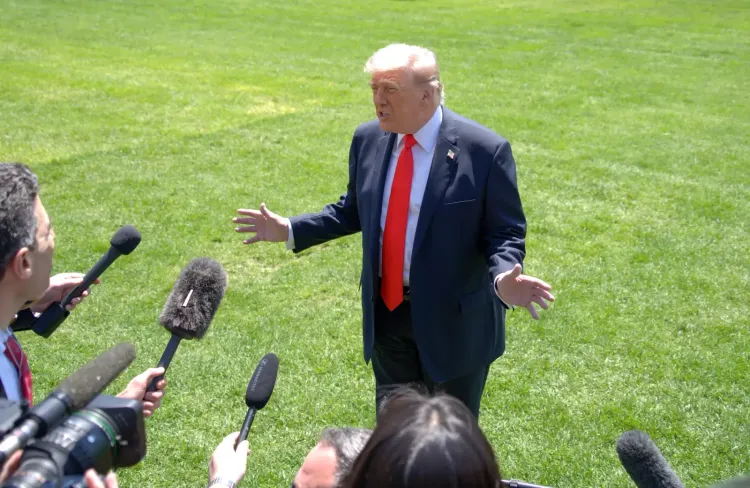
President Donald Trump on Saturday voiced support for giving local communities a say in data centre approvals and argued that such facilities should deliver substantial financial benefits to host areas, framing the push as essential to keeping the United States ahead of China in the global technology race. Trump made the remarks in an interview with WANF-TV's Atlanta News First before a campaign rally in Perry, Georgia.
What Trump Said
Responding to interviewer Abby Kousouris, who raised the position of Republican gubernatorial candidate Rick Jackson — that local residents should be able to approve data centre projects — Trump said he agreed. 'I agree with that. No, I agree with that. And I think locals should be paid a lot of money for data centers,' he told Kousouris.
Trump suggested that financial compensation could transform community opposition into acceptance. 'When a data center goes in, I've seen it. People are very unhappy. All of a sudden, a data center decides to pay a community, uh, in the form of taxes, in a form of whatever. And all of a sudden, the same people love what they're doing,' he said.
He did not, however, outline a formal approval process, announce any federal legislation, or specify how payments to communities would be calculated or distributed — nor did he clarify whether money would flow to local governments, individual households, or both.
The China Competition Argument
Trump coupled his remarks on community benefits with an argument for continued, rapid data centre construction, citing competition with China. He asserted that China was building such facilities at speed and claimed the US remained ahead, though he offered no metric or source for that comparison. 'But the data centers, they have money. They can pay local communities a lot,' he added.
He also stated that data centres would generate their own electricity and supply surplus power back to the grid, without naming any specific projects or providing details on generating capacity.
White House Ratepayer Protection Pledge
Trump's remarks follow the White House's 4 March Ratepayer Protection Pledge, which called on participating technology companies to cover the additional electricity supply and infrastructure costs their data centres require. The pledge also included commitments to local hiring, workforce training, and coordination with grid operators. Notably, those commitments govern company practices and do not themselves demonstrate that household electricity bills have fallen — a distinction critics and consumer advocates are likely to press.
This is not the first time the administration has sought to frame data centre expansion as a public benefit rather than a burden. The March pledge signalled a broader effort to pre-empt community resistance by tying corporate investment to local obligations.
What Data Centres Require
Data centres underpin cloud computing and artificial intelligence services. According to the US Department of Energy, both reliable power supply and continuous heat removal from computing equipment are central operational requirements — making them significant consumers of electricity and water in host communities. Those demands are at the root of much local opposition.
What Remains Unresolved
Trump's statements expressed broad support for community consent and compensation but stopped short of introducing new regulatory requirements or a federal framework. No timetable was given for any payment arrangement. As the US data centre pipeline grows — driven by surging demand for AI infrastructure — the gap between presidential rhetoric and enforceable policy is likely to remain a flashpoint between technology companies, local governments, and residents. How that gap is bridged, and by whom, will shape where the next generation of facilities gets built.
Point of View
No regulatory mechanism, no payment formula. Endorsing community consent in a TV interview costs nothing politically and commits nothing legally — while signalling to the tech industry that the administration will not impose hard federal siting rules. The real tension is between the AI infrastructure boom's voracious appetite for power and land, and the communities bearing those costs with no guaranteed share of the upside. The March Ratepayer Protection Pledge was a voluntary commitment; without statutory teeth, it is a press release. Until Congress or federal agencies act, local governments will continue fighting data centre siting battles with little leverage.
NationPress
25 Oct 2026
Frequently Asked Questions
What did Trump say about data centres and local communities?
Trump said he supports giving local communities a role in approving data centres and believes host areas should receive substantial financial benefits, potentially through taxes or similar arrangements. He made the remarks in a TV interview before a rally in Perry, Georgia, on Saturday.
Did Trump announce a new federal policy or law on data centres?
No. Trump expressed broad support for community consent and compensation but did not outline a formal approval process, announce federal legislation, or specify how payments would be calculated or distributed. No timetable was given.
What is the White House Ratepayer Protection Pledge?
The White House's 4 March Ratepayer Protection Pledge calls on participating technology companies to cover the additional electricity supply and infrastructure costs their data centres require, along with commitments to local hiring, workforce training, and grid coordination. It is a voluntary commitment and does not itself guarantee lower household electricity bills.
Why did Trump bring up China in his data centre remarks?
Trump argued that the US needs to build data centres rapidly to stay ahead of China in the global technology race. He claimed China was constructing such facilities at speed but offered no specific metric or source to support the comparison.
Why do data centres face local opposition?
According to the US Department of Energy, data centres require large, reliable electricity supplies and continuous cooling — making them significant consumers of power and water in host communities. Those demands, along with concerns about noise and land use, are at the root of much local resistance.