Trump pushes AI data centre dividends for local communities, signs SI order
Synopsis
Trump wants Big Tech to pay dividends to neighbourhoods hosting AI data centres — a voluntary idea floated after a 40-executive White House summit where he also signed an order erasing 'AI' from official US government language and replacing it with 'Super Intelligence'. No binding mechanism exists yet, but the geopolitical framing is stark: build in America or cede ground to China.
Key Takeaways
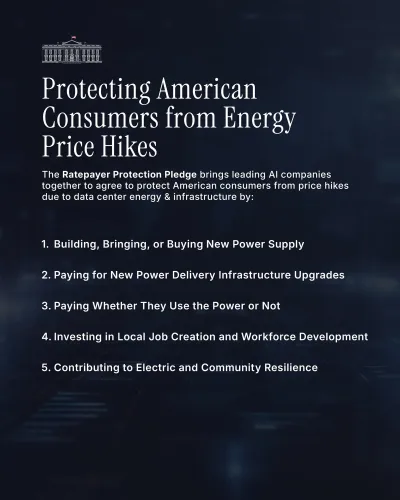
Donald Trump proposed on 30 September 2026 that tech firms building AI data centres share financial gains with host communities, including teacher bonuses and resident dividends.
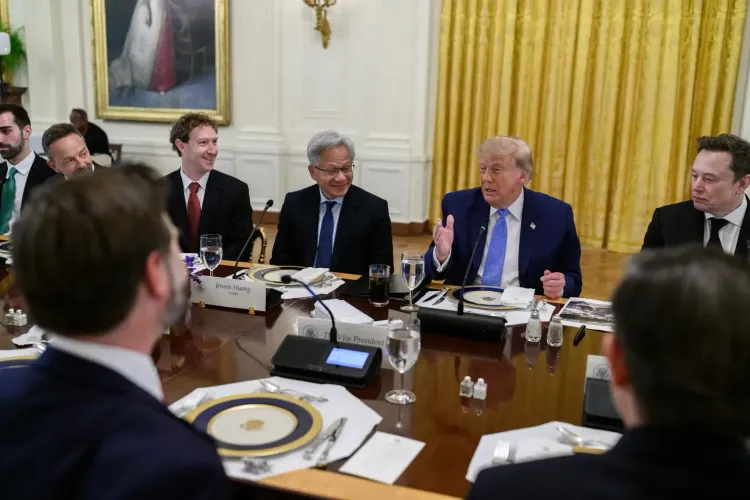
About 40 technology industry leaders met Trump at the White House and signed a voluntary accord on advanced AI development.
Trump signed an executive order replacing 'Artificial Intelligence' and 'AI' with 'Super Intelligence' and 'SI' in all official US government communications and non-statutory documents.
The federal government has announced more than $5 billion for the Genesis Mission to accelerate AI-driven scientific and medical research.
No formal programme or funding mechanism for community payments has been announced; the proposal remains voluntary.
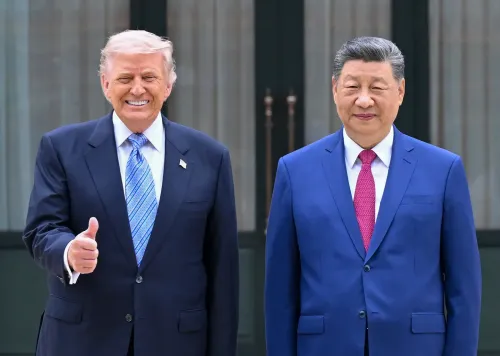
Trump cited competition with China as the primary reason the US must accelerate domestic data-centre construction despite local opposition over energy and water use.
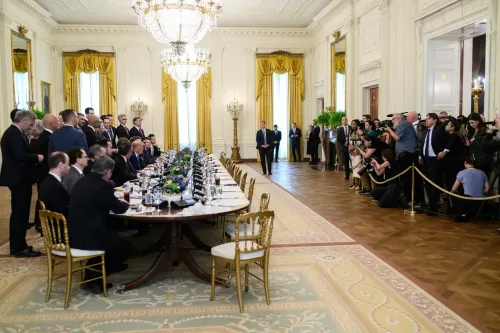
US President Donald Trump on 30 September 2026 called on technology companies constructing large AI data centres across the United States to share their financial gains with host communities, proposing teacher bonuses and direct dividend payments for local residents. The remarks came after Trump met approximately 40 technology industry leaders at the White House — a gathering that also produced a voluntary accord on advanced artificial intelligence development.
What Trump Proposed
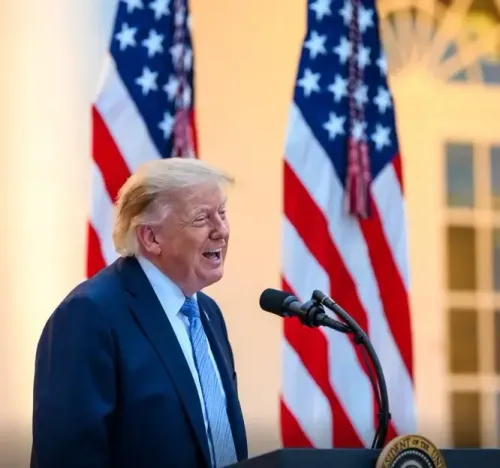
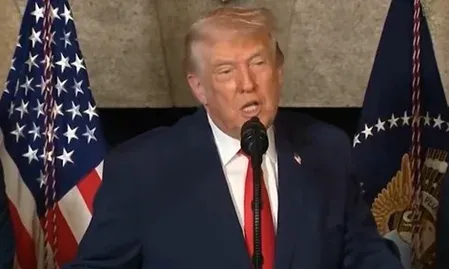
Speaking after the White House meeting, Trump argued that data-centre operators should form formal partnerships with the towns and counties where they build their facilities. 'The companies will be very generous to them, both financially and otherwise,' he said. 'I think they'll help with their schools, they'll help with their teachers, they'll help with pay of the teachers.'
He later expanded on the idea, suggesting payments could flow directly to nearby residents. 'The people are going to benefit directly,' Trump said. 'Whether it's teachers that get paid a bonus, whether it's people that live in the community that get paid a dividend, you could call it a dividend because the dividend sounds right.'
Notably, Trump did not announce a formal programme, funding requirement, or mechanism for distributing the proposed benefits. The proposal remains voluntary and conceptual at this stage.
The 'Super Intelligence' Executive Order
Separately, Trump signed an executive order directing all executive-branch departments and agencies to replace the terms 'Artificial Intelligence' and 'AI' with 'Super Intelligence' and 'SI' in official communications and non-statutory documents. The order also directed the White House science and technology adviser to propose a federal definition of the new term and identify any additional executive action needed for implementation.
The administration's framing of advanced AI as 'Super Intelligence' marks a deliberate rhetorical shift, one that places the US technology build-out in a race-against-China context. This comes amid a broader policy architecture that includes the AI Action Plan released in July 2025 and a National Super Intelligence Policy Framework unveiled in March 2026.
Community Opposition and Energy Concerns
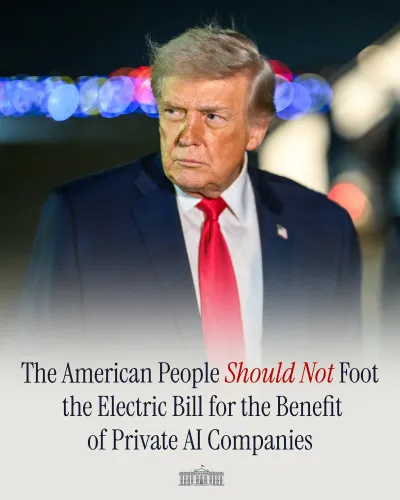
The rapid construction of data centres has generated significant pushback in parts of the US. Residents and local officials have raised concerns about electricity consumption, water use, land requirements, noise, and the effect on household utility bills. Trump acknowledged the siting concerns but framed continued construction as a national security imperative.
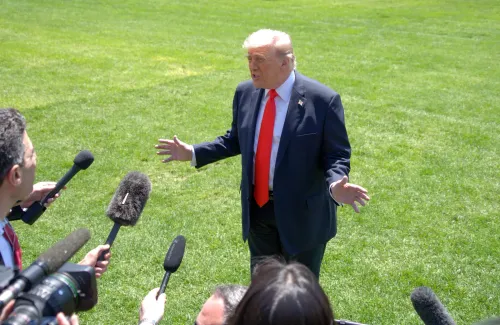
'Frankly, I want them built in America,' he said. 'If we're not smart, they'll end up building data centers in other countries, and those other countries will make a fortune, and we won't.'
Data centres require large, continuous electricity supplies to power and cool thousands of high-performance chips. The growth of generative AI has sharply accelerated demand for new facilities, transmission networks, power-generation capacity, and cooling systems.
The Genesis Mission and Federal Spending
According to a White House fact sheet, the federal government has announced more than $5 billion for the Genesis Mission, a programme designed to use advanced computing to accelerate scientific, medical, energy, and manufacturing research. The administration presented the data-centre build-out as central to both US economic growth and national security strategy.
Relevance for India
India is experiencing its own rapid expansion in cloud computing and data-centre investment, driven by digital services, data-localisation requirements, and surging demand for AI infrastructure. The US debate over energy costs, water use, and community benefits therefore carries wider relevance, as countries compete to build domestic computing capacity. How Washington resolves the tension between infrastructure ambition and local opposition may offer a template — or a cautionary tale — for policymakers in New Delhi and beyond.
Whether Trump's community-benefit concept translates into binding policy will depend on congressional appetite and industry cooperation in the months ahead.
Point of View
It amounts to a request that profit-maximising firms voluntarily redistribute gains to neighbours they were never obligated to consult. The 'Super Intelligence' rebrand is more than semantics — it is an attempt to reframe a regulatory debate, distancing the administration from Biden-era AI safety language while projecting US technological dominance. The deeper tension is unresolved: data centres demand prodigious amounts of electricity and water in communities that neither consented to host them nor share in the upside. If that bargain is not formalised, local opposition will slow the very build-out Trump insists is a national security necessity — and China will not wait.
NationPress
30 Sept 2026
Frequently Asked Questions
What did Trump propose for communities hosting AI data centres?
Trump suggested that technology companies building large AI data centres should share financial gains with surrounding communities, including bonus pay for teachers and direct dividend payments for local residents. However, no formal programme or funding mechanism has been announced, making the proposal voluntary and non-binding at this stage.
What is the 'Super Intelligence' executive order Trump signed?
Trump signed an executive order on 30 September 2026 directing all US executive-branch departments and agencies to replace the terms 'Artificial Intelligence' and 'AI' with 'Super Intelligence' and 'SI' in official communications and non-statutory documents. The White House science and technology adviser was directed to propose a federal definition of the new term.
Why is Trump pushing for more data centres to be built in the US?
Trump framed the data-centre build-out as a national security and economic imperative, warning that failure to build in the US would allow other countries — particularly China — to dominate advanced AI infrastructure. He argued that domestic facilities would generate tax revenue, raise local incomes, and increase property values.
What is the Genesis Mission and how much has the US committed to it?
The Genesis Mission is a federal programme intended to use advanced computing to accelerate scientific, medical, energy, and manufacturing research. The US government has announced more than $5 billion for the programme, according to a White House fact sheet.
Why are local communities opposing data centre construction in the US?
Residents and local officials have raised concerns about high electricity consumption, water use, land requirements, noise, and rising household utility bills linked to data centre operations. Trump acknowledged these siting concerns but argued that national competitiveness with China outweighs them.