Trump plans 'AI Force' and AI Czar to lead US artificial intelligence push
Synopsis
Donald Trump's 'AI Force' and 'AI Czar' pledge is more than branding — it is a declaration that the US will treat artificial intelligence as a strategic national asset, policed through existing law rather than new regulation. With no structural details yet, and Attorney General Blanche framing it explicitly as a China race, the real test is whether this translates into a coherent institutional framework or remains a political signal.
Key Takeaways
President Donald Trump announced plans on 20 September 2026 to form an 'AI Force' and appoint an 'AI Czar' in the near future.
Trump said AI could account for as much as 25 per cent of US GDP , likening it to the Industrial Revolution and the internet.
The administration will rely on the existing criminal and civil justice system to address AI misuse, rather than creating new regulatory bodies.
Attorney General Todd Blanche rejected calls to slow AI, warning the US cannot lose the AI race to China .
No structural details about the AI Force or the identity of the AI Czar have been disclosed.
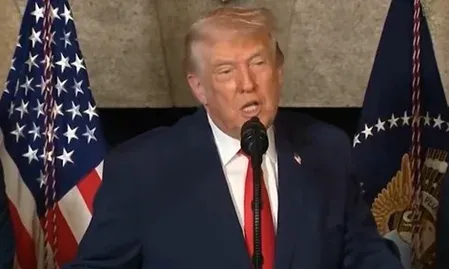
US President Donald Trump announced on 20 September 2026 that he is forming an 'AI Force' and will name an 'AI Czar' in the near future, framing artificial intelligence as the next great industrial revolution and a cornerstone of American economic dominance. The announcement, made via a post on his Truth Social account, signals the administration's intent to aggressively champion AI development while using existing legal mechanisms to police misuse.
What Trump Said
In his post, Trump vowed that his administration would not 'hinder or stifle the growth of this incredible industry.' He declared that AI could account for as much as 25 per cent of US gross domestic product, comparing its transformative potential to the Industrial Revolution and the rise of the internet. At the same time, he said the government would watch for bad actors, stating that the existing criminal and civil justice system was sufficient to address misuse.
Trump also claimed that fears over AI's destruction were among the 'many hoaxes' propagated by Democrats, grouping it alongside his characterisations of the Russia-Ukraine war and global warming — remarks that are likely to deepen the partisan divide over US technology policy.
No Structural Details Yet
The president did not elaborate on the organisational structure of the proposed AI Force or the specific mandate of the AI Czar. It remains unclear whether the AI Force would be a standalone agency, a White House office, or a unit embedded within an existing department. The identity of the prospective czar has also not been disclosed. The announcement comes as Washington is engaged in a broader, intensifying debate over how to govern rapidly advancing AI systems and their potential national security implications.
Attorney General Backs the Push
US Attorney General Todd Blanche, speaking during a media availability at the White House earlier this week, aligned squarely with Trump's position. Blanche described AI as 'highly beneficial' and firmly rejected proposals for the Justice Department to regulate or slow the technology. He warned that the United States could not afford to lose the AI race to China, pledging action against Chinese individuals and companies that steal from American technology businesses.
'We can't lose the AI race to China, right?' Blanche said. 'President Trump says that, everybody says that, but they say it because it's true.'
Blanche said the Justice Department would investigate criminal conduct connected to AI but would not assume the role of a technology regulator — a stance consistent with the broader administration posture of promotion over precaution.
The Wider Context
The Trump administration's move follows sustained pressure from technology leaders who have warned that rapidly advancing AI systems could pose serious national security and societal risks. Critics argue that without a formal regulatory framework, the US risks both domestic harms and international credibility on AI governance. Notably, the administration's approach — using criminal and civil law rather than new regulations — diverges sharply from the European Union's AI Act and the more cautious stances of some US tech executives.
With China investing heavily in state-backed AI programmes and the US Congress still debating comprehensive AI legislation, the establishment of an AI Force and czar-level coordinator could reshape how Washington organises its AI strategy in the months ahead.
Point of View
No czar named, no legislative mechanism. That ambiguity matters: the administration is signalling intent while leaving the hard institutional design unanswered. Framing AI scepticism as a Democratic 'hoax' alongside Ukraine and climate change is a political move as much as a policy one, and risks making AI governance a culture-war proxy rather than a sober strategic exercise. Meanwhile, the Justice Department's posture — investigate bad actors, do not regulate — leaves the US without the kind of proactive safety architecture that Washington's own technology leaders have been calling for.
NationPress
20 Sept 2026
Frequently Asked Questions
What is the 'AI Force' that Trump announced?
The 'AI Force' is a new body announced by President Donald Trump on 20 September 2026, intended to oversee and champion US artificial intelligence development. No structural details — such as whether it will be a standalone agency or a White House office — have been disclosed yet.
Who will be the US AI Czar?
Trump said he will announce an AI Czar in the near future, but has not named the individual or defined the role's specific mandate. The announcement was made via a Truth Social post.
Why does Trump say AI is so important for the United States?
Trump compared AI to the Industrial Revolution and the rise of the internet, claiming it could account for as much as 25 per cent of US GDP. He framed it as a critical national asset in competition with China and pledged the government would support its growth.
How does the Trump administration plan to handle AI risks?
Rather than creating new regulatory bodies, the administration intends to rely on the existing criminal and civil justice system to address AI-related misconduct. Attorney General Todd Blanche confirmed the Justice Department will investigate criminal conduct linked to AI but will not act as a technology regulator.
What is the US-China dimension of Trump's AI push?
Attorney General Blanche explicitly warned that the United States cannot afford to lose the AI race to China, and pledged action against Chinese entities that steal from American technology companies. The framing of AI as a geopolitical race underpins the administration's pro-development, low-regulation stance.