Trump: AI bigger than internet, US must stay ahead of China
Synopsis
Donald Trump didn't just call AI important — he called it bigger than the internet and bigger than anything that has ever existed. With Nvidia's Jensen Huang at his side and China's unconstrained AI push as his foil, Trump's message was unambiguous: America leads, and regulation must not change that.
Key Takeaways
President Donald Trump on 30 July declared AI 'bigger than the internet ever was' and insisted the US must maintain its lead over China .
Trump warned that excessive AI regulation could hand a strategic advantage to Beijing , which he said operates with 'virtually no controls.' Nvidia CEO Jensen Huang was present at the White House event, where Trump praised his semiconductor achievements and referenced his 'hundreds of billions of dollars' in US investment.
Trump's remarks were triggered by a question about advanced ChatGPT AI models and potential tighter government controls.
No specific regulatory framework has been announced; the administration says it is still 'looking at controls.'
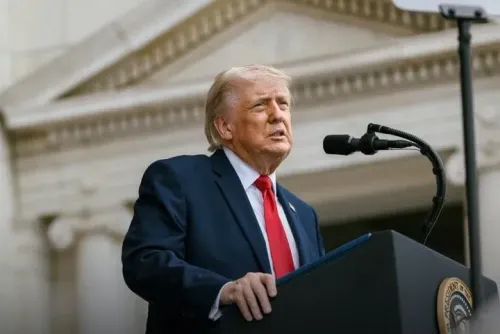
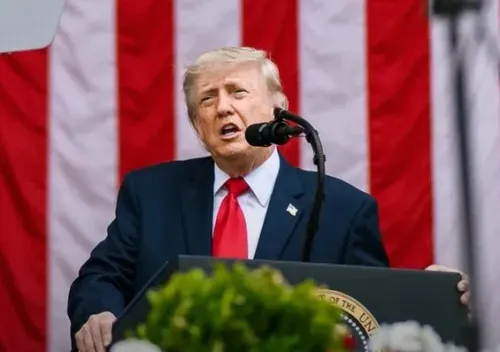
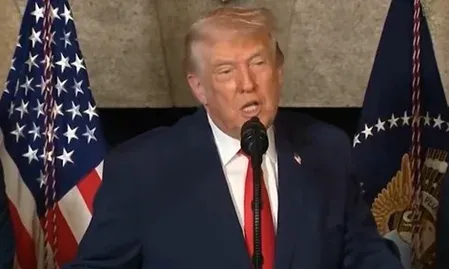
US President Donald Trump on Wednesday, 30 July declared that artificial intelligence would prove more consequential than the internet itself, while stressing that Washington must preserve its technological lead over Beijing — even as his administration weighs possible safeguards for the fast-evolving sector.
Trump's Core Warning on AI Regulation
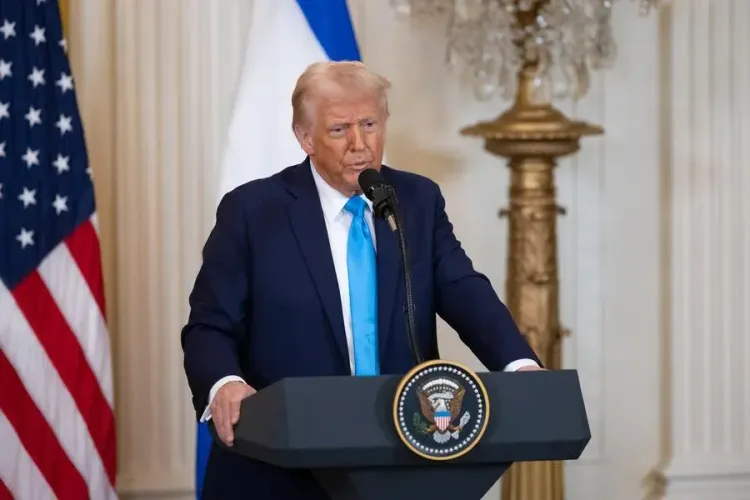
Speaking to reporters at the White House, Trump acknowledged that his administration was actively examining potential guardrails for AI development, but cautioned against rules that could blunt America's competitive edge. 'We're looking at AI. We're looking at controls,' he said, adding: 'We're also making sure that we lead. So, we're leading China in AI by a lot.'
Trump pointed to China's comparatively unconstrained approach to AI as a factor shaping US thinking. 'China has virtually no controls; it's freewheeling a little bit. So, we have to be careful in both ways,' he said, warning that over-regulation could be self-defeating: 'We don't want to restrict them where all of a sudden, we come in second to China.'
AI Bigger Than Anything That Came Before, Trump Says
Trump framed AI in sweeping historical terms, describing it as a civilisation-defining technology. 'Whoever wins with AI is going to win, that's how big it is,' he said. 'So, it's bigger than the internet ever was; it's bigger than anything ever was.' He also made clear his preference for allowing American technology companies to operate without unnecessary government interference: 'I don't want to restrict — I know many of these people, I don't want to restrict them from doing great work.'
His remarks came in direct response to a question citing reports about advanced ChatGPT AI models and whether the administration was considering tighter controls on the technology.
Nvidia's Jensen Huang at the White House
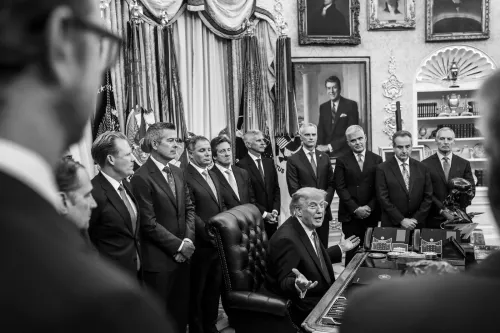
Earlier at the same event — a White House announcement on the redevelopment of Washington Dulles International Airport — Trump welcomed Nvidia founder and chief executive Jensen Huang. Praising Huang's semiconductor achievements, Trump drew a direct line between chip innovation and American infrastructure ambition: 'If we can do with an airport, like he does with chips, it'll be the greatest airport anywhere in the world.'
Trump later referenced Huang's investment commitments while discussing capital flowing into the United States, noting that Huang was 'spending a tremendous amount of money, by hundreds of billions of dollars.'
The Broader US-China AI Race
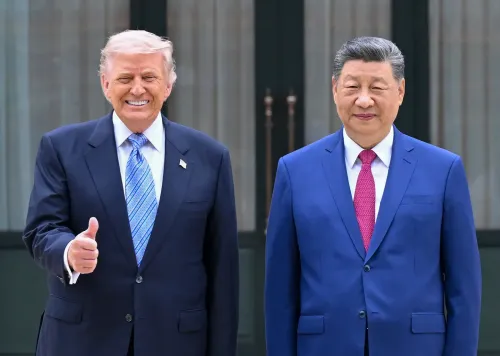
Artificial intelligence has emerged as one of the central theatres of strategic competition between Washington and Beijing. Both nations are channelling vast resources into AI research, advanced semiconductors, cloud infrastructure, and data systems. Governments on both sides increasingly view AI leadership as inseparable from economic growth, military capability, and national security — making Trump's remarks as much a geopolitical statement as a technology-policy one. Notably, this is not the first time the Trump administration has flagged the China AI threat; export controls on advanced chips to China have already been a flashpoint in the bilateral relationship.
What Comes Next
The administration has not yet detailed a specific regulatory framework, leaving open the question of how it will balance innovation with oversight. Industry observers and AI safety advocates are watching closely for any formal policy proposals, particularly in the wake of rapid capability advances by frontier AI labs. The presence of Huang at the White House signals that semiconductor and AI industry leaders remain closely aligned with the administration's economic agenda.
Point of View
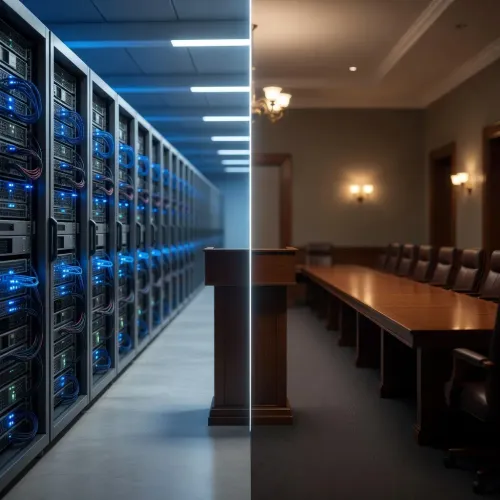
Even if they are less stringent than what US safety advocates propose. The real tension Trump is navigating is between the AI safety lobby, which wants binding guardrails, and the tech industry, which wants a free runway. By invoking China as the reason to go slow on regulation, Trump is doing what every administration does when it wants to defer a hard domestic policy choice: externalise the constraint. Whether that holds as frontier AI capabilities accelerate — and as liability questions multiply — remains the central unresolved question of US AI governance.
NationPress
13 Sept 2026
Frequently Asked Questions
What did Trump say about AI and China?
President Trump said AI is 'bigger than the internet ever was' and that the US is 'leading China in AI by a lot.' He warned that over-regulation could allow China to overtake the United States, noting that China operates with 'virtually no controls' on AI development.
Is the Trump administration planning to regulate AI?
The administration says it is examining possible safeguards but has not announced a specific regulatory framework. Trump stressed that any controls must not undermine America's competitive advantage over China or restrict leading technology companies.
Why was Nvidia CEO Jensen Huang at the White House?
Jensen Huang attended a White House announcement on the redevelopment of Washington Dulles International Airport. Trump praised Huang's semiconductor achievements and referenced his 'hundreds of billions of dollars' in US investment commitments.
What triggered Trump's AI remarks on 30 July?
A reporter's question citing reports about advanced ChatGPT AI models and whether the administration was considering tighter controls on artificial intelligence prompted Trump's comments.
Why does the US-China AI competition matter?
Both the United States and China are investing heavily in AI research, advanced chips, cloud computing, and data infrastructure. Governments on both sides view AI leadership as critical to economic growth, military capability, and national security, making it one of the defining strategic contests of the decade.