US leads AI race, China trailing substantially, says Bessent
Synopsis
US Treasury Secretary Scott Bessent drew a sharp line at the White House: America is the world's AI superpower, and China is a distant second. With the administration explicitly choosing innovation over heavy regulation and deepening its partnership with major AI labs, Washington is betting that staying ahead — not slowing down — is the only winning strategy in the US-China tech rivalry.
Key Takeaways
Treasury Secretary Scott Bessent declared the United States the world's leading AI power on 29 May .
Bessent said China is 'trailing substantially' behind the US in artificial intelligence.
The administration is working closely with major large language model labs, calling them 'excellent partners.' Washington is seeking to balance AI innovation with safety rather than impose tighter restrictions.
Both the US and China are investing heavily in AI, semiconductors, and advanced computing infrastructure.
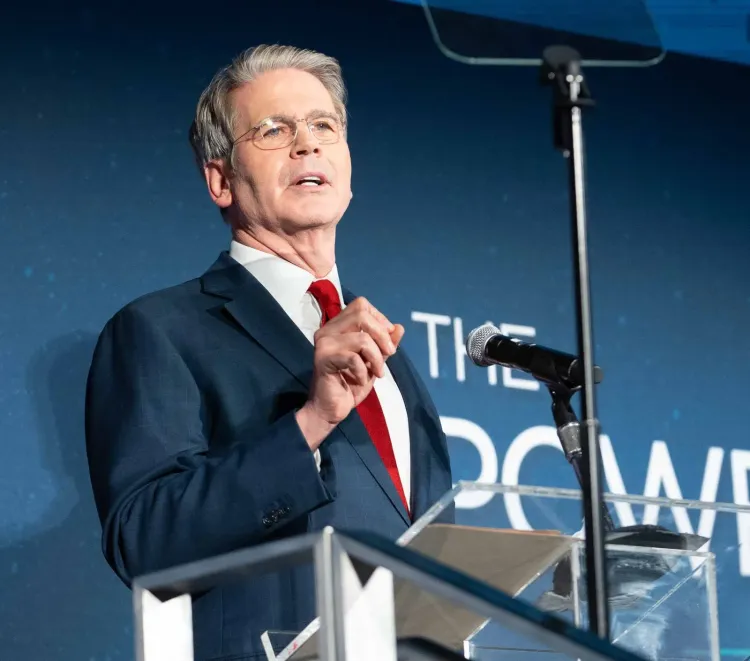
Treasury Secretary Scott Bessent on 29 May declared the United States the world's foremost artificial intelligence power, asserting that China remains significantly behind as Washington works to preserve its technological edge in one of the defining strategic rivalries of the century.
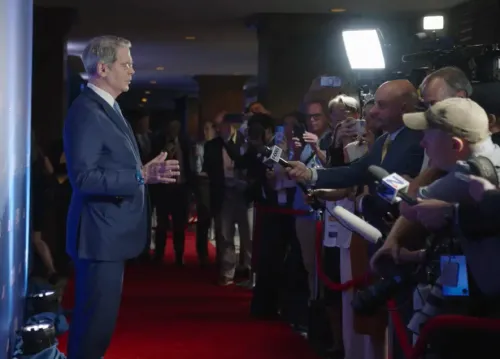
'The US is the AI leader in the world,' Bessent said at a White House briefing. 'We're an AI superpower. China is second, they are trailing substantially.'
The Administration's Position
Bessent's remarks reflect the Trump administration's broader conviction that technological leadership is increasingly inseparable from national security, economic growth, and geopolitical influence. Rather than signalling tougher regulatory curbs, he emphasised the importance of maintaining America's lead while simultaneously addressing safety concerns.
'We are working on the exact calculus between innovation and safety, and we want to optimise for that,' he said, adding that the administration's goal is to 'get a solution that solves for the maximum calculus.'
Government-Industry Collaboration
The Treasury Secretary highlighted what he described as close cooperation between federal policymakers and major American AI developers. 'We're working very closely with the large language labs. They've been excellent partners,' Bessent said. He added that collaboration extends across 'all of the labs that have the large language models, but between the US government and the labs.'
His comments came in direct response to questions about risks posed by advanced AI models and whether additional government measures may be needed to protect critical infrastructure and the financial system — concerns that have grown louder as AI capabilities accelerate.
Why the US-China AI Race Matters
American officials increasingly view leadership in artificial intelligence as critical not only for economic competitiveness but also for military capabilities, cybersecurity, advanced manufacturing, and long-term productivity growth. Both the United States and China are investing heavily in AI, semiconductors, and advanced computing infrastructure, with each nation seeking to secure dominance in technologies widely expected to reshape the global economy over the coming decades.
Notably, the debate has intensified globally as governments grapple with how to regulate increasingly powerful AI systems without ceding ground to rivals. The administration's approach, as articulated by Bessent, appears aimed at encouraging continued private investment and technological development while avoiding measures that could slow innovation.
What Comes Next
With Washington and Beijing locked in a technology competition that spans chips, cloud infrastructure, and frontier AI models, the policy balance between innovation and safeguards will remain under scrutiny. Industry observers and lawmakers are watching closely to see whether the administration formalises its collaboration with AI labs into concrete regulatory or investment frameworks in the months ahead.
Point of View
The administration is staking out a posture that resists regulatory overreach at home while signalling confidence abroad. But the 'innovation versus safety' calculus he referenced remains undefined — there is no public framework, no timeline, and no measurable benchmark. The real risk is that the partnership with AI labs, while strategically useful, could insulate frontier developers from the kind of independent oversight that both the financial system and critical infrastructure arguably require. Winning the AI race matters; so does deciding who sets the rules of the race.
NationPress
14 Oct 2026
Frequently Asked Questions
What did Scott Bessent say about the US-China AI race?
Treasury Secretary Scott Bessent said the United States is the world's leading AI power and that China is 'trailing substantially.' He made the remarks at a White House briefing on 29 May, framing AI leadership as central to national security and economic growth.
What is the Trump administration's approach to AI regulation?
Rather than imposing tougher restrictions, the administration is focused on balancing innovation with safety. Bessent indicated the government is working closely with major AI labs to find what he called 'the maximum calculus' between the two goals.
Why does AI leadership matter in the US-China rivalry?
American officials view AI dominance as critical for military capabilities, cybersecurity, advanced manufacturing, and long-term economic competitiveness. Both nations are investing heavily in AI, semiconductors, and advanced computing, with the technology expected to reshape the global economy for decades.
How is the US government working with AI companies?
Bessent described close collaboration between federal policymakers and the major large language model laboratories, calling them 'excellent partners.' The administration appears to favour a cooperative model over a regulatory one, at least for now.
What are the risks being discussed around advanced AI?
Questions have been raised about risks to critical infrastructure and the financial system from increasingly powerful AI models. Bessent acknowledged these concerns but suggested the administration would address them through partnership with industry rather than new government mandates.