China leads US in AI apps but firms face overvaluation risk

Synopsis
At the 2026 HKEX Future Tech Summit in Shenzhen, Alibaba Cloud's Chi Zhang declared China is only '100 days behind' the US in frontier AI models — yet warned Chinese AI firms are looking dangerously overvalued even as the country leads in consumer AI applications.
Key Takeaways
Chi Zhang , General Manager of Finance Industry at Alibaba Cloud Intelligence Group , said China is only '100 days behind' the US in frontier AI model capabilities as of June 2026 .
China 's primary AI advantage lies in consumer-facing applications, fuelled by a large base of entrepreneurs and engineers, according to Zhang .
Lixue Xia , CEO of Infinigence AI ( Shanghai ), identified energy, infrastructure, and open-source development as key drivers of China 's AGI ambitions.
Tech executives and investors at the 2026 HKEX Future Tech Summit in Shenzhen warned that Chinese AI firms are increasingly overvalued.
DeepSeek and other Chinese AI vendors have attracted US clients by offering significantly lower costs compared with OpenAI and Anthropic .
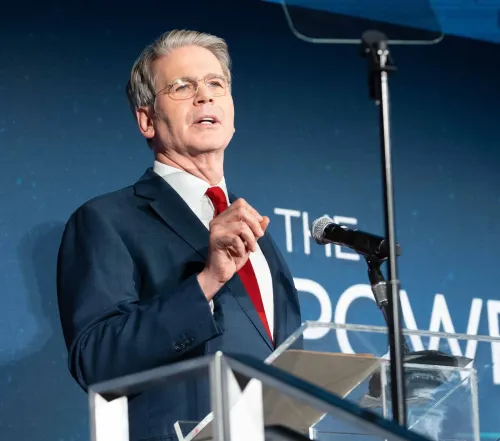
China holds a meaningful edge over the United States in deploying artificial intelligence applications to everyday consumers, according to tech executives and investors who spoke on Thursday, June 11, 2026, at the 2026 HKEX Future Tech Summit in Shenzhen, hosted by Hong Kong Exchanges and Clearing. However, the same voices cautioned that Chinese AI companies are looking increasingly overvalued.
China is '100 days behind' the US in frontier AI models
Chi Zhang, General Manager of Finance Industry at Alibaba Cloud Intelligence Group, told the summit panel that China still lags in raw computing power but is only '100 days behind' the US in frontier AI model capabilities. Zhang framed this not as a deficit but as a narrowing gap that underscores China's accelerating pace of development. The remarks reflect a broader industry consensus that the technology distance between the two AI superpowers is shrinking faster than many anticipated.
Why it matters: applications as China's true advantage
Zhang argued that China's most significant and durable advantages lie not in foundational models but in AI applications, driven by its vast pool of entrepreneurs and engineers and its current stage of economic development. The country's scale of talent and the hunger of its domestic market create conditions that are difficult for US rivals to replicate. This application-layer dominance could prove strategically decisive even if China trails on raw model benchmarks.
AGI race: energy, infrastructure, and open-source as growth levers
Lixue Xia, Co-founder and CEO of Infinigence AI, a Shanghai-based AI computing service provider, said that in the race toward artificial general intelligence (AGI), China's enormous growth potential would be propelled by sectors including energy, infrastructure buildout, and its open-source ecosystem. Xia's framing positions China as competing on a different axis than pure model performance — one rooted in industrial integration and open collaboration. These structural levers could compound China's application-layer lead over time.
The competitive backdrop: DeepSeek and cost-driven disruption
Chinese AI labs have in recent months unveiled new proprietary and open-source models that trail closely behind those from US peers such as OpenAI and Anthropic in capabilities. Their ability to maintain a significantly lower cost structure has prompted some US firms to switch to Chinese vendors, with DeepSeek emerging as a notable beneficiary of this trend. The cost arbitrage is reshaping procurement decisions across the global AI supply chain.
What's next: valuation reality check looms
Despite the optimism around China's application-layer strengths, the executives and investors at the summit flagged a growing concern: Chinese AI firms appear increasingly overvalued relative to their current revenue and profitability fundamentals. As capital markets scrutinise AI monetisation more rigorously in 2026, companies that cannot demonstrate sustainable unit economics risk a sharp correction. Investors and industry watchers will be monitoring whether China's application-layer lead translates into durable earnings before valuations reset.
Point of View
A narrative useful for both investor confidence and geopolitical posturing. What mainstream coverage underweights is the valuation warning embedded in the same breath — a rare moment of candour from insiders who are typically incentivised to talk up the sector. The cost-driven defection of US firms to vendors like DeepSeek is accelerating AI commoditisation faster than the chip-war narrative suggests, threatening the premium valuations that Chinese AI unicorns currently command. The real test in the second half of 2026 is whether application-layer dominance converts to margin, or whether it simply exposes a race to the bottom on pricing.
NationPress
26 Oct 2026
Frequently Asked Questions
How far behind is China in AI compared to the US?
According to Chi Zhang of Alibaba Cloud Intelligence Group , China is only '100 days behind' the US in frontier AI model capabilities as of June 2026 , though it still lags in overall computing power.
Why does China lead the US in everyday AI applications?
China 's edge in consumer AI applications stems from its large pool of entrepreneurs and engineers and its current stage of economic development, according to Chi Zhang at the 2026 HKEX Future Tech Summit . These structural factors make it easier to deploy AI products at scale across a massive domestic market.
Are Chinese AI companies overvalued?
Tech executives and investors speaking at the 2026 HKEX Future Tech Summit in Shenzhen warned that Chinese AI firms are looking increasingly overvalued. The concern centres on whether current valuations are justified by actual revenue and profitability fundamentals.
What is Infinigence AI and what role does it play in China's AGI race?
Infinigence AI is a Shanghai -based AI computing service provider whose Co-founder and CEO , Lixue Xia , says China 's path to AGI will be driven by energy, infrastructure buildout, and its open-source ecosystem. The company provides the computing infrastructure that underpins China 's broader AI development ambitions.
Why are US companies switching to Chinese AI vendors like DeepSeek?
Chinese AI vendors, including DeepSeek , have attracted US clients primarily because of their significantly lower cost structure compared with US rivals such as OpenAI and Anthropic . This cost advantage is reshaping global AI procurement and accelerating commoditisation of AI model services.