OpenAI exec urges Trump-Xi AI safety talks amid China state media backlash

Synopsis
An OpenAI executive and ex-White House adviser is publicly urging US-China AI safety talks just weeks before the Trump-Xi summit — while Chinese state media simultaneously accuses Anthropic of weaponising AI governance for geopolitical gain.
Key Takeaways
Dean Ball , OpenAI 's head of strategic futures and a former White House Office of Science and Technology Policy adviser, called for US-China AI safety collaboration on Tuesday .
Ball wrote on X that a 'window of opportunity' has opened but 'will not remain open forever.' US Treasury Secretary Scott Bessent confirmed to Reuters on Sunday that officials from both sides 'will press forward with dialogues' on AI guardrails ahead of the September 24 summit.
Chinese state media account Yuyuan Tantian , affiliated with broadcaster CCTV , accused Anthropic of using aggressive lobbying to dictate global AI industry rules.
Anthropic CEO Dario Amodei 's calls to arm democracies with AI were singled out by Chinese state media as evidence of US geopolitical intent.
Dean Ball, OpenAI's head of strategic futures and a former adviser to the White House Office of Science and Technology Policy, has publicly called for US-China cooperation on AI safety ahead of a planned bilateral summit — even as Chinese state media launched a sharp attack on American AI governance practices on Sunday, August 31, 2026.
A window of opportunity
Writing on X on Tuesday, Ball said: 'I have always believed US/China AI safety collaboration would be desirable but thought it was unlikely to happen. In the past few months, though, the ground has shifted. There is a window of opportunity.' He cautioned, however, that the window 'will not remain open forever.'
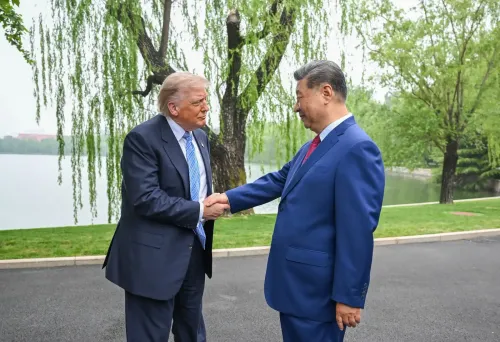
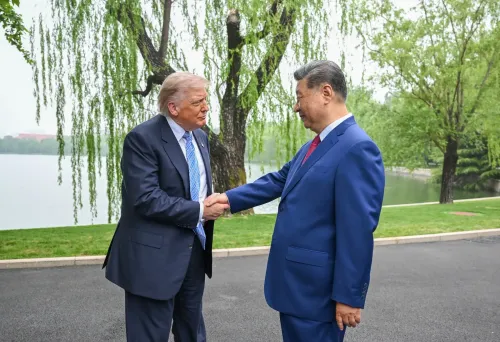
Ball described the window as likely to 'widen over at least the next few months' due to escalating AI risks and the imminent high-level bilateral meeting between US President Donald Trump and Chinese leader Xi Jinping.
Summit backdrop: AI guardrails on the agenda
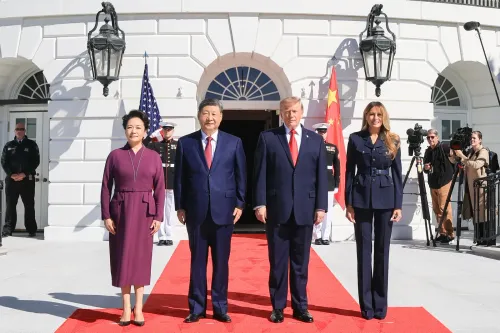
Ahead of Xi Jinping's planned state visit to the US on September 24, officials from both sides 'will press forward with dialogues' on topics including AI guardrails, US Treasury Secretary Scott Bessent told Reuters on Sunday. The disclosure signals that AI governance has moved from a technical side-discussion to a formal diplomatic priority between the world's two largest AI powers.
Chinese state media fires back
The diplomatic overture comes against a combative backdrop. Yuyuan Tantian, a social media account affiliated with state broadcaster CCTV, published an article on Sunday accusing US AI firm Anthropic of attempting to dictate industry rules through aggressive lobbying. The account also targeted Anthropic CEO Dario Amodei's public calls to arm democracies with AI as evidence of an American push to dominate global AI governance.
The critique reflects a broader pattern in which Beijing has sought to frame Washington's AI safety agenda as a geopolitical tool rather than a neutral technical standard-setting exercise.
Why it matters
The simultaneous push for cooperation and the state media broadside illustrate the fundamental tension at the heart of any prospective US-China AI safety dialogue: both governments recognise existential risks from advanced AI, yet each suspects the other of using safety frameworks to entrench competitive advantage. Ball's intervention — coming from inside one of the world's most influential AI labs — adds institutional weight to what has so far been a largely academic debate.
What's next
All eyes now turn to the September 24 summit, where the scope and structure of any formal AI safety mechanism could take shape. Whether the two sides move beyond dialogue to binding commitments — and how Anthropic, OpenAI, and their Chinese counterparts are represented in those talks — will determine whether Ball's 'window of opportunity' translates into durable policy.
Point of View
He is applying pressure on both governments to act before frontier AI capabilities outpace any diplomatic framework. What mainstream coverage underplays is the significance of the CCTV-affiliated broadside against Anthropic — it signals that Beijing intends to contest the very legitimacy of US-led AI safety norms, not just their content. This mirrors the pattern seen in semiconductor export controls, where technical standards become proxies for geopolitical dominance. The real test of the September 24 summit will be whether both sides can separate genuine catastrophic-risk reduction from the governance competition that now surrounds it.
NationPress
17 Oct 2026
Frequently Asked Questions
Who is Dean Ball and why is he calling for US-China AI safety talks?
Dean Ball is OpenAI 's head of strategic futures and a former adviser to the White House Office of Science and Technology Policy . He is calling for cooperation because he believes escalating AI risks and the upcoming Trump-Xi summit have created a rare diplomatic opening that he warns 'will not remain open forever.'
When is the Trump-Xi summit and will AI be on the agenda?
Chinese leader Xi Jinping is scheduled to make a state visit to the US on September 24, 2026 . US Treasury Secretary Scott Bessent confirmed to Reuters that officials from both sides 'will press forward with dialogues' on topics including AI guardrails ahead of the meeting.
Why did Chinese state media criticise Anthropic?
Yuyuan Tantian , a social media account affiliated with state broadcaster CCTV , accused Anthropic of trying to dictate global AI industry rules through aggressive lobbying. It also criticised CEO Dario Amodei 's calls to arm democracies with AI , framing them as evidence of US geopolitical ambition rather than genuine safety concern.
What is the significance of an OpenAI executive making this call publicly?
As head of strategic futures at one of the world's most influential AI labs, Ball's public statement carries institutional weight beyond individual opinion. It suggests that at least part of the US AI industry sees diplomatic engagement with China on safety as both feasible and urgent, potentially influencing the official government position ahead of the September 24 summit.
How does this fit into the broader US-China AI rivalry?
The episode highlights a central tension: both governments acknowledge risks from advanced AI, yet each suspects the other of using safety frameworks to gain competitive advantage. Beijing 's state media attack on Anthropic and Washington 's export controls on semiconductors both reflect a pattern in which technical standards have become instruments of geopolitical competition.