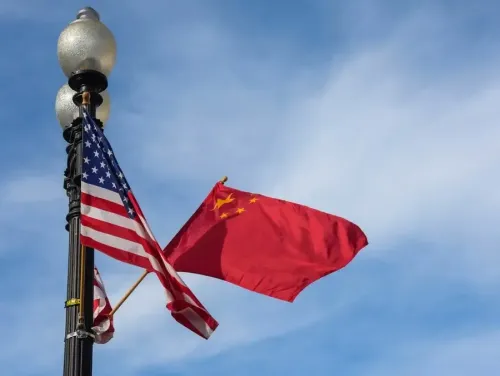
US-China AI hotline: Can a crisis dialogue prevent tech war escalation?
Synopsis
The US and China have agreed to a formal AI dialogue and threat-notification system after high-level New York talks on 21 September 2026 — but analysts warn the framework does little to resolve deep structural divides over chips, model distillation, and AI governance.
Key Takeaways
The United States and China agreed to establish a formal AI dialogue channel and a proposed threat-notification system following talks in New York on 21 September 2026 .
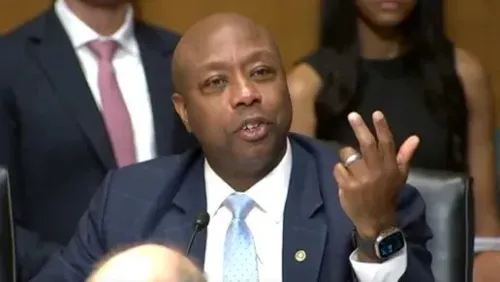
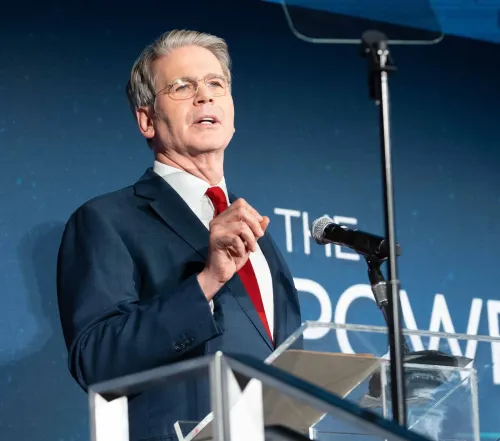
US Treasury Secretary Scott Bessent , US Trade Representative Jamieson Greer , and Chinese Vice-Premier He Lifeng were the principal officials involved in the high-level discussions.
Bessent described the AI and trade talks as 'successful,' though analysts cautioned the framework alone cannot bridge structural policy and commercial divides.
Ongoing disputes over chip access , model distillation, and market dominance — involving firms such as OpenAI and Anthropic — continue to constrain the scope of any bilateral AI cooperation.
The new operational channel builds on earlier discussions held in Beijing , signalling incremental diplomatic momentum rather than a breakthrough agreement.
The United States and China have agreed to establish a formal AI dialogue channel, including a proposed threat-notification system, following high-level talks in New York on Sunday, 21 September 2026 — a move analysts describe as a pragmatic but structurally limited step toward preventing a technology-driven geopolitical crisis.
The Announcement and Who Was in the Room
The agreement emerged from meetings between US Treasury Secretary Scott Bessent, US Trade Representative Jamieson Greer, and Chinese Vice-Premier He Lifeng. American officials confirmed the new operational channel builds on earlier discussions held in Beijing. Bessent characterised the talks on AI and trade as 'successful.'
Why It Matters
A direct communication framework between the world's two dominant AI powers carries significant symbolic weight at a moment when fears over autonomous systems, model misuse, and data security are intensifying globally. The proposed threat-notification mechanism, if operationalised, could serve as an early-warning buffer against miscalculation — particularly as both nations accelerate military and commercial AI deployments. However, analysts cautioned that a communication framework alone does little to resolve the underlying structural divides.
The Competitive Backdrop
Deep-seated tensions over chip access, model distillation practices, and market dominance continue to fracture the bilateral tech relationship. US export controls targeting advanced semiconductors have restricted Chinese firms' access to frontier compute, while Beijing has pushed domestic alternatives and challenged restrictions through multilateral forums. Companies including OpenAI and Anthropic operate under a regulatory environment that treats Chinese counterparts with increasing wariness, and industry researchers at firms such as Omdia have flagged that diverging governance philosophies make technical interoperability on safety standards exceptionally difficult.
What Analysts Are Saying
Analysts who reviewed the outcome of the New York talks stressed that establishing a channel is a necessary but far from sufficient condition for meaningful AI safety cooperation. The structural policy and commercial divides separating the two AI superpowers — from export control regimes to competing visions of AI governance — remain firmly in place. Precedents from nuclear-era hotlines suggest that communication mechanisms can reduce accident risk, but only when both parties share a baseline interest in avoiding escalation.
What's Next
The durability of the dialogue will be tested by how quickly the two sides can agree on the technical and procedural parameters of the threat-notification system. Broader multilateral forums, including discussions that have previously involved Geneva-based bodies, may provide additional scaffolding. Watch for whether the channel survives the next flashpoint in US-China chip or AI model export disputes — that stress test will reveal its true resilience.
Point of View
While the underlying competitive architecture — export controls, model restrictions, competing governance standards — remains structurally unchanged. What mainstream coverage often misses is that a threat-notification system is only as useful as the shared definition of what constitutes a 'threat,' and on that question, Washington and Beijing remain far apart. The inclusion of firms like OpenAI and Anthropic in the broader geopolitical context underscores how private-sector AI development is now inextricably entangled with state security calculations. The real test is not whether the hotline gets built, but whether it survives the next semiconductor export control escalation.
NationPress
23 Sept 2026
Frequently Asked Questions
What did the US and China agree on regarding AI at the New York talks?
The US and China agreed to establish a formal AI dialogue channel, including a proposed threat-notification system, following high-level talks in New York on 21 September 2026. The new operational channel builds on earlier discussions held in Beijing.
Who represented the US and China at the New York AI talks?
The US was represented by Treasury Secretary Scott Bessent and Trade Representative Jamieson Greer, while China was represented by Vice-Premier He Lifeng. Bessent described the AI and trade discussions as 'successful.'
Why are analysts sceptical about the US-China AI dialogue?
Analysts cautioned that establishing a communication framework alone does little to bridge the structural policy and commercial divides separating the two AI superpowers. Disputes over chip access, model distillation, and market dominance remain firmly unresolved.
How does the US-China AI hotline relate to the broader tech war?
The hotline is a direct response to escalating AI safety fears within the context of the ongoing US-China tech war, which includes US export controls on advanced chips and competing visions of AI governance. Companies such as OpenAI and Anthropic operate in a regulatory environment increasingly shaped by these bilateral tensions.
What happens next with the US-China AI threat-notification system?
Both sides must agree on the technical and procedural parameters of the threat-notification system for it to become operational. Its resilience will be tested by future flashpoints in chip exports and AI model restrictions, with multilateral forums potentially providing additional diplomatic scaffolding.