US Senate AI hearing: China tech race dominates bipartisan debate
Synopsis
A rare bipartisan moment in Washington: both Republican and Democratic senators at a Senate Banking Committee hearing on 12 June agreed that advanced AI chips must not reach China — even as they disagreed sharply on how hard to regulate American firms. With three new bills on the table and expert testimony warning of military and economic fallout, the US-China AI race is now firmly a legislative priority, not just a talking point.
Key Takeaways
The Senate Banking Committee held an AI-focused hearing on 12 June , with bipartisan agreement on restricting China 's access to advanced chips.
Chairman Tim Scott warned the US 'cannot afford to let China or any other adversary gain a technological edge in artificial intelligence.' Senator Elizabeth Warren criticised current AI policy and flagged that 'millions more American chips are sent to China.' Former NSC official David Feith said policymakers should be 'very worried' about advanced AI chips reaching Chinese hands.
Three bills — the AI Overwatch Act , MATCH Act , and Chip Security Act — were put forward to tighten semiconductor export controls.
AI Now Institute 's Sarah Myers West warned that AI infrastructure debt could hit ordinary Americans through pensions, employment, and credit access.
US lawmakers from both parties warned on 12 June that America risks ceding its technological lead to China unless it tightens safeguards around artificial intelligence, as a Senate Banking Committee hearing foregrounded national security threats, economic disruption, and the unchecked spread of advanced AI systems.
Key Developments at the Hearing
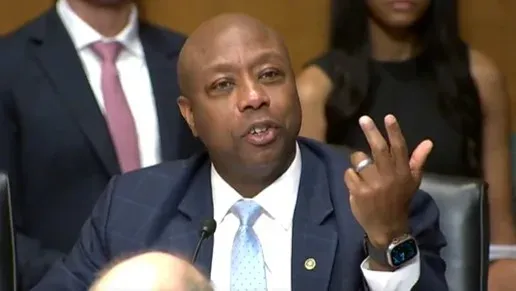
Senate Banking Committee Chairman Tim Scott opened proceedings by framing AI as both an economic opportunity and a strategic vulnerability. 'Today, this Committee is asking a simple but important question: how do we get artificial intelligence right?' Scott said. He described AI as a tool capable of lowering costs, improving financial services, and supporting small businesses, but cautioned that the United States 'cannot afford to let China or any other adversary gain a technological edge in artificial intelligence.'
The session marked a rare moment of bipartisan convergence in a deeply divided Washington, with Republican and Democratic senators alike expressing alarm over the flow of advanced chips and computing technology to Beijing.
Warren's Warning on Chips and Economic Risk
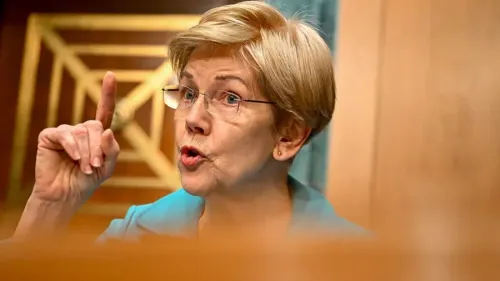
Ranking Member Senator Elizabeth Warren, while sharply critical of the Trump administration's broader AI policy direction, echoed concerns about semiconductor exports. 'AI holds tremendous promise. But Americans are rightly concerned that it could further rig our economy,' Warren said. 'Congress can no longer be a bystander as the risks from AI grow nearer and millions more American chips are sent to China.'
Her remarks underscored a central tension at the hearing: how to regulate AI aggressively enough to contain geopolitical risk without handicapping US firms against Chinese competitors.
Expert Testimony on National Security
David Feith, senior fellow at the Hudson Institute and a former National Security Council official, told senators that China's military, commercial, and geopolitical ambitions made stronger export controls essential. When asked how worried policymakers should be about advanced AI chips reaching Chinese hands, Feith replied: 'I think, very worried.' He argued that such access could bolster Beijing's military capabilities and allow Chinese technology firms to undercut US rivals in global markets.
Feith also endorsed a cluster of bipartisan legislative proposals — the AI Overwatch Act, the MATCH Act, and the Chip Security Act — aimed at tightening restrictions on exports of advanced AI chips and semiconductor manufacturing equipment to China. 'Yes, and kudos on the bipartisanship,' he said when asked whether Congress should pass the measures.
Economic Concerns Beyond the Geopolitical
Sarah Myers West, co-executive director of the AI Now Institute, shifted focus to domestic economic risk, warning that heavy borrowing tied to AI infrastructure projects could have broad knock-on effects. 'The impact on them would be significant, even if they haven't directly invested in AI,' she said, referring to ordinary Americans. She cited potential consequences for retirement accounts, pensions, employment, and access to credit in the event of a sharp sectoral downturn.
Several Republican senators pushed back, arguing that over-restricting American AI companies could inadvertently hand an advantage to Chinese competitors — a contradiction that the hearing left unresolved.
What Comes Next
The hearing reflects a broader contest between Washington and Beijing for dominance in AI, semiconductors, and other dual-use technologies increasingly seen as central to both economic growth and national security. Whether the bipartisan consensus on chip export controls translates into legislation will be the next test, as the proposed bills move through committee review in the weeks ahead.
Point of View
Not a trade nuance. The three proposed bills are modest instruments against a problem of enormous scale; China has spent years building alternative semiconductor supply chains precisely to blunt such controls. What the hearing did not resolve — and what mainstream coverage glosses over — is the contradiction between tightening export controls and keeping American AI firms globally competitive. Every restriction that slows Chinese access also risks slowing US adoption in third markets where Chinese alternatives are already present.
NationPress
22 Sept 2026
Frequently Asked Questions
What was the US Senate AI hearing on 12 June about?
The Senate Banking Committee convened on 12 June to examine how the United States should regulate artificial intelligence, with a particular focus on preventing advanced AI chips from reaching China and managing domestic economic risks from the AI boom. It drew bipartisan consensus on the need for tighter export controls.
Which bills were proposed to restrict AI chip exports to China?
Three bipartisan bills were highlighted at the hearing: the AI Overwatch Act, the MATCH Act, and the Chip Security Act. All three aim to tighten restrictions on exports of advanced AI chips and semiconductor manufacturing equipment to China.
Why are US lawmakers worried about China's access to AI chips?
According to testimony from former National Security Council official David Feith, advanced chips in Chinese hands could strengthen Beijing's military capabilities and allow Chinese technology companies to outcompete US firms in global markets. Feith described the concern level as 'very worried.'
What economic risks did experts raise at the hearing?
Sarah Myers West of the AI Now Institute warned that heavy borrowing linked to AI infrastructure projects could harm ordinary Americans through effects on retirement accounts, pensions, employment, and credit access — even for those with no direct exposure to AI investments.
Is there genuine bipartisan support for restricting AI exports to China?
Yes, the hearing was notable for rare bipartisan agreement. Both Republican Chairman Tim Scott and Democratic Ranking Member Elizabeth Warren raised alarms about chip flows to China, though they differed on the Trump administration's broader AI policy approach.