Trump admin's AI chip export loophole may have armed China, senators warn

Synopsis
Two senior Democratic senators are accusing the Trump administration of sitting on a regulatory gap for 18 months — one that may have let America's most advanced AI chips reach Chinese companies through overseas subsidiaries. With the Commerce Department now scrambling to clarify its own rules, the episode exposes a structural weakness at the heart of the US-China technology war.
Key Takeaways
Senators Elizabeth Warren and Andy Kim accused the Trump administration on 2 June of allowing a loophole in US AI chip export controls .
The gap, reportedly unaddressed for 18 months , may have let advanced chips from Nvidia and AMD reach Chinese companies via overseas subsidiaries.
The Commerce Department's Bureau of Industry and Security issued a clarification stating licence requirements apply to China-headquartered entities even when operating through foreign affiliates.
The senators demanded Commerce Secretary Howard Lutnick testify before the Senate Banking Committee over the alleged mismanagement.
The episode marks a fresh flashpoint in the broader US-China semiconductor rivalry , with critics arguing enforcement has lagged policy intent.
Two senior Democratic senators have accused the Trump administration of allowing a critical gap in US export controls that may have permitted America's most advanced artificial intelligence chips to reach Chinese companies, potentially strengthening Beijing's military capabilities. The allegations, made in a joint statement on 2 June, follow a disclosure by the US Commerce Department acknowledging what appeared to be a significant regulatory blind spot.
What the Senators Alleged
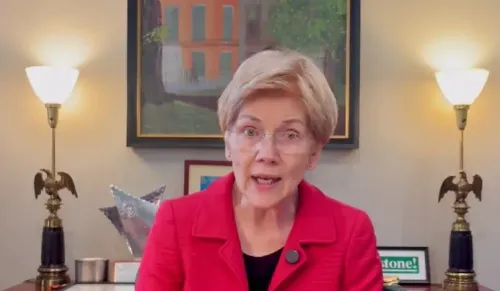
Senator Elizabeth Warren of Massachusetts and Senator Andy Kim of New Jersey said the administration's failure to update export-control regulations over the past 18 months may have inadvertently allowed cutting-edge US semiconductor technology to flow to firms headquartered in China. Both senators hold senior positions on key oversight committees — Warren as ranking Democrat on the Senate Banking Committee, and Kim as ranking Democrat on the National Security and International Trade and Finance Subcommittee.
'On Sunday afternoon, the Trump Administration revealed that its failure to update export control regulations over the last year and a half may have inadvertently allowed America's most advanced AI chips to flow to companies headquartered in China, potentially fueling China's military capabilities,' the two senators said in their joint statement.
The Commerce Department's Response
The Commerce Department's Bureau of Industry and Security (BIS) moved to address the apparent gap, issuing a notice clarifying that licence requirements apply to advanced chips exported to entities headquartered in China — even when those entities operate through subsidiaries based outside the country. The clarification targeted advanced processors manufactured by companies including Nvidia and AMD, which are central to global AI infrastructure development.
The concern, according to reports, was that Chinese firms may have exploited overseas affiliates to obtain access to advanced semiconductors, circumventing broader US restrictions designed to limit Beijing's access to frontier AI technology.
Senators Demand Immediate Action and Congressional Scrutiny
Warren and Kim called on the administration to act without delay. 'The Commerce Department could close the loophole today by issuing clear and comprehensive guidance, instead of standing by as US technology flows to the Chinese military,' they said. The senators also demanded that Commerce Secretary Howard Lutnick appear before the Senate Banking Committee to account for the regulatory lapse.
'Secretary Howard Lutnick should testify before the Senate Banking Committee about how his reckless mismanagement of the Commerce Department's Bureau of Industry and Security is putting our national security at risk,' the joint statement read. The call for testimony signals an escalating push for congressional oversight of the administration's technology export policy.
Broader Context: The US-China Chip War
This comes amid a years-long effort by successive US administrations to restrict China's access to advanced semiconductors, particularly those capable of accelerating AI and military applications. The Biden administration had enacted sweeping chip export controls in 2022 and 2023, targeting high-end GPUs and chipmaking equipment. Critics argue the Trump administration has been slower to plug emerging gaps in those frameworks, even as Chinese firms have reportedly sought alternative procurement routes. Notably, this is not the first time subsidiary-routing has been flagged as a potential workaround — the BIS has previously issued entity-list designations targeting such structures, but enforcement gaps have persisted.
What Happens Next
The BIS notice is a first step, but senators and industry observers say comprehensive guidance — rather than a piecemeal clarification — is needed to definitively close the loophole. Congressional pressure for a Lutnick testimony is likely to intensify in the coming weeks. How the administration responds will be closely watched by both the semiconductor industry and US national security officials.
Point of View
The damage — in terms of advanced AI hardware reaching Chinese entities — may already be done, and a notice cannot undo procurement that has already occurred. The deeper problem is structural: US export controls are written for a world of direct sales, not the layered corporate architectures that Chinese firms have built precisely to circumvent them. Warren and Kim are right to demand testimony, but congressional hearings rarely produce the kind of rapid, technical rule-making that closing these gaps actually requires. The real question is whether the BIS has the staffing, legal authority, and political backing to enforce entity-level restrictions at the subsidiary depth that modern Chinese tech procurement demands.
NationPress
17 Sept 2026
Frequently Asked Questions
What is the AI chip export loophole that US senators are warning about?
The loophole refers to a gap in US export-control regulations that may have allowed advanced AI chips — including those made by Nvidia and AMD — to reach Chinese companies through their overseas subsidiaries, bypassing restrictions on direct exports to China. Senators Warren and Kim say this gap went unaddressed for 18 months.
What did the Commerce Department do to address the loophole?
The Commerce Department's Bureau of Industry and Security issued a notice clarifying that US export licence requirements apply to advanced chips sold to entities headquartered in China, even when those entities route purchases through subsidiaries based outside the country. Senators say this clarification is insufficient and comprehensive guidance is needed.
Why are senators calling for Howard Lutnick to testify?
Senators Warren and Kim have called on Commerce Secretary Howard Lutnick to appear before the Senate Banking Committee to explain what they described as 'reckless mismanagement' of the Bureau of Industry and Security. They argue the failure to update export-control rules has put US national security at risk.
Which companies are at the centre of the chip export concern?
Advanced AI processors made by Nvidia and AMD are specifically cited in the Commerce Department's notice. Both companies produce high-performance GPUs that are critical for training large AI models and have been subject to escalating US export restrictions targeting China.
How does this fit into the broader US-China technology rivalry?
The US has pursued increasingly strict semiconductor export controls since 2022, targeting chips and chipmaking equipment that could accelerate China's AI and military programmes. This latest episode suggests that enforcement gaps — particularly around subsidiary-based procurement — remain a persistent vulnerability in that broader strategy.