Nvidia CEO Jensen Huang summoned to Senate over China ties, AI export rules
Synopsis
Senator Elizabeth Warren has put Nvidia CEO Jensen Huang on notice — appear before the Senate Banking Committee on 11 June 2026 or face the optics of refusing. With Nvidia's China revenues and advanced GPU exports under the congressional microscope, the hearing could shape the next wave of US semiconductor restrictions and set a precedent for how Big AI answers to Capitol Hill.
Key Takeaways
Senator Elizabeth Warren invited Nvidia CEO Jensen Huang to testify at a Senate AI hearing on 11 June 2026 .
The hearing is before the Senate Committee on Banking, Housing, and Urban Affairs at the Dirksen Senate Office Building , Washington.
Warren's letter, dated 4 June 2026 , specifically asks Huang to address Nvidia's China business and its views on US export control laws .
Witnesses will have five minutes for oral testimony and face senator questioning.
Huang was asked to confirm attendance by 8 June 2026 ; the full witness list has not been disclosed.
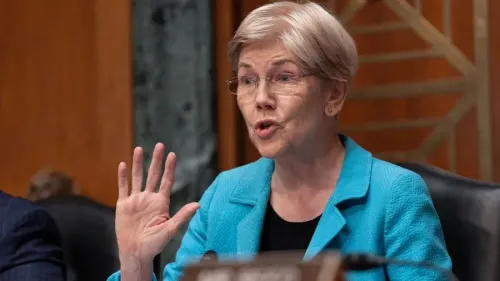
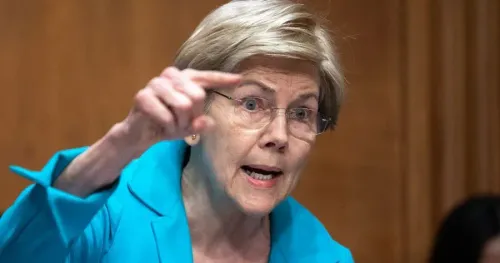
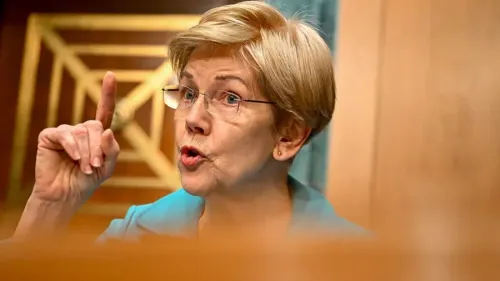
US Senator Elizabeth Warren, the ranking Democrat on the Senate Banking Committee, has formally invited Nvidia President and Chief Executive Officer Jensen Huang to testify at a public hearing on artificial intelligence scheduled for 11 June 2026 at the Dirksen Senate Office Building in Washington. The invitation, conveyed through a letter dated 4 June 2026, sharpens congressional scrutiny on Nvidia's operations in China and the adequacy of existing US export control laws governing advanced AI chips.
What Warren's Letter Said
In the letter, Warren stated: 'I write to invite you to participate as a witness before members of the United States Senate Committee on Banking, Housing, and Urban Affairs at a public hearing regarding artificial intelligence on June 11, 2026, in the Dirksen Senate Office Building.' She added that Huang's appearance would give him a direct platform to address lawmakers' concerns. 'Appearing as a witness will give you an opportunity to testify about NVIDIA's views on US export control laws and regulations and NVIDIA's business in China,' Warren wrote.
Witnesses at the hearing will be allotted five minutes for oral testimony and will face questions from attending senators. Warren requested that Huang confirm his attendance by 8 June 2026.
Why Nvidia Is Under the Spotlight
Nvidia has become arguably the most consequential company in the global AI race, with its advanced graphics processing units (GPUs) powering AI systems deployed by technology firms, research institutions, and governments worldwide. That dominance has drawn heightened attention from US lawmakers, who are increasingly concerned about the flow of cutting-edge semiconductor technology to China — a country Washington views as a strategic rival.
This comes amid a years-long tightening of US semiconductor export restrictions targeting China, with the government arguing that certain advanced chips carry potential military and strategic applications. Those measures have created significant friction between Washington and Beijing and have disrupted the China operations of several global technology companies.
The Broader Congressional Context
The Senate Committee on Banking, Housing, and Urban Affairs hearing is part of a wider legislative push to examine how leading AI companies navigate existing export frameworks and what regulatory guardrails, if any, should govern next-generation AI technologies. Notably, this is not the first time Congress has sought to question big tech on national-security grounds — but the direct invitation to the head of the world's most valuable chipmaker signals an escalation in urgency.
The letter did not disclose the full witness list for the 11 June session, leaving open the question of whether other AI industry leaders will also be called to testify alongside Huang.
What Happens Next
If Huang confirms attendance, his testimony before the Senate Banking Committee would mark a significant moment of public accountability for Nvidia on its China strategy and its stance on US export controls. The hearing is also expected to inform ongoing legislative deliberations over a new regulatory framework for advanced AI technologies. Whether Nvidia's responses satisfy lawmakers — or intensify calls for stricter curbs — will be closely watched by the global semiconductor industry.
Point of View
And this hearing forces that conversation into the open. The real question is not whether Huang shows up, but whether his testimony will be candid enough to satisfy lawmakers who suspect that existing chip curbs have been gamed through product redesigns. Congress has repeatedly tightened semiconductor export rules only to watch the industry adapt; without binding testimony and verifiable compliance data, this hearing risks becoming political theatre rather than policy substance.
NationPress
26 Sept 2026
Frequently Asked Questions
Why has Senator Elizabeth Warren invited Nvidia CEO Jensen Huang to testify?
Warren invited Huang to testify so that senators can question him directly about Nvidia's stance on US export control laws and its business activities in China. The invitation was sent in a letter dated 4 June 2026, ahead of a Senate Banking Committee hearing on artificial intelligence scheduled for 11 June 2026.
When and where is the Senate AI hearing involving Nvidia?
The hearing is scheduled for 11 June 2026 at the Dirksen Senate Office Building in Washington. It is being convened by the Senate Committee on Banking, Housing, and Urban Affairs.
What specific issues is the Senate Banking Committee expected to raise with Nvidia?
Senators are expected to question Nvidia on its views regarding US export control regulations governing advanced AI chips, as well as the extent and nature of its business operations in China. The broader hearing will also examine the regulatory framework for AI technologies.
Why is Nvidia at the centre of the US-China chip debate?
Nvidia's advanced GPUs are the primary hardware powering AI systems globally, making the company central to concerns about whether cutting-edge semiconductor technology is reaching China — a country the US government considers a strategic rival with potential military applications for such chips. Washington has progressively tightened export restrictions over recent years.
Has Nvidia confirmed Jensen Huang's attendance at the hearing?
As of the reports available, Nvidia had not publicly confirmed Huang's attendance. Warren's letter requested confirmation no later than 8 June 2026.