Nvidia China chip diversion: Senator Warren questions export compliance

Synopsis
Senator Elizabeth Warren has put Nvidia on notice — citing DOJ indictments alleging over $670 million in diverted AI chips and servers to China, she is demanding the company explain how its own CEO's 'no diversion' claims hold up. With a response deadline of 18 June and Supermicro still listed as a partner, this is shaping up as a major congressional test of US semiconductor export enforcement.
Key Takeaways
Senator Elizabeth Warren sent a formal letter on 2 June to Nvidia questioning compliance with US export controls on AI chips.
DOJ cases cited allege diversion of $160 million in H100/H200 chips and $510 million in servers loaded with restricted Nvidia products to China .
A March 2026 indictment links three individuals connected to Supermicro to the alleged $510 million server diversion scheme.
CEO Jensen Huang has publicly stated there is 'no evidence of any AI chip diversion' and that Nvidia's China market share had 'dropped to zero' — claims Warren says the indictments contradict.
Nvidia has been asked to respond to Warren's questions by 18 June 2026 .
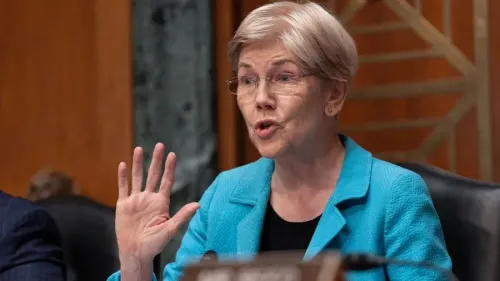
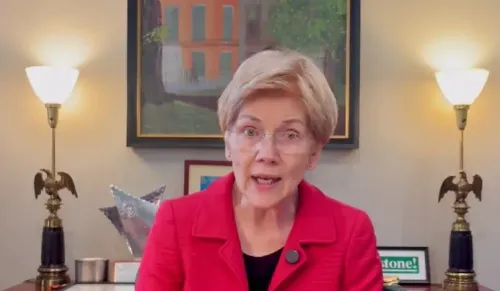
Senator Elizabeth Warren, the top Democrat on the Senate Banking Committee, has formally questioned whether Nvidia's advanced artificial intelligence chips are continuing to reach China despite US export restrictions — citing a string of criminal cases allegedly involving the diversion of hundreds of millions of dollars worth of restricted technology. The letter, sent on Monday, 2 June, was addressed to Nvidia Executive Vice President and General Counsel Tim Teter and Audit Committee Chair Brooke Seawell.
What Warren's Letter Alleges
The Massachusetts Democrat pointed to multiple enforcement actions brought by the US Department of Justice, which allege schemes involving the unlawful diversion of Nvidia products. According to her letter, these include millions of dollars in graphics processing units routed to China through Malaysia and Thailand, exports and attempted exports of $160 million in H100 and H200 chips, and $510 million in diverted servers.
Warren argued that these allegations directly contradict public statements made by Nvidia Chief Executive Officer Jensen Huang, who has maintained there was 'no evidence of any AI chip diversion' and that Nvidia's market share in China had 'dropped to zero.'
The Supermicro Connection
Among the cases cited was a March 2026 indictment involving three individuals linked to Super Micro Computer — commonly known as Supermicro. Prosecutors alleged they conspired to export more than $510 million worth of servers loaded with restricted Nvidia products to China. Warren noted that Nvidia continues to list Supermicro in its partner network, and that the server maker recently stated it is continuing to expand its partnership with Nvidia.
Southeast Asia Diversion Routes
The letter also referenced reports suggesting that several Nvidia cloud partners in Southeast Asia may have been linked to the diversion of export-controlled AI chips. Warren pointed specifically to reports alleging that Nvidia chips were routed to Chinese technology giant Alibaba through a Thailand-based company — a pattern that critics argue exploits gaps in third-country enforcement.
This comes amid broader bipartisan concern in Washington over the effectiveness of US export controls on advanced semiconductors. Warren wrote: 'Congress has made bipartisan efforts to strengthen export controls on restricted entities, but these efforts are undermined when corporations ignore the diversion of prohibited exports.'
Key Questions Posed to Nvidia
Warren asked Nvidia's Audit Committee whether it considers the alleged diversion a material legal or regulatory risk, whether it has reviewed export-control compliance following recent indictments, whether independent assessments have been conducted, and what evidence supports executives' public claims of 'no evidence' of diversion. Nvidia has been asked to respond by 18 June.
Federal regulations prohibit unlicensed exports of advanced AI chips to embargoed countries, including China, and require companies to exercise heightened diligence when products face a risk of diversion or misuse. Government guidance warns exporters to investigate 'red flags' that could indicate an inappropriate end user, destination, or use — a standard Warren argues Nvidia may not have met. Whether the company's board responds substantively before the deadline could determine whether the matter escalates to formal congressional scrutiny.
Point of View
Thailand, and now a Thailand-Alibaba link — mirror the exact third-country workarounds that export-control experts have warned about for two years. If Nvidia's Audit Committee cannot demonstrate it acted on those red flags, the liability question shifts from regulatory to fiduciary.
NationPress
18 Oct 2026
Frequently Asked Questions
Why has Senator Elizabeth Warren written to Nvidia?
Senator Warren wrote to Nvidia on 2 June 2026 to question whether the company's advanced AI chips are reaching China despite US export restrictions, citing multiple DOJ criminal cases alleging hundreds of millions of dollars in illegal diversions. She has requested responses by 18 June.
What specific diversion amounts are alleged in the DOJ cases?
According to Warren's letter, the DOJ cases allege diversion of $160 million in Nvidia H100 and H200 chips, and $510 million worth of servers loaded with restricted Nvidia products — the latter linked to individuals connected to Supermicro in a March 2026 indictment.
What has Nvidia's CEO said about chip diversion to China?
CEO Jensen Huang has publicly stated there is 'no evidence of any AI chip diversion' and that Nvidia's market share in China had 'dropped to zero.' Warren's letter argues these claims are undermined by the recent DOJ indictments.
What is Supermicro's role in the controversy?
A March 2026 federal indictment alleged that three individuals linked to Super Micro Computer conspired to export over $510 million in servers containing restricted Nvidia products to China. Nvidia continues to list Supermicro as a partner in its network.
What happens if Nvidia does not respond by 18 June?
Warren has set 18 June as the deadline for Nvidia's response. If the company does not respond substantively, the matter could escalate to formal Senate Banking Committee scrutiny, including potential hearings or further legislative action on export-control enforcement.