Convergence of US Policy and Tech Giants Amidst China's AI Threat

Synopsis
A growing alliance between US lawmakers and Silicon Valley highlights serious concerns over China's advancements in AI, emphasizing the technology race as a key national security issue that could redefine global power dynamics.
Key Takeaways
AI competition with China is critical for US national security.
Unified efforts between lawmakers and tech giants are emerging.
Legislation like the GAIN AI Act aims to control AI chip exports.
Companies are urged to keep strategic infrastructure within the US.
Collaboration between government and industry is essential for competitiveness.
New Delhi, March 27 (NationPress) The escalating anxiety surrounding China's swift progress in artificial intelligence (AI) is uniting US legislators and the tech sector in an unprecedented manner. Both parties increasingly perceive the tech race as a pivotal strategic and economic confrontation, as highlighted in a recent report.
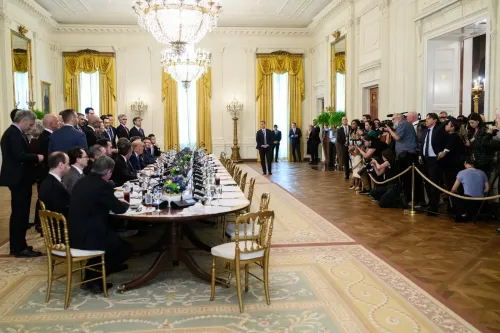
During the Hill and Valley Forum, which serves as a bridge between Washington and major tech firms, leaders from both spheres expressed a rare consensus. They acknowledged that competing with China in AI is now vital for national security and the future balance of global power, according to a report from Fortune.
The report pointed out that despite historical disagreements over regulations, lawmakers and tech executives consistently identified China as the primary threat. They cautioned that the results of the AI competition could significantly alter both economic and geopolitical landscapes.
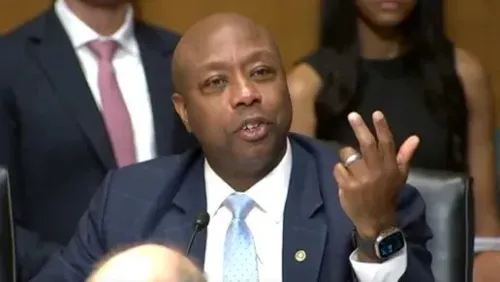
US Senator Rick Scott characterized the rivalry as existential, urging the necessity for America to surpass China in AI capabilities, as reported.
However, the dialogues also unveiled underlying strains between government officials and the tech sector, mainly regarding whether advanced technologies ought to be restricted from reaching rival countries.
Chip manufacturer Nvidia became a focal point amid concerns surrounding the export of advanced AI chips to China and the suspected smuggling of such technologies through illegal networks.
In addition, US House Speaker Mike Johnson insisted that tech companies should retain critical infrastructures—like chips, data centers, and AI systems—within the United States, away from geopolitical adversaries, underlining the importance of protecting strategic assets.
Legislators are also advocating for stricter regulations.
Proposed initiatives, such as the GAIN AI Act, would mandate companies to prioritize domestic access to advanced AI chips and acquire licenses before exporting them to 'countries of concern.'
Meanwhile, industry leaders echoed the urgent call for strategic action.
Executives warned that leadership in AI would dictate global economic supremacy, with some investors expressing reluctance to fund projects that could benefit rival nations.
Experts have also emphasized the need for a more coordinated strategy between government and industry.
Leaders in defense technology urged that neither excessive regulation nor total independence for tech companies would be effective. They encouraged stronger collaboration to sustain US competitiveness.
The report also noted that while the US continues to lead in AI innovation, China's emphasis on practical deployment and commercial applications of the technology poses an increasing competitive threat.
Point of View
It's clear that the urgency surrounding AI competition with China is reshaping alliances and strategies in the US. The collaboration between lawmakers and tech leaders illustrates a unified approach to safeguarding national interests in a rapidly evolving geopolitical landscape.
NationPress
6 Oct 2026
Frequently Asked Questions
Why is AI competition with China considered critical?
The competition is viewed as vital for national security and economic dominance, with potential repercussions on the global balance of power.
What is the GAIN AI Act?
The GAIN AI Act is proposed legislation requiring companies to prioritize domestic access to advanced AI chips and obtain licenses for exports to 'countries of concern.'
How is Nvidia involved in the AI competition?
Nvidia has come under scrutiny for its exports of advanced AI chips to China and concerns regarding potential smuggling through illicit channels.
What do industry leaders think about AI leadership?
Industry leaders emphasize that leadership in AI is crucial for determining global economic dominance, urging a strategic approach to funding and development.
What challenges does the US face in AI innovation?
While the US leads in AI innovation, China's focus on practical applications and deployment presents an increasing competitive challenge.