CM Himanta vows cow protection at any cost, cites Ramayana
Synopsis
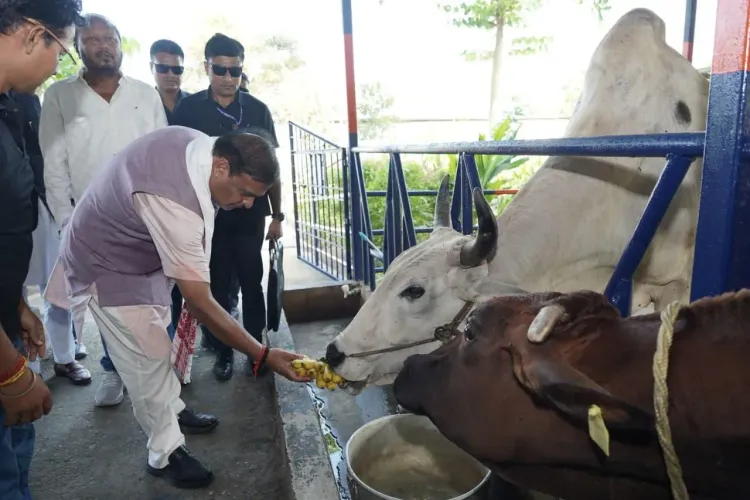
Assam Chief Minister Himanta Biswa Sarma invoked a Ramayana couplet on October 17, 2026, vowing to protect the cow 'at any cost' — framing the commitment as a civilisational obligation rather than mere policy, consistent with BJP's longstanding cow-protection platform.
Key Takeaways
Assam Chief Minister Himanta Biswa Sarma posted a firm cow-protection pledge on October 17, 2026 .
He opened with the Ramayana couplet 'Raghukal reet sada chali aayi, praan jaaye par vachan na jaaye' — invoking the Raghu dynasty's tradition of upholding vows above life itself.
The declaration — 'We will protect the cow, whatever price we have to pay' — is framed as a matter of honour, not merely administration.
BJP manifestos since 2014 have included cow-protection commitments; Assam under Sarma has previously conducted enforcement actions on cattle smuggling and slaughter.
The statement could presage fresh legislative or enforcement action in Assam , with implications for livestock farmers, cattle traders, and border communities.
A Ramayana verse resonating across centuries landed in contemporary politics on Saturday, October 17, 2026, as Assam Chief Minister Himanta Biswa Sarma posted a sharp, unambiguous pledge on cow protection — framing it not as policy preference but as a matter of honour that admits no compromise.
The post opens with the iconic Sanskrit-derived couplet: 'Raghukal reet sada chali aayi, praan jaaye par vachan na jaaye' — meaning, 'The tradition of the Raghu dynasty has always held: let life go, but never break a vow.' It then declares, in direct terms: 'We will protect the cow, whatever price we have to pay for it.'
The verse, the vow, and what it signals
The choice of this particular couplet — drawn from the Ramayana tradition and long associated with unbreakable commitment — is deliberate and loaded. By invoking Raghuvansh, the solar dynasty of Lord Ram, Sarma is not making a bureaucratic announcement; he is casting cow protection as a civilisational obligation, one that transcends political calculation. It is the language of dharma, not governance memos. This framing matters. It signals to both supporters and opponents that the Chief Minister views the issue as non-negotiable — and that any legislative, administrative, or enforcement action taken in its name will be presented as fulfilment of a sacred duty rather than a partisan move.BJP's cow-protection thread runs deep
Sarma's declaration does not arrive in a vacuum. BJP election manifestos since 2014 have consistently included commitments to cow protection and anti-slaughter legislation. Across BJP-governed states, this has translated into enforcement drives targeting cattle smuggling and illegal slaughter. Assam under Sarma has aligned with this national pattern — the state has seen enforcement actions targeting cattle trade and slaughter in recent years, drawing both applause from Hindu nationalist groups and criticism from livestock farmers and minority communities who depend on cattle trade. The Ramayana invocation tightens that link: it places Sarma within a lineage of BJP leaders who have drawn on cultural and religious idiom to give legislative intent an emotional and spiritual underpinning.What livestock farmers and communities stand to watch
For livestock farmers in Assam — a state with a significant population engaged in cattle rearing and trade — the statement is a signal worth reading carefully. Stricter enforcement of cow protection norms can affect cattle markets, slaughterhouse operations, and cross-border trade with Bangladesh and Myanmar. Whether the post presages a fresh legislative push, a new enforcement directive, or simply a political reaffirmation ahead of electoral consolidation remains to be confirmed. What is clear is that Sarma has staked his personal credibility on the outcome — the Ramayana verse, by its very logic, leaves no room for retreat.Point of View
Making any future retreat politically costly. It also reinforces his standing as a cultural-nationalist anchor in the BJP's North-East strategy at a time when the party is focused on consolidating its Hindu voter base ahead of any electoral cycle. For the broader BJP ecosystem, such declarations from a prominent state chief minister serve as a template — grounding contentious enforcement agendas in devotional idiom that resonates with a large swath of the electorate. The move simultaneously signals resolve to the party's core constituency and sets the terms of debate for any opposition response.
NationPress
17 Oct 2026
Frequently Asked Questions
What did Assam CM Himanta Biswa Sarma say about cow protection?
On October 17, 2026, Himanta Biswa Sarma posted that he will protect the cow 'at any cost', framing it as an unbreakable vow by invoking the Ramayana couplet about the Raghu dynasty never breaking its word.
What is the Ramayana couplet Himanta Biswa Sarma quoted?
The couplet 'Raghukal reet sada chali aayi, praan jaaye par vachan na jaaye' means the tradition of the Raghu dynasty has always been: let life go, but never break a vow. It is a widely recognised verse associated with Lord Ram's lineage.
What is Assam's record on cow protection under CM Himanta?
Under Himanta Biswa Sarma, Assam has conducted enforcement actions targeting cattle smuggling and illegal slaughter, aligning the state with BJP's national cow-protection agenda that has been a manifesto commitment since 2014.
How does cow protection policy affect farmers and traders in Assam?
Stricter cow-protection enforcement can affect cattle markets, slaughterhouse operations, and cross-border livestock trade, with implications for both Hindu and Muslim livestock farmers and traders who depend on cattle commerce in the state.
Is a new cow protection law expected in Assam after this statement?
No specific legislation or directive has been confirmed. Sarma's post signals strong political intent, but whether a fresh law or enforcement order follows remains to be seen based on subsequent government announcements.