CM Dhami Expands Uttarakhand Nursing Seats to 10,616

Synopsis
Uttarakhand's Chief Minister's Office says three new government nursing colleges since July 2021 have added 321 seats, lifting total state capacity to 10,616. Graduates are being placed in Japan and Germany through foreign-language training, while 12,000-15,000 students apply annually for nursing courses.
Key Takeaways
Three new government nursing colleges established in Uttarakhand since July 2021 , adding 321 seats across BSc, MSc, NPCC and NPM programmes.
Total government nursing seats in the state have risen to 879 ; private institution seats have reached 10,616 .
76 new private nursing institutions issued mandatory certificates since July 2021, with 5,138 seats approved.
60 candidates placed in Japan in 2023 and 13 candidates placed in Germany in 2025 through foreign-language nursing training.
Regular nursing tutors now number 66 , with recruitment of 30 more pending before the Uttarakhand Medical Service Selection Board.
Between 12,000 and 15,000 applicants sit for Uttarakhand's nursing entrance exam every year, reflecting strong demand.
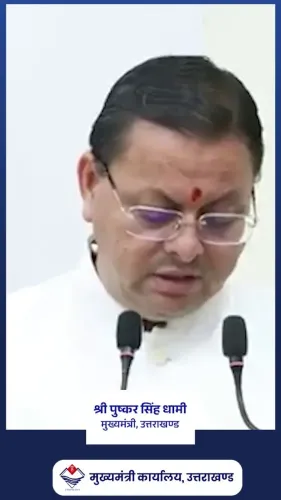
Three new government nursing colleges, 321 extra seats, and trained nurses landing jobs in Japan and Germany — Uttarakhand's Dhami government is quietly rewriting what a hill-state nursing ecosystem can look like. The Chief Minister's Office of Uttarakhand shared a detailed account on Saturday, 17 October 2026, of the expansion in nursing education since July 2021 under Chief Minister Pushkar Singh Dhami.
From 558 to 879: Government seats climb, private sector surges past 10,000
Since July 2021, three new government nursing colleges have been established in Uttarakhand, pushing total seats in state-run institutions from 558 to 879 — a jump of 321 seats. That expansion covers 151 BSc Nursing seats, 120 MSc Nursing seats, 20 NPCC (Nursing Practice Critical Care) seats, and 30 NPM (Nurse Practitioner in Midwifery) seats. The state's government colleges now run the full nursing spectrum: ANM, GNM, BSc Nursing, Post Basic BSc Nursing, MSc Nursing, NPCC, and NPM programmes.
On the private side, the numbers are even more striking. Since July 2021, 76 private nursing institutions have been issued mandatory certificates to run courses, with 5,138 seats approved across various programmes. Total seats in private nursing institutions across the state have reached 10,616. Students from Uttar Pradesh, Punjab, Himachal Pradesh, Haryana, Bihar, and northeastern states are actively enrolling in Uttarakhand's private institutions — turning the state into a regional nursing education hub.
Japan placements in 2023, Germany in 2025: The foreign-language edge
The CMO's post flags an unusual differentiator: alongside nursing coursework, students are being trained in Japanese, German, and Spanish to qualify for international placements. The results are concrete. In 2023, two batches totalling 60 candidates secured employment in Japan. In 2025, 13 candidates found placements in Germany. Chief Minister Dhami's stated goal — connecting Uttarakhand's youth to employment opportunities 'inside and outside the country' — is being pursued through this language-plus-skills model.
Faculty pipeline: 66 tutors, more appointments in motion
Dr. Ashutosh Sayana, Director of Medical Education, Uttarakhand, detailed the faculty build-up running in parallel. In December 2021, 40 tutors were appointed. By June 2025, 26 more tutors had joined, bringing the total of regular nursing tutors to 66. In October 2022, nine faculty members — including eight assistant professors and one associate professor — were appointed. November 2025 saw seven more faculty members join. The Directorate of Medical Education has since moved ahead with appointments for 16 assistant professor posts after results of a final exam were declared, and a requisition for 30 more tutors was sent to the Uttarakhand Medical Service Selection Board in September.
Annual demand signals are equally clear: entrance exams conducted by Hemwati Nandan Bahuguna Medical Education University for nursing programmes draw between 12,000 and 15,000 applicants every year — a number that speaks to both the appetite for nursing education and the pressure on available seats to keep pace.
What the numbers mean for Uttarakhand's health workforce
India's post-pandemic push to strengthen primary and secondary healthcare has exposed a chronic nursing shortage, particularly in hill and tier-2 states. Uttarakhand's strategy — expanding government capacity while channelling private growth through mandatory certification, and layering international language training on top — mirrors what several more-developed states attempted over the previous decade. The difference here is pace: five years, three new government colleges, 76 certified private institutions, and verified placements abroad. Whether the faculty pipeline catches up to seat growth will be the real test — and the Uttarakhand Medical Service Selection Board's ongoing recruitment process is the one to watch.
Point of View
A regulated private sector, and a foreign-language overlay that targets high-demand overseas markets. The strategy also serves a political economy logic: nursing seats are jobs proxies for families who cannot afford engineering or medicine, and visible international placements give the Dhami government a concrete 'youth employment' narrative ahead of state electoral cycles. The critical variable remains faculty: seat creation consistently outpaces teacher recruitment in Indian nursing education, and the pending Uttarakhand Medical Service Selection Board appointments will determine whether expanded capacity translates into quality output — or merely inflated enrolment numbers.
NationPress
17 Oct 2026
Frequently Asked Questions
How many nursing seats are there in Uttarakhand in 2026?
Total nursing seats in Uttarakhand's private institutions stand at 10,616 , while government nursing colleges now offer 879 seats , following the addition of three new state colleges since July 2021.
How many government nursing colleges did Uttarakhand open after 2021?
Three new government nursing colleges were established in Uttarakhand from July 2021 onward, adding 321 seats in BSc Nursing, MSc Nursing, NPCC and NPM programmes.
Are Uttarakhand nursing graduates getting jobs abroad?
Yes. In 2023 , two batches of 60 candidates were placed in Japan , and in 2025 , 13 candidates secured employment in Germany through a programme that combines nursing training with foreign-language instruction.
Which university conducts the nursing entrance exam in Uttarakhand?
Hemwati Nandan Bahuguna Medical Education University conducts the nursing entrance examination in Uttarakhand, drawing between 12,000 and 15,000 applicants annually .
What foreign languages are Uttarakhand nursing students being trained in?
Nursing students in Uttarakhand are being trained in Japanese, German, and Spanish alongside their professional coursework to improve their eligibility for international employment opportunities.