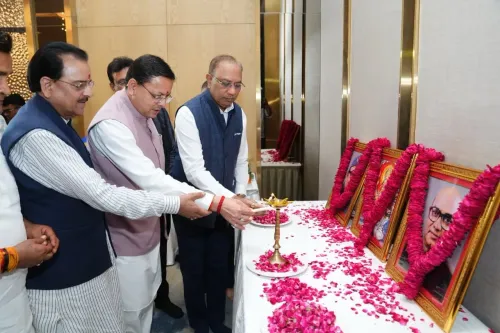
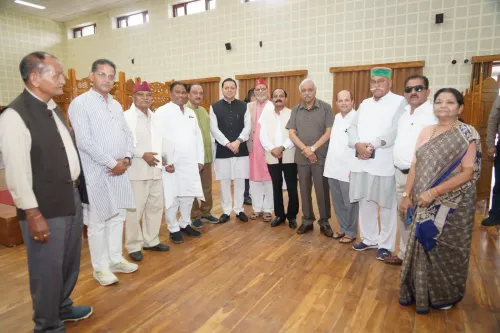
CM Dhami eyes medical college in every Uttarakhand district
Synopsis
Uttarakhand's Chief Minister's Office says CM Pushkar Singh Dhami has opened three new government medical colleges in five years, with a seventh in Rudrapur awaiting 100 MBBS seats. The state's total capacity is headed toward 1,700 seats, backed by a goal of one college per district.
Key Takeaways
Three new government medical colleges — in Almora , Pithoragarh , and Haridwar — have been started under CM Dhami's five-year tenure.
Uttarakhand currently has six government medical colleges with a combined 675 MBBS seats .
The completed Rudrapur Medical College is awaiting allocation of 100 MBBS seats , which would raise the government-college total to 775 .
Including four private colleges ( 900 seats ) and AIIMS Rishikesh ( 125 seats ), the state's total MBBS capacity approaches 1,700 seats .
CM Dhami has set a target of establishing a medical college in each of Uttarakhand's 13 districts to stop students from leaving the state for medical education.
Three new government medical colleges in five years, a seventh campus ready and waiting, and a bold target to plant one college in each of the state's thirteen districts — Uttarakhand under Chief Minister Pushkar Singh Dhami is making the most deliberate push to reshape its medical-education map in a generation. The Chief Minister's Office of Uttarakhand announced the drive on Tuesday, 13 October 2026, laying out both the numbers and the ambition in striking detail.
From three colleges to six — and a seventh on the runway
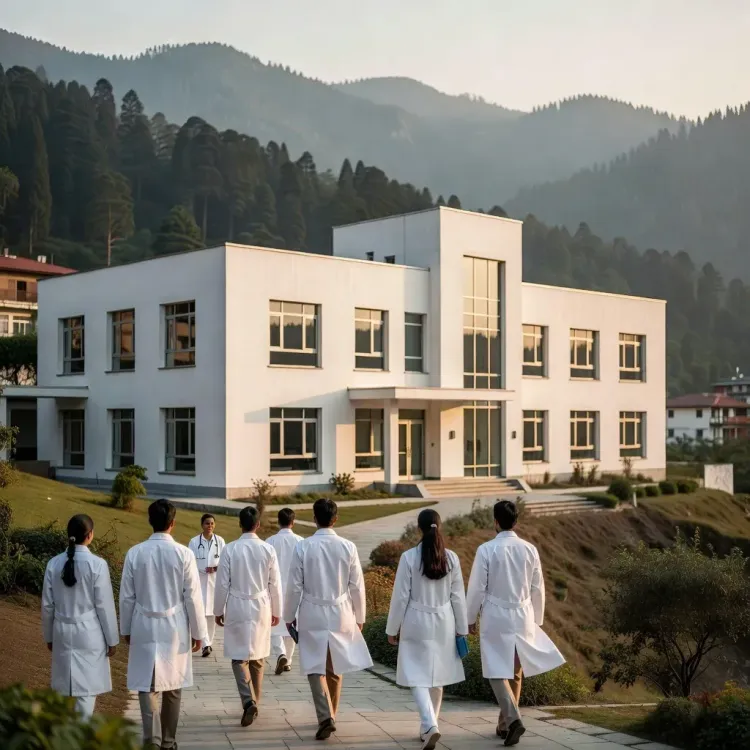
When Dhami took office, Uttarakhand had functioning government medical colleges in Haldwani (Nainital), Srinagar (Pauri), and Dehradun. His tenure has since added campuses at Almora, Pithoragarh, and Haridwar — three districts that previously had no such facility. Together, the six colleges currently offer 675 MBBS seats across the state.
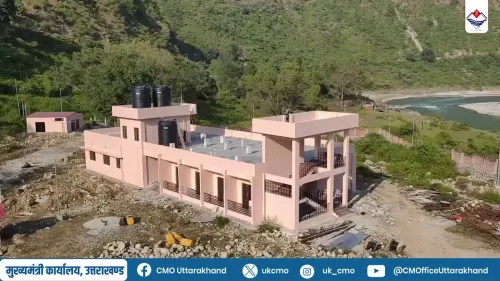
A seventh campus in Rudrapur has been built and is ready for students. Once the National Medical Commission clears the allocation, it will bring 100 additional MBBS seats online, pushing the government-college tally to 775. Add the 900 seats across four private medical colleges and the 125 seats at AIIMS Rishikesh — the central institute established under the Pradhan Mantri Swasthya Suraksha Yojana — and Uttarakhand's total MBBS capacity climbs toward 1,700 seats.
The 'one college per district' goal and what it means for students
The headline ambition is a medical college in every district of the state. Dhami put it plainly: 'हर जिले में मेडिकल कॉलेज की स्थापना हमारा संकल्प है' — 'establishing a medical college in every district is our resolve' — so that talented students no longer have to leave Uttarakhand for quality medical education. The Department of Medical Education has been directed to accelerate efforts to make it happen.
The logic is straightforward but consequential. Uttarakhand's terrain is overwhelmingly hilly and remote. Concentrating medical colleges in a handful of plains cities has historically pushed aspiring doctors out of the state, and the communities they leave behind face persistent doctor shortages. Decentralising seats down to the district level is, in theory, the sharpest lever available to break that cycle.
Director Sayana's read on global ambitions
Director of Medical Education Dr. Ashutosh Sayana framed the expansion in wider terms, saying that as a result of Chief Minister Dhami's 'far-sighted vision,' Uttarakhand is moving towards recognition in medical education 'at a global level.' That may be aspirational language for now, but the underlying infrastructure drive — seven government colleges, a seat count approaching 1,700, a stated commitment to thirteen-district coverage — gives the claim more substance than it might otherwise carry.
Uttarakhand's push mirrors a pattern seen across several Indian states that have aggressively expanded district-level MBBS capacity to reduce dependence on private colleges and bring healthcare professionals closer to underserved communities. What sets the Uttarakhand case apart is the geographic challenge: building and staffing colleges in high-altitude districts like Pithoragarh is a logistical feat that flatland states do not face.
The next concrete milestone to watch is the National Medical Commission's formal seat allocation for Rudrapur — the trigger that will move that campus from 'built' to 'open.' After that, every new district campus the state can announce brings the thirteen-college target one step closer to being a real map, not just a manifesto.
Point of View
CM Dhami is directly addressing the voter concern that hill residents are structurally disadvantaged in the competition for scarce MBBS seats. The 1,700-seat projection, if realised, would represent a near-doubling of the state's medical-education footprint within a single term. The harder test is the downstream one — whether newly built campuses in remote districts can attract and retain faculty, since infrastructure without staffing produces underperforming colleges, a pattern India has seen before. The National Medical Commission's Rudrapur decision will be an early indicator of how much central backing the state's ambitions can count on.
NationPress
13 Oct 2026
Frequently Asked Questions
How many government medical colleges are there in Uttarakhand in 2026?
There are currently six operational government medical colleges in Uttarakhand — in Haldwani, Srinagar, Dehradun, Almora, Pithoragarh, and Haridwar — with a seventh in Rudrapur built and awaiting seat allocation.
How many MBBS seats are available in Uttarakhand government medical colleges?
The six existing government medical colleges in Uttarakhand collectively offer 675 MBBS seats. Once Rudrapur's 100 seats are allocated, the total will rise to 775.
What is the total MBBS seat count in Uttarakhand including private colleges and AIIMS Rishikesh?
Combining 775 government seats (after Rudrapur), 900 seats across four private medical colleges, and 125 seats at AIIMS Rishikesh, Uttarakhand's total MBBS capacity approaches 1,700 seats.
What is CM Dhami's plan for medical colleges in Uttarakhand?
Chief Minister Pushkar Singh Dhami has set a goal of establishing one government medical college in each of Uttarakhand's 13 districts, aiming to train doctors locally and stop students from leaving the state for medical education.
When will Rudrapur Medical College admit students?
The Rudrapur Medical College building is ready. Seat allocation — expected to be 100 MBBS seats — is pending approval from the National Medical Commission; no specific date has been announced.