Karnataka CM Shivakumar vows no double standard on right to protest
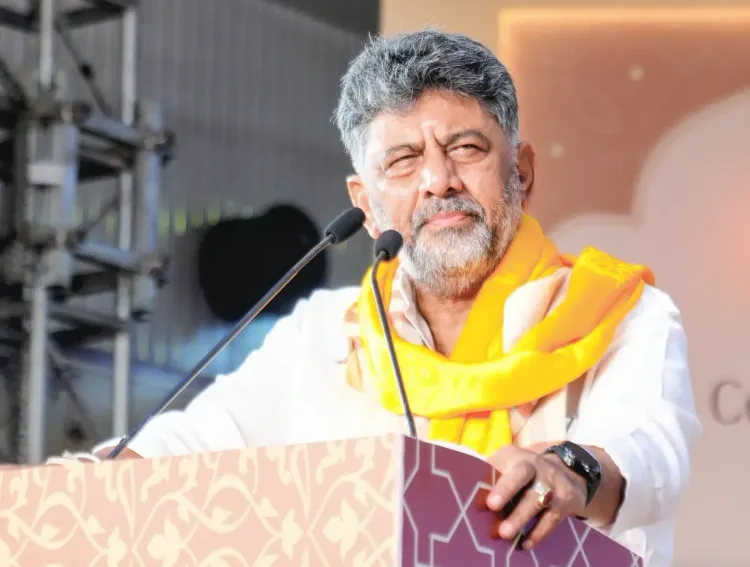
Synopsis
Karnataka CM D.K. Shivakumar turned a politically awkward police crackdown into a democratic accountability moment — declaring that a Congress-ruled state cannot demand protest rights in Delhi while denying them in Bengaluru. With a police report ordered and Home Minister Kharge reviewing Monday's detentions, how the government acts next will determine whether the words hold.
Key Takeaways
Shivakumar on 13 October asserted there would be 'no double standards' on the right to peaceful protest.
Bengaluru Police detained protesters near K.R.
Circle on 12 October after they marched without prior permission toward the Karnataka Chief Electoral Officer's office.
Shivakumar has ordered a detailed report on the incident and warned that accountability would follow if excessive force is confirmed.
Home Minister Priyank Kharge said the police handling would be reviewed and instructed officers not to disrupt peaceful demonstrations.
Both leaders framed the state's responsibility as not just maintaining order but actively protecting the right to dissent .
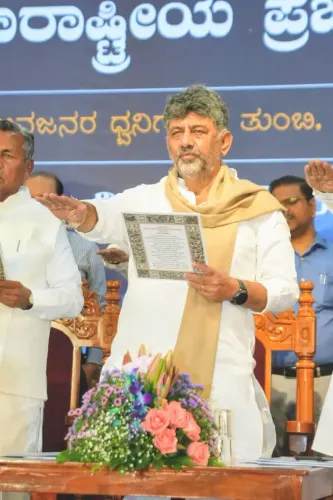
Karnataka Chief Minister D.K. Shivakumar on Tuesday, 13 October firmly asserted that the right to peaceful protest is fundamental to democracy, declaring that Karnataka could not demand the right to protest in Delhi while denying it to citizens in Bengaluru. His remarks came a day after Bengaluru Police detained and removed a group of protesters near K.R. Circle on 12 October, triggering criticism over the handling of the demonstration.
What Prompted the Statement
The protesters had gathered without prior permission to march toward the Karnataka Chief Electoral Officer's office. Police intervened, detaining demonstrators — an action that also drew media scrutiny after members of the press were reportedly caught up in the police response. Shivakumar said he had taken note of the incident and sought a detailed report on the circumstances that led to the police action.
"If there has been any unnecessary use of force or excess, accountability will follow," Shivakumar said. The Chief Minister's swift response signals that the government is sensitive to the optics of curbing dissent, particularly given the ruling Indian National Congress (Congress) party's frequent criticism of protest crackdowns under the Bharatiya Janata Party (BJP) government at the Centre.
CM Shivakumar's Key Assertion
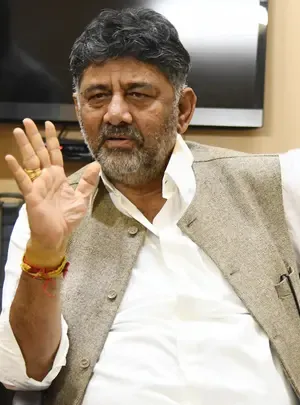
Shivakumar was unambiguous in laying out the standard he expects his administration to maintain. "Disagreement with the Election Commission, disagreement with my government, or disagreement with me personally does not diminish anyone's right to peacefully express it," he said. He added that Karnataka must uphold the same democratic standards it expected from the rest of the country. "We cannot demand the right to protest in Delhi and deny it in Bengaluru. There will be no double standards," he declared.
This is notably self-critical framing — an acknowledgement that any inconsistency between the party's national posture on civil liberties and its conduct in a state it governs would be politically untenable.
Home Minister Priyank Kharge's Direction to Police
Earlier on Tuesday morning, Karnataka Home Minister Priyank Kharge said the Bengaluru Police's handling of the protesters on Monday would be reviewed. In a statement, Kharge said he had issued instructions to the police to ensure that no peaceful demonstration was disrupted. "The right to peaceful protest is fundamental to our democracy. It must be respected, protected and never suppressed," he said.
Kharge appealed to protesters to cooperate with the police and keep authorities informed in advance, framing this as a measure to protect both demonstrators' safety and the rights of others. "The police are here to protect your rights, not to stand in the way of your voice," he added. He also broadened the state's stated obligation, arguing that maintaining law and order includes "creating an environment in which every citizen can express dissent freely, peacefully and without fear."
Background and Broader Context
The 12 October detention of protesters near K.R. Circle follows a broader pattern of tensions between state authorities and demonstrators across India over permission requirements for public marches. Critics argue that pre-permission norms are selectively enforced, often against opposition-aligned groups. In Karnataka's case, the incident is particularly sensitive because the Congress government has routinely invoked the right to protest at the national level — making any perceived suppression at home a ready-made counter-narrative for the BJP. Notably, both Shivakumar and Kharge responding within hours of the incident suggests the government moved quickly to contain reputational damage.
What Happens Next
A detailed police report on the K.R. Circle incident is expected to be submitted to the Chief Minister. Depending on the findings, officials indicated that accountability measures could follow if excessive force is established. The government's position — that peaceful protest must be protected rather than policed — will now be tested by how it actually responds to the report's conclusions.
Point of View
The words will become a liability. Karnataka's handling of this episode will be cited in every future debate about protest rights in Congress-governed states.
NationPress
13 Oct 2026
Frequently Asked Questions
Why did Karnataka CM Shivakumar issue a statement on the right to protest?
Shivakumar responded to Monday's incident in which Bengaluru Police detained protesters near K.R. Circle on 12 October, drawing criticism over the handling of the demonstration. He stressed that Karnataka must uphold the same democratic standards it expects from the rest of the country and that accountability would follow if excessive force was used.
What happened at K.R. Circle in Bengaluru on 12 October?
Bengaluru Police detained and removed a group of protesters near K.R. Circle on 12 October after they gathered without prior permission to march toward the Karnataka Chief Electoral Officer's office. Members of the media were also reportedly caught up in the police action.
What action has the Karnataka government promised after the protest crackdown?
CM Shivakumar has sought a detailed report on the circumstances leading to the police action. He said that if unnecessary force or excess is established, accountability will follow. Home Minister Priyank Kharge has also ordered a review and directed police not to disrupt peaceful demonstrations.
What did Home Minister Priyank Kharge say about the incident?
Kharge said the Bengaluru Police's handling of protesters would be reviewed and confirmed he had instructed police to ensure no peaceful demonstration is disrupted. He stated that 'in a democracy, peaceful dissent is not a threat to law and order — it is a right that law and order must protect.'
Why is the 'no double standards' remark politically significant?
The Congress party has frequently criticised protest crackdowns by the BJP-led central government. Shivakumar's remark acknowledges that his Congress-run state government is held to the same standard, and that demanding protest rights nationally while restricting them locally would be inconsistent and politically damaging.