CM Shivakumar's Nine-Point Plan to Fight Drugs, Rowdyism in Karnataka
Synopsis
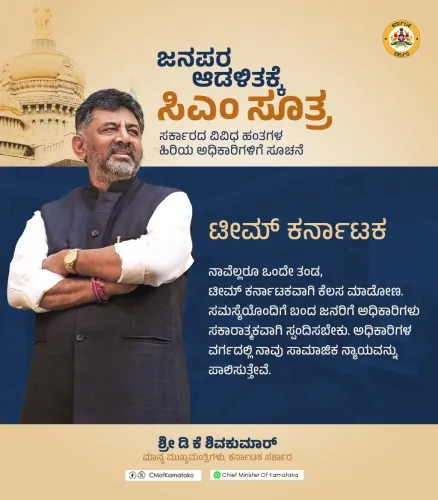
Chief Minister D K Shivakumar has issued nine governance directives to Karnataka officials, ordering five-member anti-rowdy squads at every police station and strict action on drugs, cyber crime, and illegal finance operators under the Guarantee Sarkara framework.
Key Takeaways
CM D K Shivakumar issued nine directives to senior Karnataka government officials on 15 June 2026 .
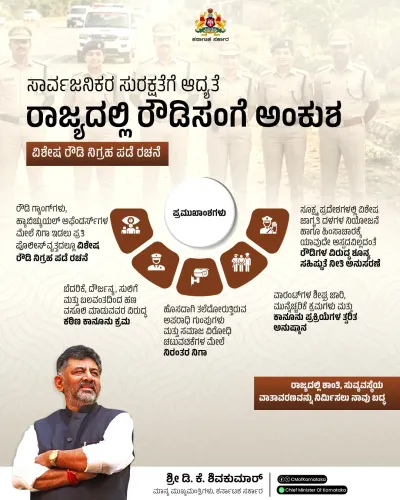
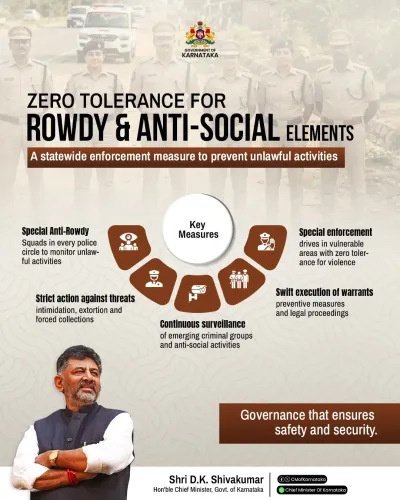
A dedicated five-member police team is to be formed at every police station in the state for rowdyism suppression.
Strict action has been ordered against ganja, drugs, and cyber crimes across Karnataka.
Illegal and unregulated finance operators ('fake finances') are also targeted under the new directive.
The announcement was made under the #GuaranteeSarkara tag, linking law-and-order delivery to the Congress government's welfare promise framework.
Implementation will be monitored through seizure and arrest data at the police station level in the coming weeks.
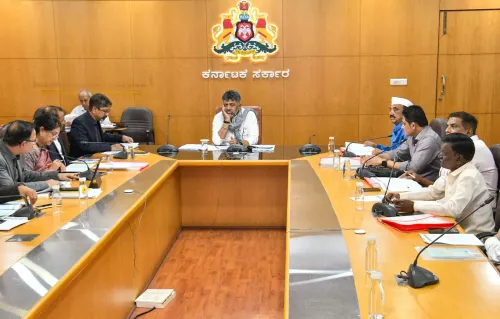
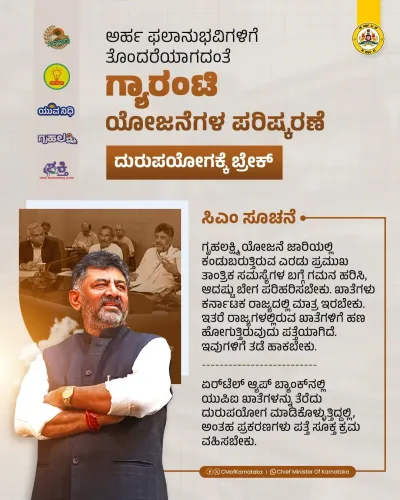
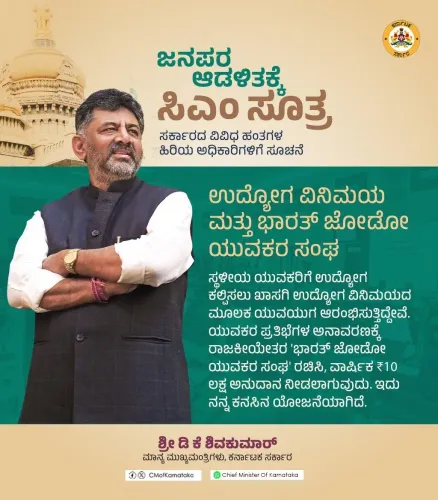
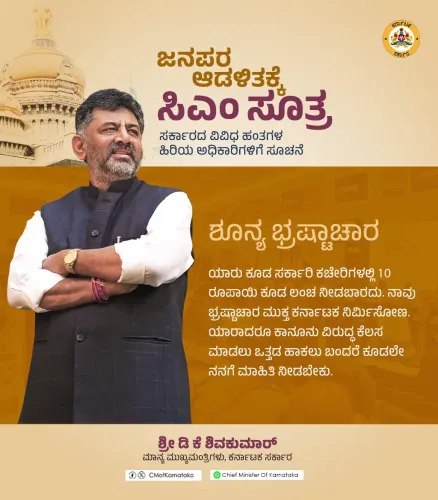
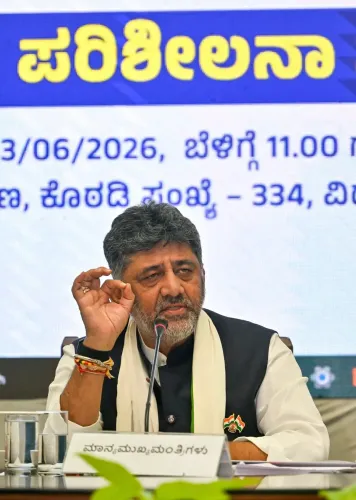
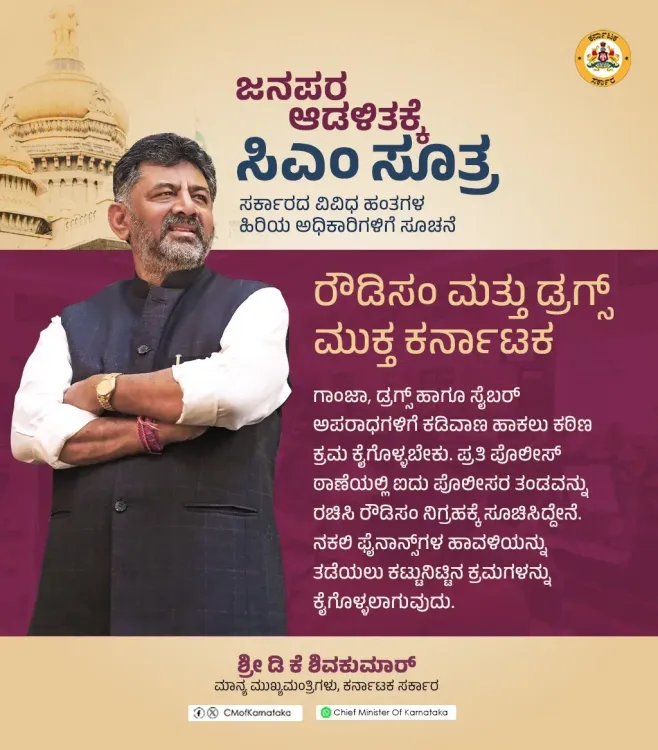
The Chief Minister's Office of Karnataka announced on Monday, 15 June 2026 that Chief Minister D K Shivakumar has issued a nine-point directive to senior officials across all levels of the state government, outlining a firm action plan to make Karnataka free of rowdyism and drugs.
Context
The post, shared under the hashtag #GuaranteeSarkara, outlines instructions to crack down on cannabis (ganja), drugs, and cyber crimes, describing these as priority law-and-order concerns. The Chief Minister has also directed action against illegal and unregulated finance operators — commonly referred to as 'fake finances' — whose predatory lending practices have long troubled urban and semi-urban communities in the state.
Translating the key directive from Kannada: 'Ganja, drugs mattu cyber aparadhagalige kadivana hakalu kathina krама kaigoLLabeку' — 'Strict measures must be taken to curb ganja, drugs, and cyber crimes.' The directive was addressed to senior officials across various levels of the government machinery.
Policy Backdrop
Karnataka Police has periodically mounted anti-rowdy and anti-narcotics drives in Bengaluru and other rapidly urbanising centres over the past several years. Enforcement under the Narcotic Drugs and Psychotropic Substances (NDPS) Act has been a standing mandate, but ground-level implementation has often been criticised for being reactive rather than preventive.
The Congress government that came to power in May 2023 built its electoral campaign around five guarantee schemes focused on welfare delivery. The #GuaranteeSarkara tag used in this post signals an attempt to frame law-and-order governance within the same promise-delivery narrative. State governments across India have historically used local police stations as the primary enforcement unit for such crackdowns, and Shivakumar's directive follows that established pattern.
Stakeholders and Impact
The most direct operational impact falls on Karnataka Police, which has been instructed to constitute a dedicated five-member team at every police station specifically for rowdyism suppression. This station-level squad model is intended to ensure consistent, localised enforcement rather than sporadic city-wide operations.
Urban youth, who are disproportionately affected by drug availability and cyber fraud, stand to benefit if the directives translate into sustained enforcement. Residents dealing with harassment from unregulated money-lenders — a problem particularly acute in districts outside Bengaluru — are the primary stakeholders in the crackdown on fake finance operators. Civil society groups monitoring narcotics and financial crime will be watching whether these instructions produce measurable outcomes.
What's Next
The immediate test will be whether police stations across Karnataka's districts operationalise the five-member anti-rowdy squads within a defined timeline. Seizure and arrest data in the weeks following this directive will be the clearest indicator of on-ground implementation.
The directive against fake finance operators is likely to require coordination between the police and financial regulators, raising questions about inter-agency mechanisms. As the Congress government approaches the midpoint of its term, the rollout of these nine governance principles will be a closely watched benchmark for its law-and-order credibility ahead of future electoral cycles.
Point of View
A domain where state governments are routinely judged. Mandating five-member squads at every police station is operationally ambitious and shifts accountability to the station level, making it harder for the administration to claim ignorance of local failures. However, directives of this nature in Indian state governance have a mixed record of translating into sustained enforcement without follow-up audit mechanisms. The fake-finance crackdown, if pursued seriously, could resonate strongly in semi-urban Karnataka where predatory lending has caused documented distress.
NationPress
15 Sept 2026
Frequently Asked Questions
What are CM DK Shivakumar's nine directives for Karnataka governance?
On 15 June 2026, CM D K Shivakumar issued nine governance directives to senior Karnataka officials, with key instructions including forming five-member anti-rowdy squads at every police station, cracking down on ganja and drugs, curbing cyber crimes, and taking strict action against illegal finance operators.
What is the five-member police squad announced for Karnataka?
CM Shivakumar has directed that a dedicated team of five police personnel be constituted at each police station in Karnataka specifically to suppress rowdyism and organised crime at the local level.
What is Guarantee Sarkara in Karnataka?
'Guarantee Sarkara' refers to the Congress government's framework of promise-based governance in Karnataka, originally anchored in five welfare schemes launched after the party's 2023 assembly election victory. The term is now being applied to law-and-order commitments as well.
Is DK Shivakumar the Chief Minister of Karnataka?
According to the official Chief Minister's Office of Karnataka's post dated 15 June 2026, D K Shivakumar is referred to as Chief Minister. He previously served as Deputy Chief Minister of Karnataka from May 2023.
What action is Karnataka taking against fake finance companies?
CM Shivakumar has directed that strict measures be taken to stop the menace of fake and unregulated finance operators, which have been linked to predatory lending and financial harassment of residents across Karnataka.