CM Shivakumar Issues Directives to Weed Out Ineligible Beneficiaries from Karnataka Guarantee Schemes
Synopsis
Chief Minister D.K. Shivakumar chaired a review meeting of Karnataka's flagship Guarantee Schemes on Friday, issuing directives to safeguard eligible beneficiaries and exclude ineligible claimants — part of the Congress government's ongoing effort to prevent leakages in its welfare programmes.
Key Takeaways
The Chief Minister's Office of Karnataka shared directives from a Guarantee Schemes review meeting held on Friday, 19 June 2026 .
Shivakumar chaired the meeting and issued instructions on both protecting eligible beneficiaries and removing ineligible claimants.
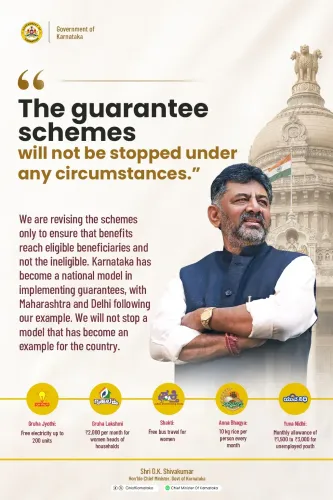
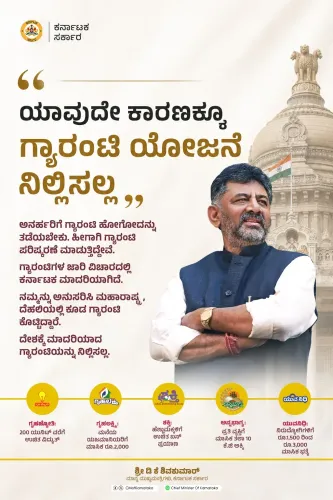
Karnataka's five Guarantee Schemes — launched after the May 2023 assembly election victory — include free electricity, free bus travel for women, and food assistance.
The review is part of a broader pattern of periodic oversight meetings held by the Karnataka Congress government since 2023 to refine beneficiary lists and prevent fiscal leakages.
Detailed instructions from the meeting are expected to be released subsequently, with potential implications for the state budget and beneficiary databases.
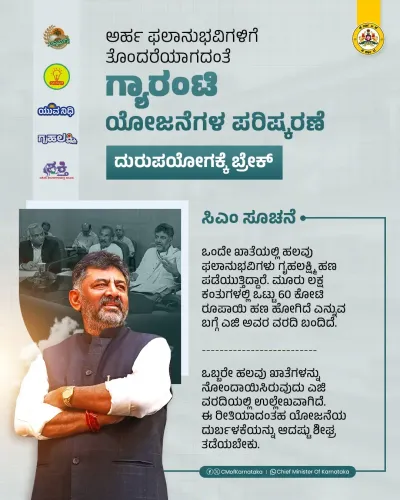
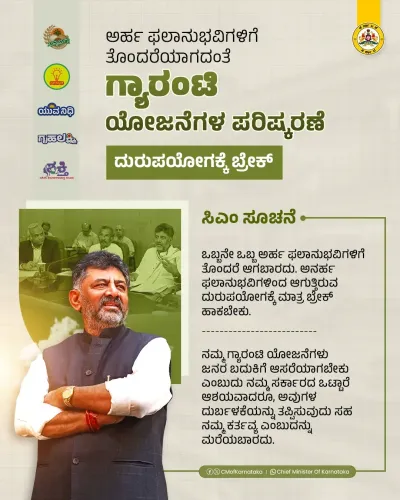
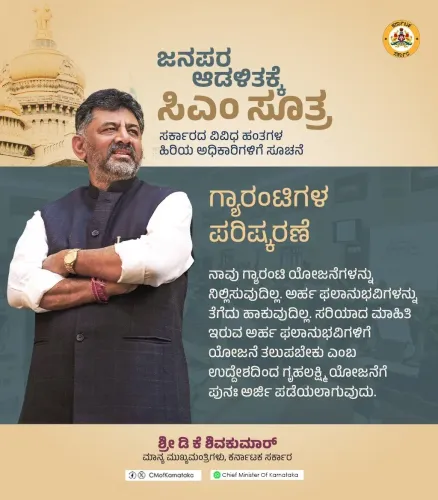
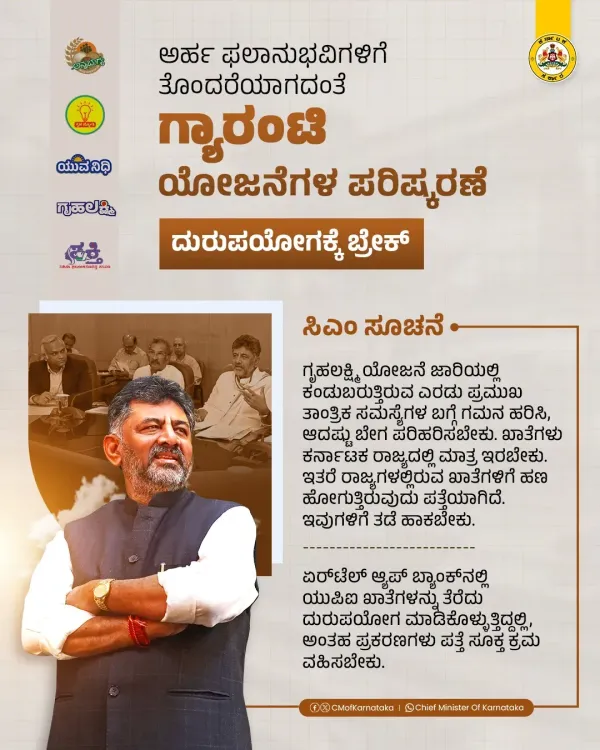
The Chief Minister's Office of Karnataka on Saturday, 20 June 2026, shared directives issued by Chief Minister D.K. Shivakumar at a review meeting of the state's flagship Guarantee Schemes, focusing on protecting eligible beneficiaries while excluding ineligible claimants from the programmes.
The post, shared in Kannada, stated that the instructions were issued at a review meeting held on Friday and concerned both safeguarding the interests of deserving beneficiaries and removing those deemed ineligible from the scheme rolls. The original post reads: 'ಅರ್ಹ ಫಲಾನುಭವಿಗಳ ಹಿತಕಾಯುವ ಜೊತೆಗೆ ಅನರ್ಹರನ್ನು ಯೋಜನೆಯಿಂದ ಹೊರಗಿಡುವ ಸಂಬಂಧ' — meaning 'regarding protecting the interests of eligible beneficiaries while excluding ineligible persons from the scheme.'
Context
The Karnataka Congress government launched five flagship Guarantee Schemes following its victory in the May 2023 assembly elections. These schemes include free electricity up to a specified limit, free bus travel for women, and food assistance, among others, and were central to the party's election manifesto.
Since their rollout, the state administration has periodically convened review meetings to assess implementation, refine beneficiary lists, and address fiscal concerns. Friday's meeting, chaired by Chief Minister Shivakumar, is the latest in this series of oversight exercises.
Policy Backdrop
Large-scale welfare schemes in India routinely face the dual challenge of ensuring full coverage for intended recipients while preventing leakages caused by ineligible claimants drawing benefits. This is a structural concern for state exchequers, particularly when schemes operate at the scale of Karnataka's Guarantee programmes, which cover millions of households.
State governments across India have adopted beneficiary verification drives, database audits, and inter-departmental data sharing to address such leakages. The directives from Friday's meeting appear to follow this established administrative approach.
Stakeholders and Impact
The primary stakeholders are welfare households enrolled in the Guarantee Schemes and the Karnataka state exchequer, which bears the fiscal cost of these programmes. Eligible beneficiaries stand to gain from stronger protections and more targeted delivery, while ineligible claimants face removal from the rolls.
Any revision of beneficiary lists at scale could affect a significant number of households across the state. The balance between inclusion and exclusion will be closely watched by civil society groups and opposition parties alike.
What's Next
The Chief Minister's Office is expected to release the detailed instructions from the meeting in the coming days, which will clarify the specific criteria and mechanisms for beneficiary verification and exclusion. Subsequent revisions to beneficiary databases will determine the on-ground impact of Friday's directives.
The outcome of this review could also have implications for the Karnataka state budget, particularly if the exercise results in a significant reduction in the number of active beneficiaries and a corresponding change in scheme expenditure.
Point of View
But at scale it carries the risk of wrongful removals that opposition parties can exploit. The timing, mid-term in the electoral cycle, suggests the administration is trying to shore up scheme credibility before the next budget cycle. How the exclusion criteria are defined and communicated publicly will be the real test of this initiative's fairness.
NationPress
19 Sept 2026
Frequently Asked Questions
What are Karnataka's Guarantee Schemes?
Karnataka's Guarantee Schemes are five flagship welfare programmes launched by the Congress government after its victory in the May 2023 assembly elections. They include free electricity up to a set limit, free bus travel for women, and food assistance, among others.
What did CM Shivakumar decide at the Guarantee Schemes review meeting?
Chief Minister D.K. Shivakumar issued directives at a Friday review meeting to both protect the interests of eligible beneficiaries and exclude ineligible claimants from the Guarantee Schemes, according to the Chief Minister's Office of Karnataka.
Why is Karnataka reviewing its Guarantee Scheme beneficiary lists?
The Karnataka government is reviewing beneficiary lists to prevent leakages — a common challenge in large-scale welfare programmes where ineligible persons may be drawing benefits, adding unnecessary burden to the state exchequer.
Who is DK Shivakumar?
D.K. Shivakumar is a senior Congress leader and the Chief Minister of Karnataka, as identified in the official Chief Minister's Office post dated 20 June 2026.
What happens to ineligible Guarantee Scheme beneficiaries in Karnataka?
According to the directives issued at Friday's review meeting, ineligible beneficiaries are to be removed from the Guarantee Scheme rolls. The specific criteria and process are expected to be detailed in instructions released by the Chief Minister's Office.